Totnes travel guide: history, shops, and hidden gems
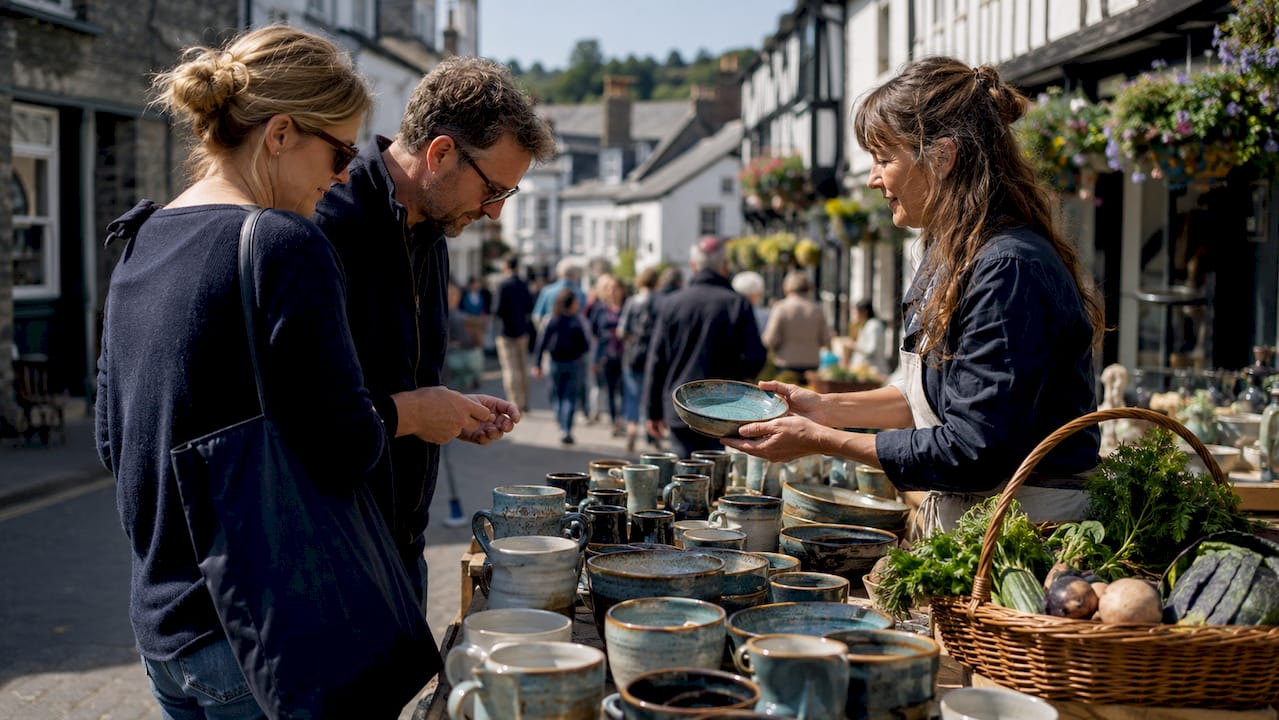
Totnes is defined as a historic market town at the head of the River Dart estuary in South Devon, celebrated for its bohemian atmosphere, independent shops, and Norman castle. Few towns in England pack this much character into a single steep high street. You get over 125 independent businesses, a Norman castle with panoramic views, weekly markets, and a community shaped by the Transition Towns movement. Whether you are planning your first visit or returning for the tenth time, this guide covers everything worth knowing.
What makes Totnes’s history and culture unique?
Totnes is one of the oldest boroughs in England, with origins dating to 907 AD. That age shows in its streets, its buildings, and its stubborn refusal to become a clone town. The Norman motte-and-bailey castle dates to the 11th century and is managed by English Heritage. It sits at the very top of the town, commanding views over the River Dart and the South Devon countryside.
The town’s cultural identity runs deeper than its stonework. The Elizabethan House Museum on the High Street preserves a merchant’s home from the 1570s, complete with period furnishings and a walled garden. The Brutus Stone, set into the pavement near the bottom of Fore Street, marks the legendary landing point of Brutus of Troy, the mythical founder of Britain. Local historians treat it with affectionate scepticism, but it draws curious visitors every day.
What genuinely sets Totnes apart from other historic market towns is its bohemian community culture. The Transition Towns movement was born here in 2006, founded by Rob Hopkins as a grassroots response to peak oil and climate change. That ethos shaped everything from the local food economy to the type of shops that line the High Street. You will not find a Pret a Manger or a Costa here. You will find independent booksellers, zero-waste grocers, and herbalists.
Key cultural landmarks worth visiting:
- Totnes Castle: 11th-century Norman fortification run by English Heritage, with steep access paths and outstanding views
- Elizabethan House Museum: A preserved 16th-century merchant’s home on the High Street
- The Brutus Stone: A legendary marker on Fore Street, debated but beloved
- St Mary’s Church: A 15th-century red sandstone church with a carved rood screen
- The Guildhall: A working civic building with a history stretching back to 1553
Pro Tip: Visit the Elizabethan House Museum on a Tuesday or Wednesday in summer when costumed guides bring the building to life. It is one of the most underrated experiences in South Devon.
Which attractions define things to do in Totnes?
Totnes Castle is the obvious starting point. The castle offers panoramic views over the River Dart and the rolling South Devon hills. English Heritage manages the site, and access involves a steep climb from the town centre. The views from the top justify every step.
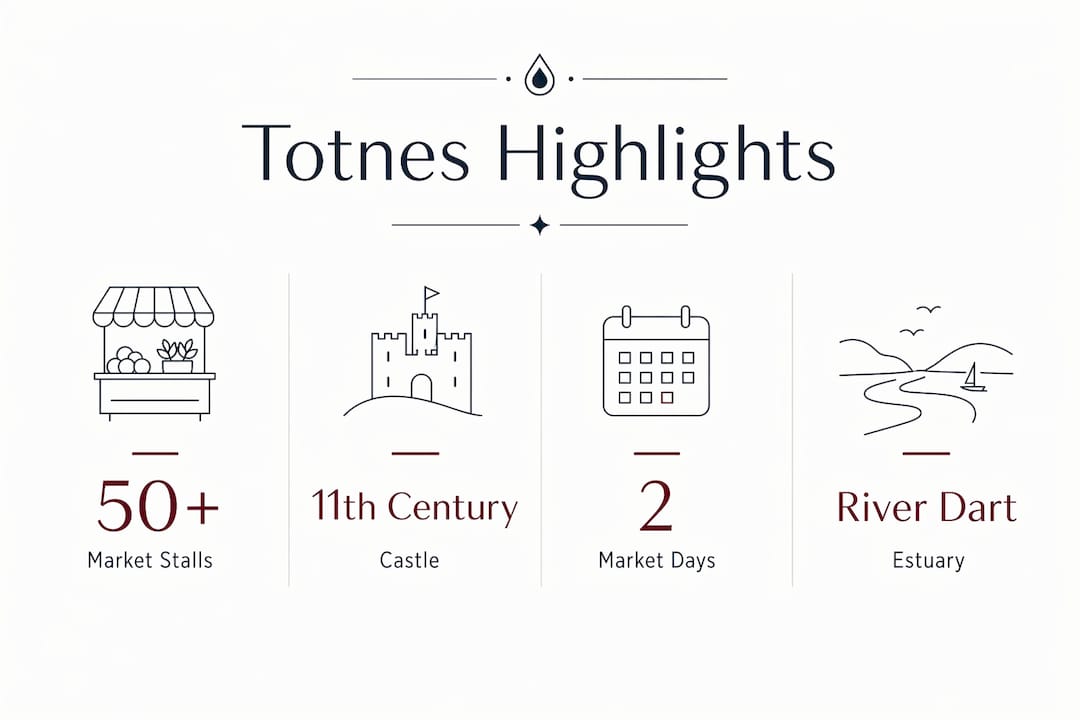
The town’s markets are a genuine draw, not a tourist afterthought. Markets run on Fridays and Saturdays with more than 50 stalls covering local produce, handmade crafts, and vintage goods. Totnes also hosts an Elizabethan Charity Market, a monthly food and artisan market, and a December Christmas Market. That variety means there is almost always something on, regardless of when you visit.
The High Street itself is an attraction. Independent shops like Penelopetom and ME AND EAST offer clothing and homewares you will not find anywhere else. Galleries, record shops, and wholefood stores fill the gaps between them. The independent retail scene here is a direct result of the community’s commitment to localism. It is proof that a high street can thrive without chains.

| Attraction | Type | Highlights |
|---|---|---|
| Totnes Castle | Historic site | Norman motte-and-bailey, English Heritage, river views |
| Elizabethan House Museum | Museum | 1570s merchant’s home, period rooms, walled garden |
| Friday and Saturday Markets | Market | 50+ stalls, local produce, crafts, vintage |
| Totnes Cinema | Arts venue | Independent cinema, community events, film screenings |
| Bridgetown riverside | Walking | Scenic river views back towards the town |
Totnes Cinema on the Plains deserves a mention. It is a community-run independent cinema that screens everything from arthouse films to family favourites. On a rainy afternoon, it is exactly where you want to be.
- Start at Totnes Castle for the views and historical context
- Walk down the High Street, stopping at independent shops and galleries
- Visit the Elizabethan House Museum mid-morning before it gets busy
- Browse the Friday or Saturday market stalls near the Civic Hall
- Cross the river to Bridgetown for riverside walking and quieter views
What are the best dining and local food experiences in Totnes?
Totnes takes food seriously. The town’s Transition Towns ethos means locally sourced produce is the default, not a premium option. Independent cafés and eateries set the tone across the board.
The Curator on Fore Street is a well-regarded café and deli with a menu built around seasonal and local ingredients. Canteen, near the town centre, is a community-focused café that has become a social hub as much as a place to eat. Both reflect the town’s preference for quality over convenience.
- The Curator: Café and deli on Fore Street, seasonal menu, excellent coffee
- Canteen: Community café with a relaxed atmosphere and locally sourced food
- Sunday Food and Craft Market: Monthly outdoor market combining artisan food producers with craft stalls
- Totnes Brewing Company: Local craft brewery with a taproom worth visiting
- Traditional pubs: The Bay Horse Inn and the Royal Seven Stars Hotel both serve food and offer a genuine local atmosphere
The Sunday Food and Craft Market is one of the best food events in South Devon. It draws producers from across the region, and you can pick up everything from raw honey to sourdough bread to locally smoked fish. Arriving early gives you first pick of the best stalls.
Pro Tip: The Royal Seven Stars Hotel on the Plains has been serving travellers since the 17th century. Its bar is a good spot for a local ale and a proper Devon meal without the tourist markup you find elsewhere.
How can visitors make the most of outdoor activities near Totnes?
Totnes sits at the head of the River Dart estuary, which makes it a natural base for water-based activities. Kayak hire is available from the riverbank, and guided boat trips run downstream towards Dartmouth through some of the most beautiful river scenery in England. The journey by boat takes around an hour and a half and passes through dense woodland and tidal creeks.
Walking trails extend in every direction. The Dart Valley Trail follows the river south through the South Devon National Landscape, connecting Totnes to Dartmouth via a route that takes in ancient oak woodland and tidal mudflats. The Franklin Totnes Trail heads inland and offers a different perspective on the town’s agricultural hinterland. Both trails are accessible from the town centre without a car.
Dartmoor National Park lies just a few miles to the north. A short drive brings you to open moorland, granite tors, and some of the best Devon country pursuits in the county. Cycling routes connect Totnes to the moor and to the coast, making it a practical base for multi-day active trips.
Practical outdoor tips for visiting Totnes:
- Start at the castle: Walking downhill from the castle is significantly less tiring than climbing up from the quay
- Arrive early on market days: Parking is limited on Fridays and Saturdays; the park-and-ride service runs from the edge of town
- Cross to Bridgetown: The suburb across the river offers scenic riverside walks with views back to the town that most visitors never see
- Book kayak hire in advance: Summer weekends fill up quickly, especially in july and august
- Check the tide times: The River Dart is tidal at Totnes, which affects both kayaking and the visual character of the riverbank
| Activity | Starting point | Difficulty | Notes |
|---|---|---|---|
| Dart Valley Trail | Totnes Quay | Moderate | Follows river south to Dartmouth |
| Franklin Totnes Trail | Town centre | Easy to moderate | Inland route through farmland |
| Kayak hire | Totnes Quay | Beginner friendly | Book ahead in summer |
| Boat trip to Dartmouth | Totnes Quay | Easy | Approx. 90-minute journey |
| Bridgetown riverside walk | Steam Packet Inn | Easy | Short walk, excellent views |
Key takeaways
Totnes rewards visitors who go beyond the High Street and engage with its markets, river, and community culture.
| Point | Details |
|---|---|
| Start at the castle | Walk downhill from Totnes Castle to the quay to save energy and see the town in order. |
| Visit on a market day | Friday and Saturday markets bring 50+ stalls of local produce, crafts, and vintage goods. |
| Cross to Bridgetown | The riverside walk from Bridgetown offers views of Totnes that most visitors miss entirely. |
| Eat and shop independently | Over 125 independent businesses line the High Street; chains are absent by community choice. |
| Plan outdoor activities | The Dart Valley Trail, kayak hire, and Dartmoor are all accessible from the town centre. |
Why Totnes surprised me every time I visited
I have been to Totnes more times than I can count, and it still catches me off guard. The first time, I expected a pretty market town with a castle. What I found was a place with genuine opinions about how to live. The zero-waste shops are not a trend here. The community gardens are not a council initiative. They are just how things are done.
The thing most visitors miss is Bridgetown. Everyone walks the High Street, which is worth doing. But crossing the river and looking back at Totnes from the Bridgetown bank is a completely different experience. The town reveals itself as a medieval settlement climbing a steep hill above a tidal river. That view explains everything about why it developed the way it did.
My honest advice on timing: come on a Friday or Saturday for the markets, but arrive before 10am. The stalls are at their best early, the streets are quieter, and you can get a coffee at The Curator before the queues form. If you are planning a Devon weekend itinerary, Totnes works well as a base. Dartington Hall is ten minutes away, Dartmouth is reachable by boat, and Dartmoor is a short drive north.
The balance between tourism and community life here is genuinely well managed. Totnes has not sold itself out. The independent spirit that makes it worth visiting is the same spirit that keeps it from becoming a theme park version of itself. Respect that, spend your money in the local shops, and the town will give you a great deal back.
— Mark
Discover more of Devon with Thedevondrop
Totnes is one of Devon’s most rewarding towns, but the county has plenty more to offer visitors who want to go deeper.

Thedevondrop covers the best of Devon, from hidden coastal villages to country house hotels, artisan food producers to outdoor adventures. Whether you are looking for a spa retreat, a riverside walk, or a table at a great local restaurant, we have the local knowledge to point you in the right direction. Explore local dining and experiences across Devon and find something worth planning your next trip around. You can also browse our Devon places guide for inspiration beyond Totnes.
FAQ
When are the Totnes markets held?
Markets run on Fridays and Saturdays with more than 50 stalls. Totnes also holds a monthly food and craft market, an Elizabethan Charity Market, and a December Christmas Market.
Is Totnes Castle worth visiting?
Yes. The 11th-century Norman castle is managed by English Heritage and offers panoramic views over the River Dart and South Devon. Access involves a steep climb, so wear comfortable shoes.
How do I get around Totnes on foot?
Start at the castle at the top of the hill and walk downhill to the quay. This is far less tiring than the reverse. The town is compact and most attractions are within a ten-minute walk of each other.
What outdoor activities are available near Totnes?
Kayak hire and boat trips operate from Totnes Quay on the River Dart estuary. The Dart Valley Trail and Franklin Totnes Trail both start near the town centre, and Dartmoor National Park is a short drive north.
Where should I park in Totnes?
Parking is limited on market days, particularly Fridays and Saturdays. Arrive before 9am or use the park-and-ride service from the edge of town to avoid delays.