When the Sea Stands Up: A Local's Guide to Devon Storm-Watching
There is a morning every November, once the clocks have gone back and the half-term crowds have gone home, when the sea reminds Devon who was here first. The forecast fills with arrows. Harbourmasters double up their mooring lines. And a certain kind of local — we count ourselves among them — digs out the coat that no longer matters and heads for the coast on purpose.
Storm-watching is one of the great free shows of a Devon winter, and we have two coasts that take their weather differently: the north, where Atlantic swell runs out of ocean against some of the hardest cliffs in England, and the south, where an easterly can turn the Channel white from Start Point to the Exe. Here is where we go when the sea stands up — and how to watch it without becoming part of the story.
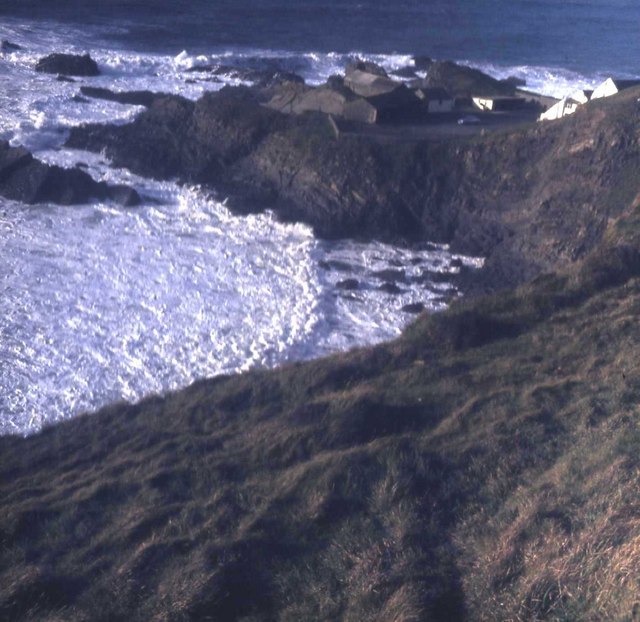

Hartland Quay: the Atlantic's full stop
If you make only one winter pilgrimage, make it this one. Hartland Quay sits at the squared-off corner of north-west Devon, where the coast turns from facing north to facing west, and it takes some of the roughest winter seas in the country. There has been a harbour here since the time of Henry VIII, and small ships traded off this improbable shelf of rock for centuries — until the sea settled the argument, destroying the pier head and then the whole pier wall in a storm in 1887.
What survived is better. The old customs house has been a hotel since 1886, and its bar — the Wreckers Retreat, in the former stables — is hung with relics from the wrecks this coast has collected over four centuries: the Test in 1843, the Royal Saxon in 1886, the Clipper in 1895. The small Shipwreck and Smuggling Museum on the site tells their stories properly. On a wild day you take the winding toll road down, stand on the rising ground by the hotel, and watch waves detonate against cliff faces so cleanly folded they look sketched rather than weathered. Then you retreat to the bar, which is half the point. The hotel is open all year except Christmas.
Ilfracombe: the chapel that keeps the light
Ilfracombe's harbour has long been a port of refuge on the Bristol Channel, and its weather-watching credentials are built into the skyline. On Lantern Hill, the rock standing between harbour and open sea, a small fourteenth-century chapel has shown a light to guide shipping since the Middle Ages — it is said to be the oldest working lighthouse in the country, and nowhere wears the claim better. St Nicholas's has lived several lives since regular worship ended at the Reformation, serving by turns as a dwelling house, a reading room and a laundry. Its present lantern dates from 1819, and volunteers still open the chapel to visitors in the warmer months.
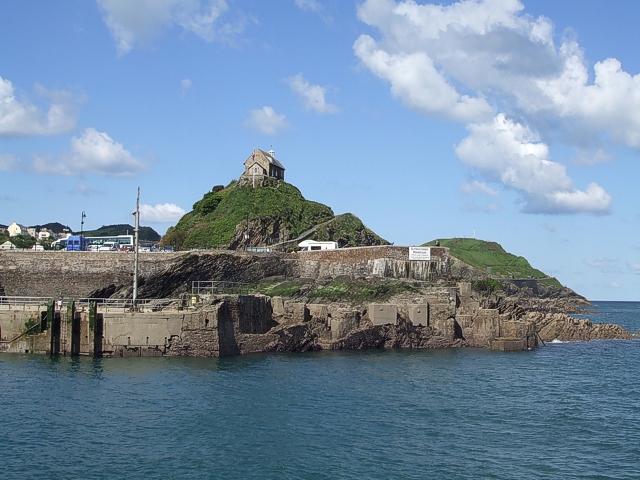

In a winter blow the pier and harbour mouth take the brunt, watched since 2012 by Verity, Damien Hirst's twenty-metre steel-and-bronze figure, standing at the harbour entrance on a twenty-year loan. When the sea is truly up, give the pier a miss and watch from higher ground: Bristol Channel swell has a habit of arriving over the top of things.
Start Bay: the storm that took a village
The south coast does its storm-watching with a different accent. When the wind swings into the east, the long curve of Start Bay — Torcross, Beesands, Hallsands — takes the sea head-on, and nowhere in Devon is the cost of underestimating that written more plainly than at Hallsands.
At the end of the nineteenth century Hallsands was a working fishing village tucked under the cliff a mile north of Start Point, living off the crab grounds of the Skerries Bank. From April 1897, dredgers began lifting shingle from the seabed just offshore — some 650,000 tons in all, bound for the naval dockyard works at Keyham in Plymouth — and the beach between the houses and the sea began to drop almost at once. The licence was revoked in January 1902, but the shingle never came back, and the stronger sea wall built in 1906 bought the village only eleven more years. On 26 January 1917 a gale out of the north-east arrived on a high spring tide; two days later a single house remained habitable. Every one of the seventy-nine villagers survived — still the most remarkable fact in the story.
Two names stay with you. Elizabeth Prettyjohn, whose house was the one left standing, refused to leave: she lived on among the ruins with her chickens, showing visitors around, until she died in 1964. And Ella Trout, who had left school to work her late father's fishing boat, was out crabbing in September 1917 when she saw a steamer mined off Start Point, rowed to it, and helped pull nine men from the water. It earned her the Order of the British Empire; with compensation money she and her sisters later built a hotel above the drowned village, running it until 1959.
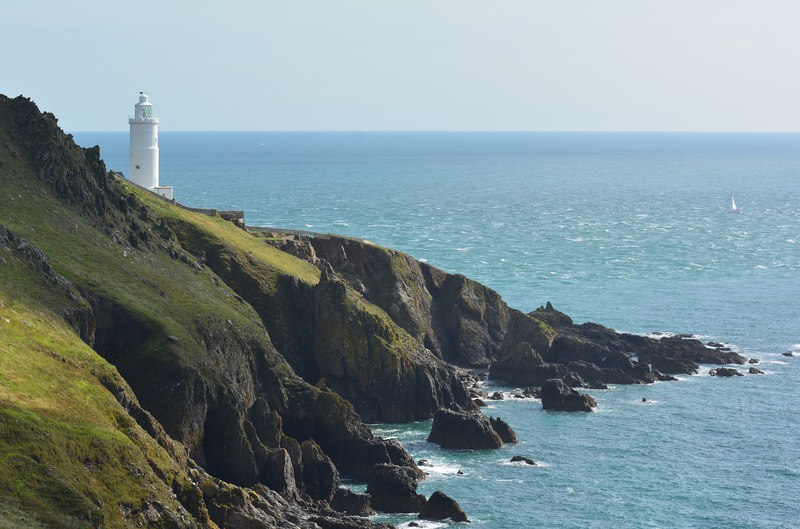

Today the old village site is closed off, but a viewing platform on the South West Coast Path looks down on what is left: gable ends and doorways against the rock, the sea lapping where front rooms used to be. Go on a rough day and the story tells itself — from the platform, please; this is not a shoreline to be clever on.
Plymouth Hoe: the lighthouse that came home
Plymouth does its storm-watching in company. When a south-westerly pushes into the Sound, the Hoe gathers its audience, presided over by Smeaton's Tower — most of a lighthouse, a long way from its rock. John Smeaton finished it in 1759 on the Eddystone reef, building in dovetail-jointed granite bound with hydraulic lime, the tower shaped to stand like the trunk of an oak, its light first lit with twenty-four candles. It served for well over a century, until the ledge beneath began to erode and the tower shook with every big wave: the lighthouse had outlasted its own rock. In 1882 the upper part was taken down and rebuilt on the Hoe, opening to visitors in 1884, and the stump left behind still stands on the reef beside its successor, too well built to be worth demolishing.
Climb the tower's ninety-three steps for the widest view of an angry Sound in the city. And when the weather is gentler, the seafront below the Hoe holds one of the finest art deco pools in Britain, which we wrote about in our guide to Devon's lidos and sea pools.
Sidmouth: storm-watching in a Regency frame
At the county's eastern end, Sidmouth offers the most civilised version of the pastime. The town sits at the mouth of the River Sid between Peak Hill and Salcombe Hill, behind a wide esplanade that has been a fixture since Regency times — the future Queen Victoria was brought to stay as a baby in 1819. The red cliffs flanking the town are Otter Sandstone, laid down in Triassic deserts, and when a gale drives the sea at them the contrast of white water against deep red rock is the best colour scheme on the Jurassic Coast.
The sea has tested the town before: south-westerly storms in the early 1990s stripped away much of the protecting shingle, and the offshore rock islands you see today were built in reply, and pebbles brought in to remake the beach. In a blow, locals keep to the landward side of the esplanade or climb to Connaught Gardens, laid out around 1820 and given their present name when the Duke of Connaught opened them in 1934. The view from there, down over Jacob's Ladder — the wooden stairway to the beach below — puts the whole performance beneath your feet, with a handrail between you and it.
Watching well
The RNLI's winter advice is blunt, and worth taking exactly as offered: stay well back from stormy seas, cliff edges and any exposed waterside spot, because conditions can knock you off your feet or wash you into the water. Give piers, harbour walls and low seafront paths a miss — a wave only has to be lucky once. Check the forecast and tide times, take a charged phone, and tell someone where you are going. If you end up in the water, float on your back with your ears under until the cold shock passes; if you see someone else in trouble, call 999 or 112 and ask for the Coastguard rather than going in after them. No view is worth a life.
And when the wind finally drops, as it always does, Devon's winter coast has a gentler register waiting: flat-calm estuaries filling with birds down from the Arctic, which we wrote about in our guide to Devon's estuary birds. Storm or stillness, the sea down here never stops performing. All it asks is an audience with the sense to stand in the right place.