
By the second week of August the sea around Devon is as warm as it gets all year, and it holds that warmth long after the school-holiday crowds thin out — which is why locals keep swimming well into September. But not everyone wants waves, and not every day is a beach day. Devon's answer, for well over a century, has been the outdoor pool: seawater lidos wedged into rocky shorelines, a river-fed pool dug by hand on the edge of Dartmoor, and community baths kept alive by volunteers, jumble sales and sheer stubbornness. Some are grand and Grade II listed. Two are completely free. One is refilled by the tide itself. Here's where we'd go for an outdoor swim this month, and the stories behind the water.
Salt water first: the sea pools
Shoalstone Pool, Brixham has a fair claim to being the best free swim in England. People have bathed off Shoalstone Point since Victorian times, but in 1896 two walls were built to hold back the tide, and a natural rock pool became the 53-metre seawater pool that still sits at the foot of Berry Head Road today. It is one of the largest tidal pools in the world and one of only a handful of tidal-fed pools left in the country: the sea floods in over the walls, and the sea takes itself back out again. Swimming costs nothing — the pool is run by a registered charity that survives on donations, so throw something in the bucket if you can. Lifeguards are on duty from 10am to 5pm through the main summer season, and the Stones Throw bar-bistro above the pool does locally sourced food with a view across to the breakwater. Fair warning for August: it's regatta season along this coast, so Brixham will be busy and all the better for it.
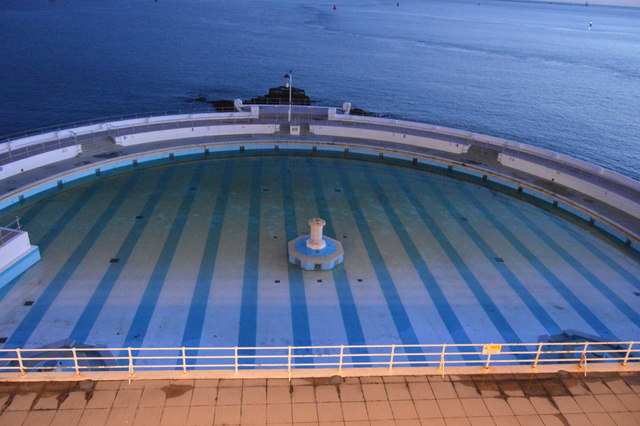
Tinside Lido, Plymouth is the glamorous one. Opened in 1935 to a design by architect John Wibberley, it curves out from the foot of Plymouth Hoe like the stern of an ocean liner — all white walls and Art Deco lines, with Plymouth Sound stretching away beyond the pool edge. It very nearly didn't survive: after decades of decline the lido closed and sat derelict, escaping demolition before a major restoration brought it back to life in 2003. It is now Grade II listed, filled with salt water, and open for swimming from May to September under Plymouth Active. Even if you never get in, it's worth walking the Hoe just to look down on it; out of season, drained and empty, it might be the most photogenic piece of concrete in the county.
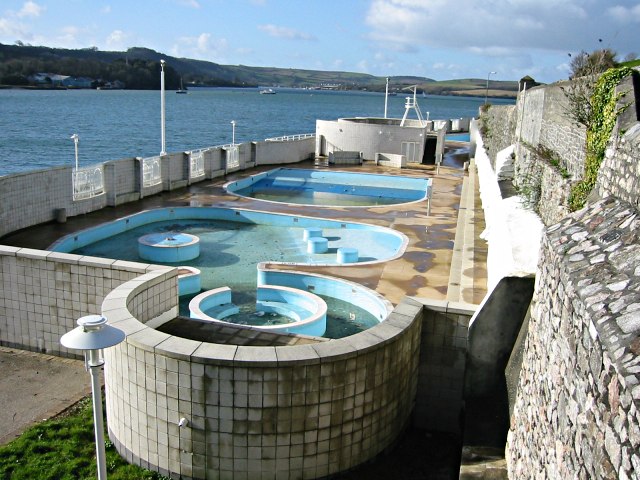
Two miles west in Devonport, Mount Wise Pools are Plymouth's best-kept open secret: three outdoor pools — a 25-metre main pool, a fun pool with fountains and stepping stones, and a shallow paddling pool for small children — set on a headland with views across the Tamar towards Cornwall. They are free to use, a decision Plymouth City Council took deliberately in 2023 and has stuck with since. Sessions are bookable in advance, which on a hot Saturday in August is a detail worth knowing. Between them, Tinside and Mount Wise give Plymouth four outdoor pools within a couple of miles of each other, and locals are quietly pleased about it.
North Devon's contribution is the oldest of the lot, though it comes with a caveat. At Ilfracombe, four tunnels were hand-carved through the cliffs in 1823 to reach a pair of sheltered beaches, where the Victorians built tidal bathing pools — one for ladies, one for gentlemen, separated in the interests of nineteenth-century modesty. Tunnels Beaches operated as a much-loved swimming spot for two centuries, but rock falls in April 2025 forced the owners to close the beaches to general visitors, and at the time of writing they have not reopened to the public. We mention it because no history of Devon sea bathing is complete without it — but check before you travel, and for now, admire it from the coast path.
Fresh water: the river and country pools
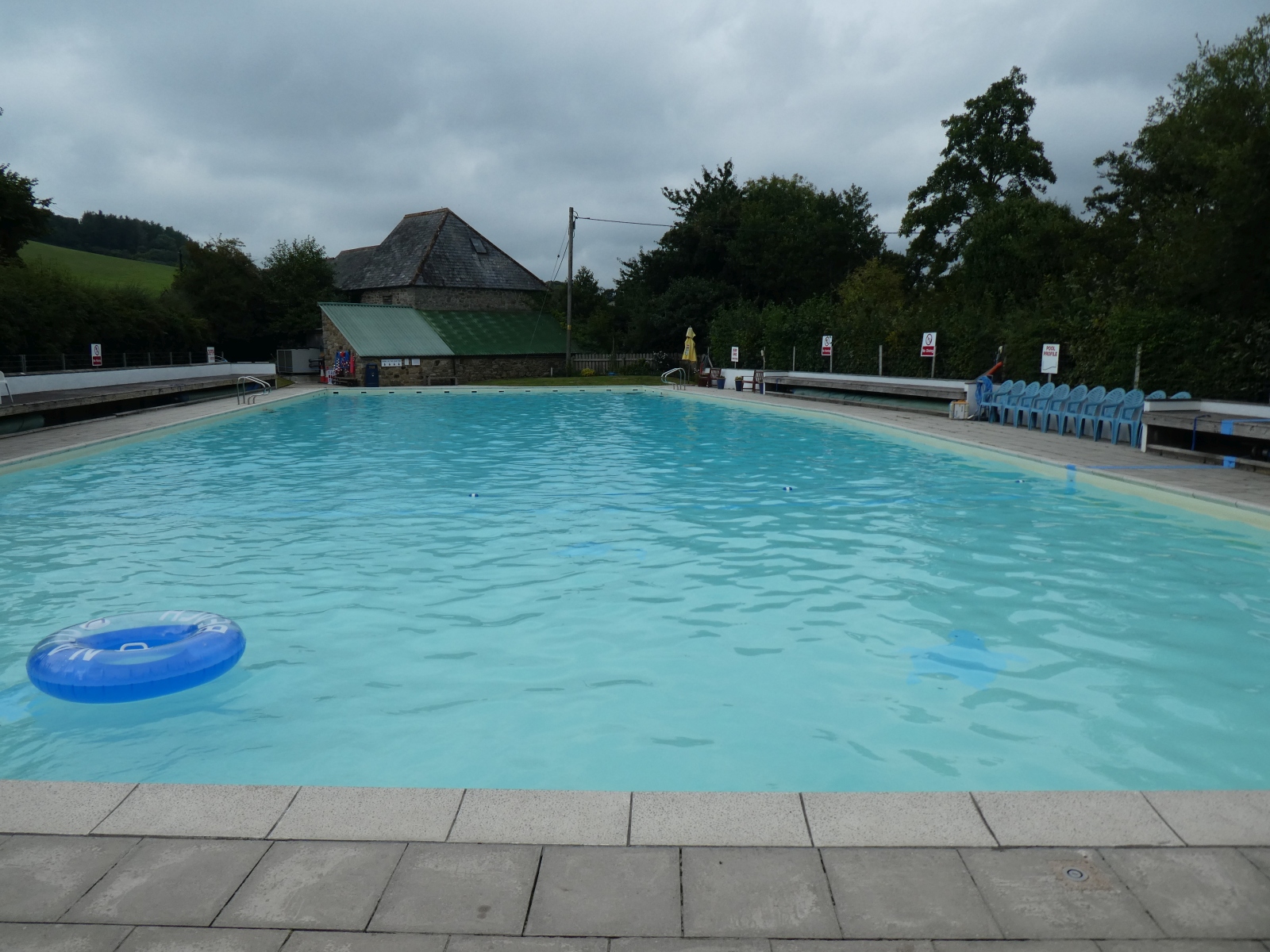

Half a mile outside Chagford, on the north-east edge of Dartmoor, is something quietly remarkable: Chagford Swimming Pool, dug by hand in 1933 by local residents on land entrusted to the town by the Hayter-Hames family. It is fed by the River Teign through an old mill leat, treated with UV filtration and a minimum of chlorine, and — this is the part that surprises first-timers — heated to around 27°C by air-source heat pumps and solar panels. The result is the largest river-fed outdoor pool in the south-west: moorland water, warm enough to stay in all afternoon, with a separate toddler pool and a volunteer-run Tea Shed serving cake into the early evening. If you're combining it with a walk, Chagford itself is one of Dartmoor's finest small towns, and the pool makes a persuasive argument for ending any hike early.
South along the moor's edge, Buckfastleigh Open Air Pool is the elder statesman of Devon's inland pools. It was gifted to the town in 1887 by the Hamlyn family to mark Queen Victoria's golden jubilee, and apart from a brief closure during the Second World War it has been in use ever since — though only just. When the pool faced permanent closure, the community fought for it, and in May 2015 it reopened under a charitable trust run by local people. Today it's a heated 21-metre lido in Victoria Park, swimming through the summer and then switching to cold-water sessions from autumn into winter for the hardy. A pool given by Victorians, saved by their great-great-grandchildren: Devon does this sort of thing rather well.
The same story, a century later, produced Topsham Outdoor Swimming Pool. Through the 1970s the people of this Exe-side town raised the money themselves — mountains of collected waste paper, returned glass bottles, jumble sales, carnival floats — until, with a Sports Council grant to top it off, the pool opened in 1979 with Olympic gold medallist David Wilkie doing the honours. Nearly half a century on it is still run entirely by a volunteer committee as a registered charity, a heated open-air pool on Fore Street a short stroll from the estuary. Swim, then walk down to the quay: Topsham's waterfront is one of the loveliest in Devon and deserves the extra hour.

Reading the water
A few practical notes from people who do this often. None of these pools pretend to be the Mediterranean: the joy of them is that they are the sea, or the river, held still long enough to swim lengths in. Bring more layers than you think you need for afterwards, and something hot in a flask — the walk from the water to the changing cubicle is where the bravado goes. Shoalstone changes character with the tide — at high water on a rough day the sea comes over the walls in sheets, which regulars regard as a feature rather than a problem; check the tide times on the pool's website before you set out. Most of Devon's outdoor pools run seasonally from May to September, so the window is closing even as the water peaks — if you've been meaning to go all summer, this is the fortnight. Nearly all of them are charities or council-run pools that depend on being used, so your swim is also a small act of preservation. And if cold water is your thing once the heated pools shut, the same coastline has sprouted a wild sauna boom over the past few years, which makes an autumn dip at Shoalstone considerably easier to talk yourself into. The Victorians built the walls; the least we can do is get in.