
The clocks went back on Sunday, half-term is upon us, and Halloween falls on a Saturday this year — a whole week of dark evenings asking to be filled with ghost stories. Devon is unusually well supplied. Ours aren't vague things that happened "somewhere on the moor": they come attached to particular castles, tombs and bends in particular roads, and you can go and stand in every one of them. So this week, the stories, the places, and the rather more complicated history underneath. Whether you take a torch or a healthy scepticism is up to you.
The castle in the woods: Berry Pomeroy
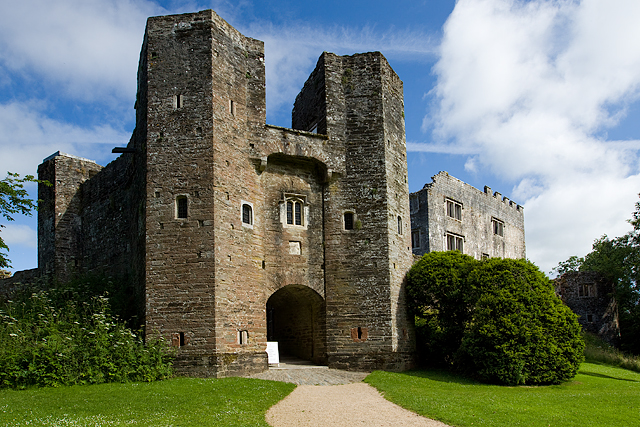
Start with the big one. Berry Pomeroy Castle sits in a steep wooded valley a couple of miles from Totnes, with everything a ghost story could want: a Norman family who held the land from the Conquest, a Tudor power grab, and a ruin the trees have had three centuries to close in around. The Pomeroys sold up in 1547 to Edward Seymour — brother of Jane Seymour and Lord Protector to the boy king Edward VI — and the Seymours built a grand mansion inside the medieval walls before giving up on the place around 1694. English Heritage looks after what's left.
The stories came later, and they are lurid. The White Lady is said to be Margaret Pomeroy, imprisoned in the dungeons by a jealous sister and left to starve; she drifts around the ruined tower that now carries her name. The Blue Lady is worse — the daughter of a Norman lord, wronged and grieving, who is supposed to beckon passers-by into unsafe corners of the ruin. Visitors have also reported a small girl, a lady in grey and a pair of brothers on horseback. We make no promises either way, but the walk up through the woods on a grey October afternoon does half the work for any ghost. Check English Heritage's winter opening days before you go.
The squire in the iron cage: Buckfastleigh
In the churchyard of Holy Trinity, on its hill above Buckfastleigh, stands a squat stone building known locally as the Sepulchre: three windowless walls, a pyramidal slate roof, and an iron grille across the fourth side so you can look in at the chest tomb. Architectural historians count it among the first free-standing mausoleums in England. The reason it exists is Squire Richard Cabell of Brook Hall, who died on 5 July 1677 with the blackest reputation in the parish — stories of cruelty, of a soul sold to the Devil, even a rumour (untrue, as it happens) that he had murdered his wife.
The legend says that on the night he died, a phantom pack of hounds came baying across the moor to howl at his tomb, and that he rides out with them still on the anniversary of his death. The villagers' response was practical: a heavy slab, a stout building over the grave, iron bars. It evidently made an impression far beyond Devon, because when a young Arthur Conan Doyle came looking for a West Country legend, the tale of the evil squire and the spectral hounds fed straight into The Hound of the Baskervilles. Cabell's hounds belong to an older Dartmoor tradition — the wisht hounds, said to kennel among the stunted oaks of Wistman's Wood, a place strange enough in broad daylight that we gave it a whole chapter in our guide to Devon's temperate rainforest.
Hands on the wheel: the B3212
Dartmoor's most unsettling story is barely a century old. On the stretch of the B3212 between Postbridge and Two Bridges, drivers and cyclists began reporting the same thing from around 1910: a pair of hands — sometimes hairy, sometimes invisible — seizing the wheel or the handlebars and wrenching the vehicle off the road. In June 1921 Dr E. H. Helby, medical officer at Dartmoor Prison, was killed when his motorcycle combination went out of control there; the two young passengers in his sidecar survived. Weeks later a coach went off the same stretch, and that August an army officer told the papers that invisible hands had forced his motorcycle into the verge. Fleet Street took the story national.
In 1924 a woman staying in a caravan nearby woke to see a large hairy hand clawing at the window, and made the sign of the cross until it withdrew. The sober postscript is that highway engineers later found the road's camber dangerous in places and altered it, after which the hands grew much quieter. Drive it today and it's a perfectly ordinary moorland road. Still — ten and two, perhaps.
Flowers for Kitty Jay
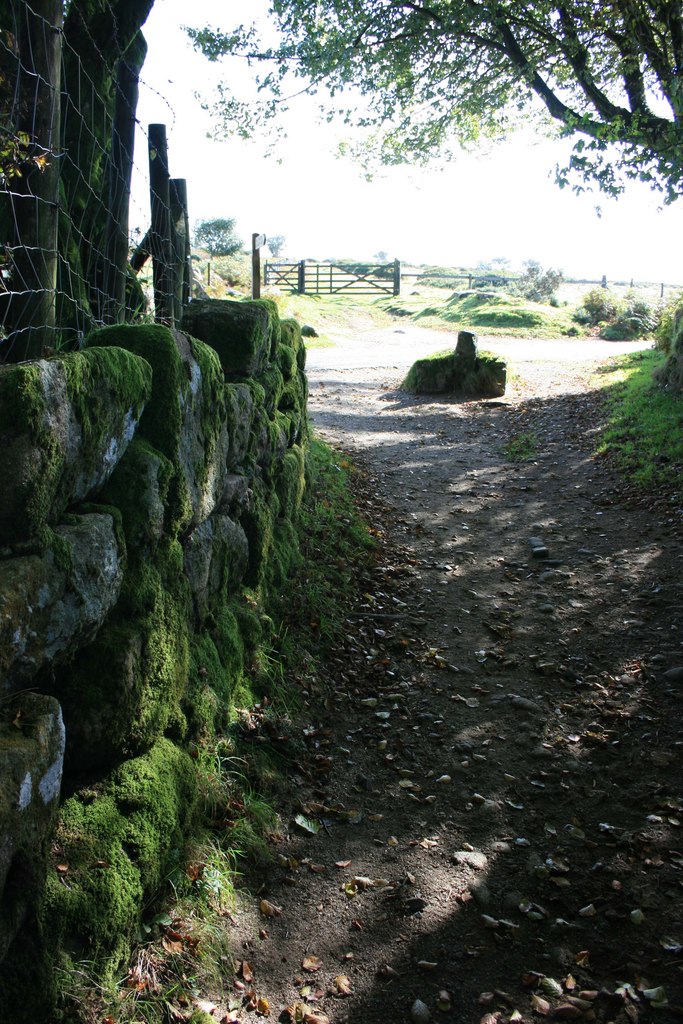

A few miles east, beside the lane that runs towards Natsworthy about a mile north-west of Hound Tor, is a small roadside mound with a headstone and a footstone. This is Jay's Grave. The story, in the shape it has settled into, tells of Kitty Jay, a young workhouse apprentice at a moorland farm in the late eighteenth century who was betrayed and shamed and took her own life — and who, as the custom then cruelly was, could not be buried in a churchyard, so was laid out at the parish bounds. Around 1860, workers employed by James Bryant of Hedge Barton opened the mound and found bones that a doctor declared were those of a young woman. They were reburied on the spot, and the stones set up.
Here is the part nobody has explained: there are nearly always fresh flowers on the grave. Wild flowers in summer, garden blooms in winter, appearing year-round with no one ever seen placing them. The writer Beatrice Chase was known to leave them before her death in 1955; whoever has carried it on has kept the secret for seventy years. The grave has long worked on imaginations — Conan Doyle stayed at nearby Heatree, and Seth Lakeman's 2004 album Kitty Jay took its title from the story. It is a real grave, whoever lies in it: flowers are the tradition, litter is not.
The coach of bones: Tavistock to Okehampton
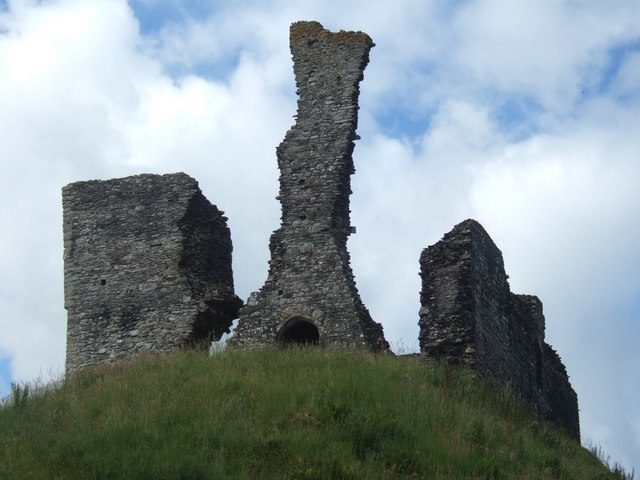

The grandest of Devon's ghost legends belongs to Lady Mary Howard of Fitzford House, Tavistock. The story has her condemned to ride every night in a coach made from the bones of her four husbands — all of whom, the legend insists, she murdered — driven by a headless coachman and preceded by a black dog with burning eyes. The coach runs the sixteen-odd miles to Okehampton Castle, where the dog plucks a single blade of grass from the castle mound to carry home; she is released only when the mound is bare, which is to say never.
The real Mary Fitz deserves better. Orphaned heiress to a violent father at nine, married four times, she outlived husbands who died of fever and illness, not poison — her true offence seems to have been fighting to keep her own fortune, which seventeenth-century Devon found unforgivable in a woman. The legend's two endpoints are both still there: the Fitzford gatehouse on the edge of Tavistock, and Okehampton Castle itself, the largest castle in Devon, begun by the Norman sheriff Baldwin within twenty years of the Conquest and left to decay after Henry VIII executed its Courtenay owner in 1538. English Heritage manages the ruin above the West Okement; it keeps seasonal hours, so check before travelling — the grass on the motte, we can report, is doing fine.
Under the pavements: Exeter's passages
If the weather turns, take the shivers indoors. Beneath Exeter's shopping streets runs a network of vaulted medieval passages, built to carry fresh spring water through lead pipes into the walled city and roomy enough — just — to walk through. They are the only passages of their kind in Britain open to the public, and guided tours have been running since the 1930s. Today's visit pairs a short film with twenty-five minutes underground; the passages are narrow, low and dark in places, which is precisely the appeal in Halloween week and precisely why anyone prone to claustrophobia should sit it out. Under-fives aren't admitted, and with half-term crowds about it's worth booking ahead. Centuries of sieges and plagues above have left the tunnels with ghost stories of their own, which the guides tell with relish.
Walking gently among ghosts
These stories survive because people keep telling them, and they are best treated as the tellers always treated them: with a shiver, a pinch of salt and a certain respect. Churchyards like Holy Trinity are working burial grounds, and the moor's roads at night deserve careful driving for reasons that have nothing to do with hairy hands. If you'd rather the dark gave you wonder than dread, the same late-October nights that suit ghost stories are superb for stargazing — our guide to Devon's dark skies knows the best spots. Either way, keep a light handy on Saturday night. Just in case.