
There is a certain kind of November evening in Devon — the light gone by half past four, rain travelling sideways up the Exe — that calls for a drink with a story behind it. We are lucky on that front. A decade or so ago you could count the county's distilleries on one hand with fingers to spare; now there is gin being made beside a canal in Exeter, single malt maturing in a granite town hall on the edge of Dartmoor, and rum in the east of the city that claims to take more carbon out of the sky than it puts in. Winter suits them all. A distillery is a warm place built around hot copper and good smells, most of them run tours or tastings through the dark months, and a bottle with a Devon postcode on the label solves at least one present you have been putting off. Here are six makers we rate, from the quayside to the moor.
Quayside, Exeter
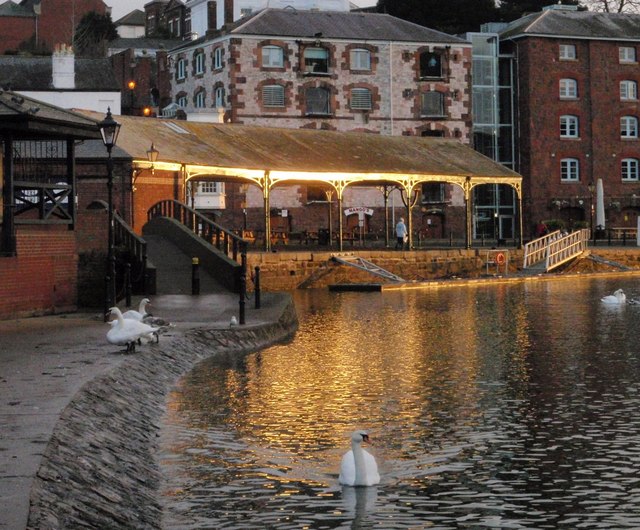
Exeter's quay has been working for a very long time. There has been trade on this stretch of the Exe since Roman times, the ship canal that serves it was dug in the 1560s, and the brick Custom House of 1680 — built to tax the woollen cloth pouring out of the city — still presides over the cobbles. The newest arrival on the waterfront is Quayside, on Haven Road by the canal basin, which manages to be three things at once: a daytime spot for brunch and coffee, a floating restaurant and bar out on the water, and a working craft distillery. The distilling is the clever part. Rather than boiling its botanicals, Quayside distils under vacuum at 20°C, a low-temperature method that keeps the delicate aromas of fresh fruit and wild herbs — many of them foraged by the head distiller in and around Exeter — that a hot still would cook away. The pontoon, which Visit Devon reckons is the city's first floating bar, serves brunch, lunch and cocktails over the canal from Wednesday to Sunday, and there is a gin school if you fancy choosing your own botanicals and running a small copper still yourself. Quayside also happens to be the venue behind one of our current drops, if you would like an excuse to get acquainted. Afterwards, the towpath runs flat and traffic-free towards the estuary — in winter it is one of the best birdwatching strolls in the county, as we found in our guide to Devon's estuary birds.
Plymouth Gin, Plymouth
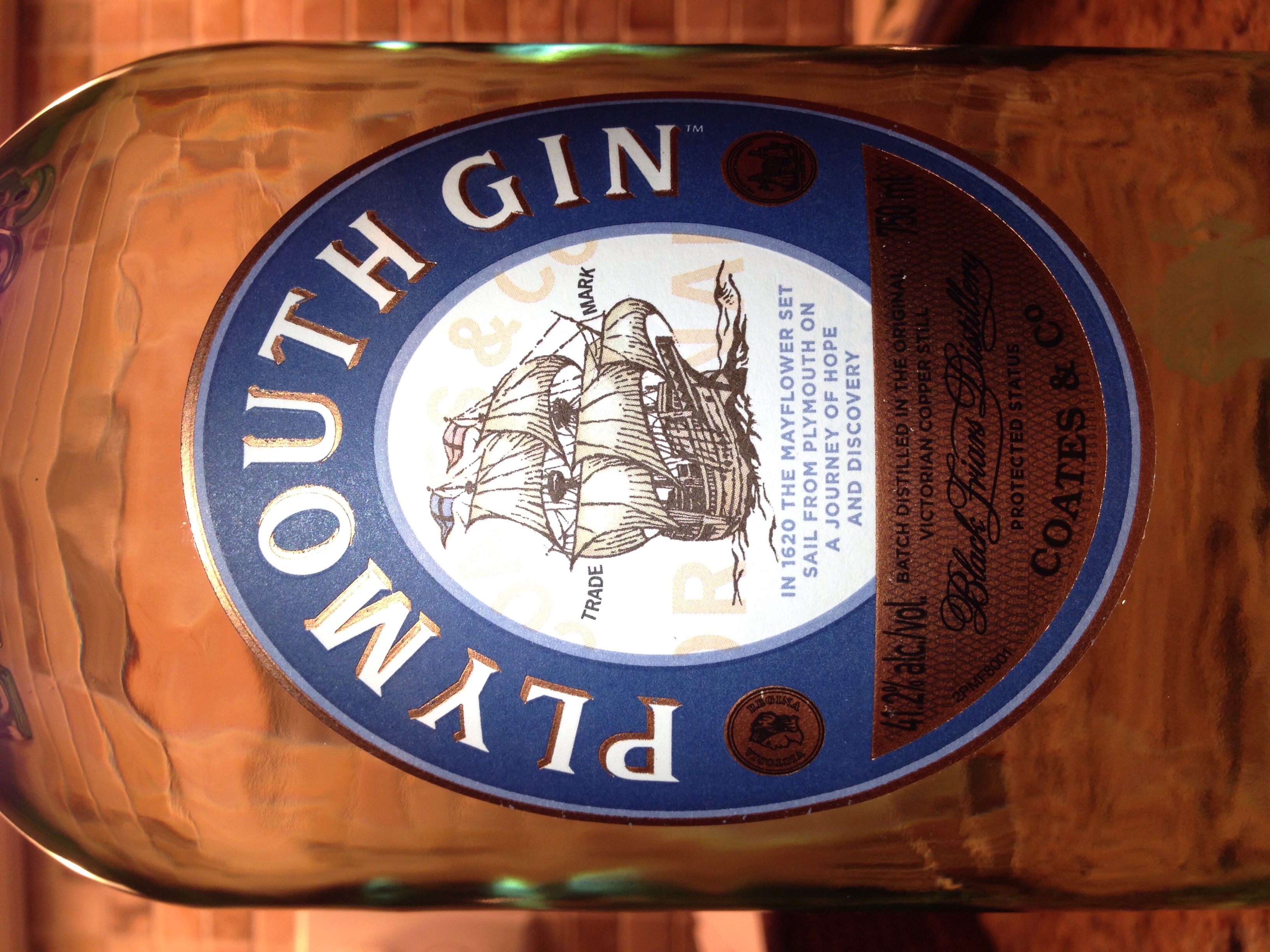

Every craft in Devon has an elder, and for distilling it is the Black Friars Distillery on Southside Street, where Plymouth Gin has been made since 1793 — England's oldest working gin distillery, in a building far older still. Parts of it date from the early 1400s; the Refectory, a medieval hall with a magnificent hull-shaped timber roof, is dated to 1431. Local tradition holds that the building began as a Dominican friary — hence Black Friars — though the historians will tell you the evidence is thin, and its documented past as a merchant's house and, by 1605, a gaol is colourful enough. The Pilgrim Fathers are said to have spent their last night here in 1620 before boarding the Mayflower a few yards away, which is why a ship still sails across the label. The Grade II*-listed building runs guided tours through the stillhouse, finishing with a tutored tasting and a cocktail in the Refectory lounge; places are limited, so book ahead, especially on a wet Barbican afternoon when everyone else has the same idea.
Salcombe Distilling Co., Salcombe
Down in the South Hams, Salcombe Distilling Co. works from The Boathouse on Island Street, the boatyard-and-workshop quarter where the town still smells faithfully of varnish and rope. Its founders, Angus and Howard, met in the 1990s teaching sailing at the Island Cruising Club, and the sea runs through everything they make. The flagship gin, Start Point, is a citrus-led London Dry named after the lighthouse that guided the Salcombe Fruiters home — the town's nineteenth-century fleet of fast fruit schooners, said to have carried the lion's share of Britain's citrus from the Mediterranean and the Azores. There is a neat symmetry in a Salcombe distillery now importing its own oranges and lemons for the still. The gin school here opened in 2017 — the first of its kind in the South West, by the distillery's reckoning — and lets you blend your own botanicals and take home a bottle of your own invention, finished with a glass of it at the bar by the water's edge.
Dartmoor Whisky Distillery, Bovey Tracey
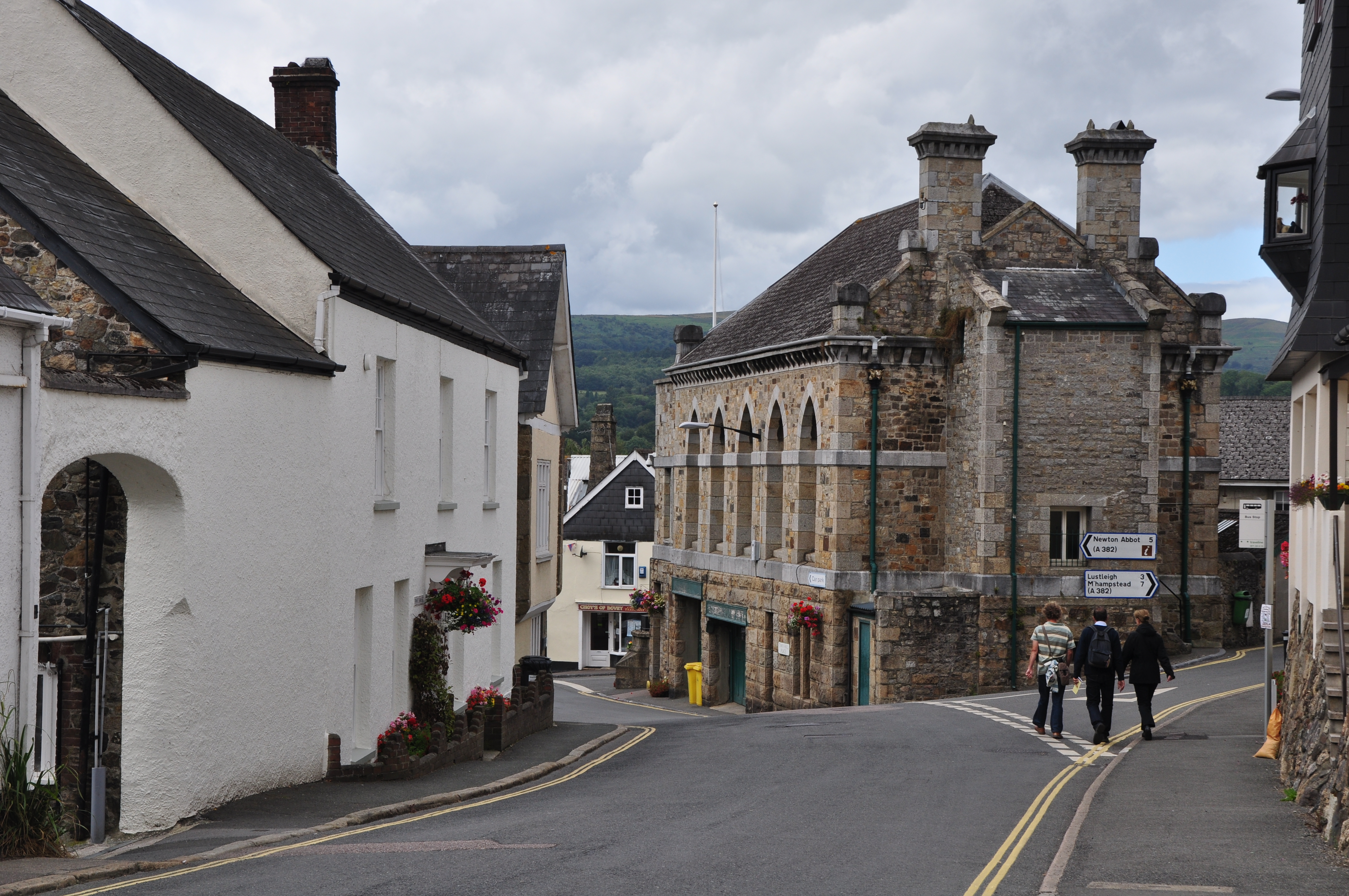

Bovey Tracey's Old Town Hall of 1866 is a granite oddity — an Italianate hall on an island site in the middle of town, with rainwater spouts cast as fiery dragons — that has been a fire station, a cinema and a council chamber in its time. When the town council moved out, two friends whose plan had been hatched on a whisky course on Islay moved in, and it is now home to the county's first single-malt distillery. The still is a story in itself: a 1,400-litre alembic built in 1966 for a third-generation Cognac distilling family, retired in 1994 and brought back to life here, its bulbous head and narrow neck giving a slow, gentle distillation. The make is Devon through and through — locally grown barley malted at Warminster, brewed into wash at Dartmoor Brewery, and moorland spring water from a borehole at Holne — with guidance along the way from Frank McHardy, a Springbank veteran with half a century of whisky behind him. The spirit matures in ex-bourbon, Oloroso sherry and Bordeaux casks, and on Saturdays the old hall hosts a tutored tasting beside the still. Pre-booking is essential, and the gift shop is a dangerous place to linger.
Two Drifters, Exeter
On the eastern edge of Exeter, near the airport, Russ and Gemma Wakeham have been making rum since 2019 under a name borrowed from a line in Moon River, the song Gemma walked down the aisle to on their wedding day. Russ is an organic chemist who spent years working in carbon capture, and Two Drifters is that career turned into a drink: the couple count the emissions of every bottle from sugar cane to doorstep, run electric deliveries, and pay the carbon-removal firms Climeworks and Carbfix to capture CO2 from the air in Iceland and mineralise it into stone underground. The result, they say, is that each bottle permanently removes more carbon than it ever created — by their reckoning, the world's first carbon-negative rum distillery, and the business is a certified B Corp. The rum holds its own without the virtue: a triple-distilled Pure White and a Signature aged in ex-Madeira French oak, both of which have been turning up on good menus across the county, including at Rockfish. There is no visitor centre yet, but the bottles are easy to find in Devon's farm shops and delis.
Wicked Wolf, Brendon
Right up on the county's northern rim, where the East Lyn runs its wooded valley between Lynton and the open moor, Pat Patel and Julie Heap have been making Wicked Wolf Exmoor Gin in the hamlet of Brendon since 2015. The method is painstaking: eleven botanicals — hibiscus and kaffir lime leaves among them — are distilled individually in a copper alembic still and only then blended, in batches of just a hundred litres, every bottle filled and labelled by hand on the banks of the river. The result is a gin with layers of citrus and pepper over the juniper, and it has travelled further than most things made in a village this size, though the proper way to drink it is still within sight of Exmoor — you will find it in shops and bars across the moor and down into the rest of Devon.
A winter spirit
Devon's distillers are at their best in exactly the weather that keeps everyone else indoors. Tours and tastings carry on through the dark months, a hip flask improves any cold clifftop walk, and a bottle made twenty miles from the recipient's front door beats almost anything wrapped in December. And if your tastes run gentler than juniper and oak, the county's orchards have you covered too — our guide to Devon cider country ends, fittingly, with a wassail. However you take your winter warmer, drink it slowly; somebody in Devon made it that way.