Exeter city, Devon: the complete guide for 2026
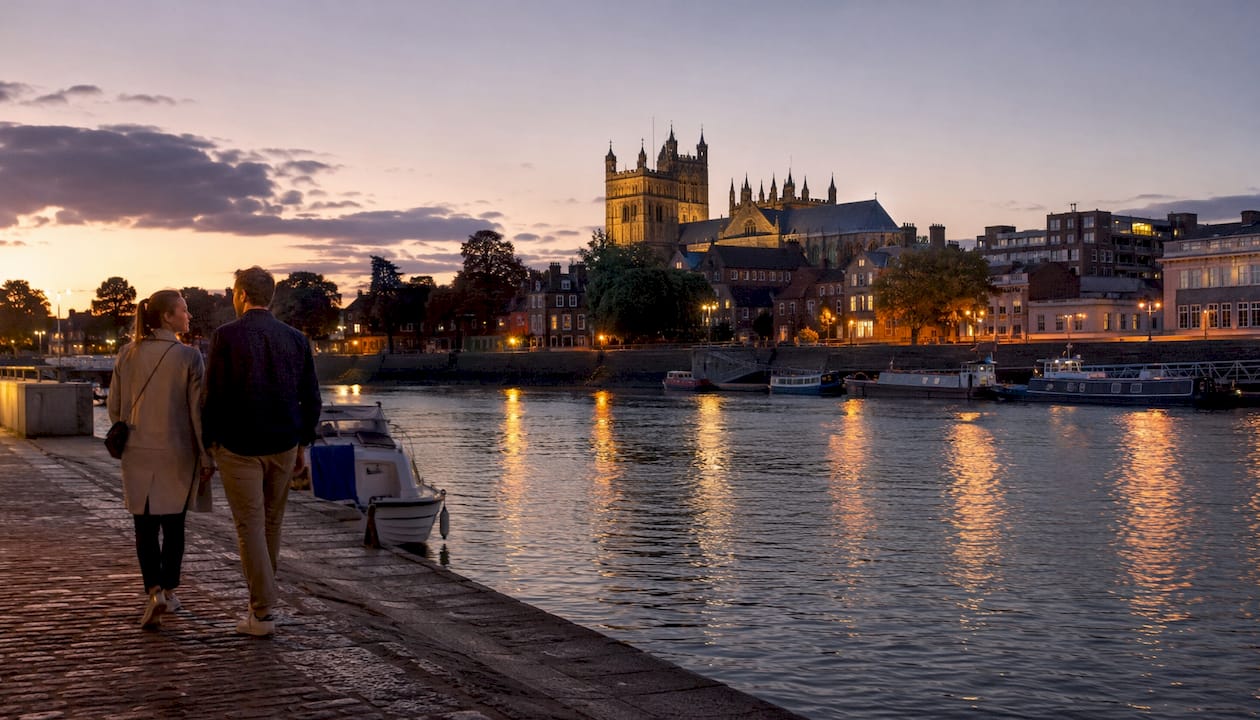
Exeter is a cathedral city and the county town of Devon, sitting on the eastern bank of the River Exe in South West England. It lies approximately 36 miles northeast of Plymouth and 65 miles southwest of Bristol, placing it squarely at the heart of the South West’s road and rail network. What makes Exeter genuinely distinctive is the combination: Roman walls still standing in the city centre, a medieval cathedral that dominates the skyline, a Russell Group university bringing tens of thousands of students into the mix, and a quayside that feels more like a village than a city. For visitors and prospective residents alike, it punches well above its size.
Key facts at a glance:
- Population: approximately 138,000
- Area: about 18 square miles
- County: Devon, South West England
- City motto: Semper fidelis (Always faithful)
- Major institutions: University of Exeter, Royal Devon University Healthcare NHS Foundation Trust, Exeter City Council
- Transport links: Direct trains to London Paddington (approximately 2 hours), Exeter Airport, M5 motorway
- Notable landmarks: Exeter Cathedral, Roman city walls, the Quayside, Guildhall, Underground Passages
- Postcode district: EX1–6
- Area code: 01392
Table of Contents
- How did Exeter get here? A journey through 2,000 years
- How Exeter is governed
- Where is Exeter, and what is the weather like?
- Who lives in Exeter?
- What are the best things to see and do in Exeter?
- What is it like to live in Exeter?
- What drives Exeter’s economy?
- Getting to and around Exeter
- Healthcare in Exeter
- Sport and recreation in Exeter
- Notable people from Exeter
- Key takeaways
How did Exeter get here? A journey through 2,000 years
Exeter’s story begins with the Romans, and you can still see the evidence underfoot and in the walls around you. The city was founded as Isca Dumnoniorum around AD 55, serving as the Roman legionary fortress and later the civilian capital of the Dumnonii tribe. The Roman city walls are among the best-preserved in Britain, with sections standing to near their original height in places.
Here is how the city’s story unfolds across the centuries:
-
Roman founding (c. AD 55–410). The legionary fortress gave way to a thriving civilian town. The forum, basilica, and bathhouse were all built within the walls. When the Romans withdrew, the infrastructure they left behind shaped everything that followed.
-
Anglo-Saxon settlement (5th–10th centuries). The Saxons renamed the settlement Exanceaster, and King Athelstan fortified it in the 10th century. Exeter became one of the four boroughs of Wessex, a significant administrative and trading centre.
-
Norman conquest and cathedral foundations (1068 onward). William the Conqueror besieged the city in 1068 after it refused to submit. The Normans built Rougemont Castle, the ruins of which still stand in Northernhay Gardens. Work on Exeter Cathedral began in 1112 under Bishop William Warelwast, though the building we see today is largely the result of a major Gothic rebuild between 1270 and 1369.
-
Medieval ecclesiastical life. The cathedral dominated civic and spiritual life for centuries. The Bishop of Exeter held enormous political influence, and the city grew around the cathedral close, with markets, guilds, and religious houses shaping its streets.
-
St Nicholas Priory (founded 1087). One of the oldest surviving buildings in Exeter, the priory was established by the Benedictines and later became a private merchant’s house after the Dissolution of the Monasteries. It remains open to visitors today.
-
The Guildhall (14th century). The Guildhall on the High Street is reputedly the oldest municipal building still in use in England. Its portico, added in 1593, is a Tudor flourish on a medieval core.
-
Tudor and Elizabethan prosperity. Exeter grew wealthy on the wool and cloth trade, exporting serge fabric across Europe. The city’s merchants built fine townhouses, several of which survive in the Cathedral Close and along Fore Street.
-
The English Civil War (1642–1646). Exeter changed hands between Royalist and Parliamentarian forces. It was a Royalist stronghold for much of the war, and Princess Henrietta, daughter of Charles I, was born here in 1644.
-
Georgian expansion. The 18th century brought elegant terraces to Southernhay and Pennsylvania, areas that remain among the most sought-after addresses in the city today. The canal, originally cut in the 1560s as one of England’s first pound-lock canals, was extended and deepened during this period.
-
Victorian industry and the railway. Brunel’s Great Western Railway reached Exeter in 1844, transforming the city’s connectivity and accelerating its growth. Victorian terraces spread across St Thomas and Heavitree.
-
Second World War bombing (1942). The Baedeker Blitz of May 1942 destroyed significant parts of the city centre, including much of the High Street. Post-war reconstruction was not always sympathetic, though the cathedral and many historic buildings survived.
-
Contemporary heritage preservation. Today, Exeter City Council actively manages heritage assets across the city, from the Underground Passages to the city wall trail. Free guided Red Coat walking tours, meeting at Cathedral Green, cover history, ghosts, and curiosities daily.
How Exeter is governed
Exeter operates under a two-tier local government structure, which can feel complicated if you are new to the city.
Exeter City Council handles the day-to-day services most residents interact with: housing, planning applications, council tax collection, waste collection, leisure facilities, and local licensing. The council is currently controlled by Labour, with Councillor Philip Bialyk serving as Leader. Members of Parliament for the area are Stephen Race (Labour) and David Reed (Conservative).
Devon County Council sits above the city council and is responsible for strategic services: education, highways, social care, libraries, and fire services. Its headquarters are in Exeter itself, on County Hall, which gives the city an outsized administrative role in the wider county.
Key services residents should know about:
- Council tax: Set annually by both Exeter City Council and Devon County Council, with a precept added for police and fire services. Rates vary by property band (A–H).
- Planning and development: Applications are handled by Exeter City Council’s planning department; major strategic decisions may involve Devon County Council.
- Housing: The council manages social housing stock and administers housing benefit claims.
- Benefits and support: Council tax reduction schemes and discretionary housing payments are available through the city council.
- Community engagement: Exeter City Council runs regular public consultations and neighbourhood forums.
Exeter has been pursuing unitary authority status, which would merge the two tiers into a single council. An earlier bid was blocked by the 2010 coalition government following a judicial review. A new bid is underway under current local government reorganisation discussions, and the outcome will significantly affect how the city is administered in the coming years.
Where is Exeter, and what is the weather like?
Exeter sits on a ridge of land on the eastern bank of the River Exe, at the point where the river opens onto a wide flood plain and estuary. The city is 158 miles west-southwest of London, 18 miles north of Torquay, and within easy reach of both Dartmoor National Park to the west and the Jurassic Coast to the east. That dual access, upland moor and dramatic coastline within an hour’s drive, is one of the city’s most appealing geographical features for outdoor enthusiasts.
The landscape around the city is characterised by rolling hills, the broad Exe valley, and the wooded ridges of East Devon. The highest point within the city boundary reaches 715 feet (218 metres), while the lowest dips to just below sea level at the estuary edge.
Exeter’s climate is temperate maritime: mild winters, warm summers, and a fair amount of rain spread throughout the year. It is notably warmer and drier than much of the UK, benefiting from its southerly position and shelter from the worst Atlantic weather.
| Season | Average temperature | Average rainfall |
|---|---|---|
| Spring (March–May) | 8°C–14°C | 45 mm per month |
| Summer (June–August) | 16°C | 40 mm per month |
| Autumn (September–November) | 10°C–16°C | 60 mm per month |
| Winter (December–February) | 4°C–9°C | — |

Snow is rare in the city itself, though Dartmoor can be blanketed in winter. The relatively mild climate makes Exeter genuinely usable for cycling, walking, and outdoor dining for a good eight months of the year.
Who lives in Exeter?
Exeter had a population of 138,399 in 2024, making it the 175th largest district in England by population. The city covers 18 square miles, giving a population density of around 7,600 people per square mile.
The age profile skews younger than the national average, largely because of the University of Exeter’s presence. The student population runs to tens of thousands, concentrated in areas like St David’s, Newtown, and Pennsylvania. That influx shapes everything from the café culture to the rental market.
Exeter’s population includes a mix of age groups, with a significant student population contributing to a younger demographic profile, alongside families and older residents.
Exeter is more ethnically diverse than much of rural Devon, with steady population growth and a range of communities represented across the city. The student population contributes significantly to that cultural mix, bringing international students from across Europe and beyond. Residents identify as Exonians, a demonym that carries a quiet civic pride.
What are the best things to see and do in Exeter?
Exeter rewards both the first-time visitor and the long-term resident who keeps finding new corners. The city is compact enough to cover on foot, yet layered enough that you can spend a week here and still miss things.
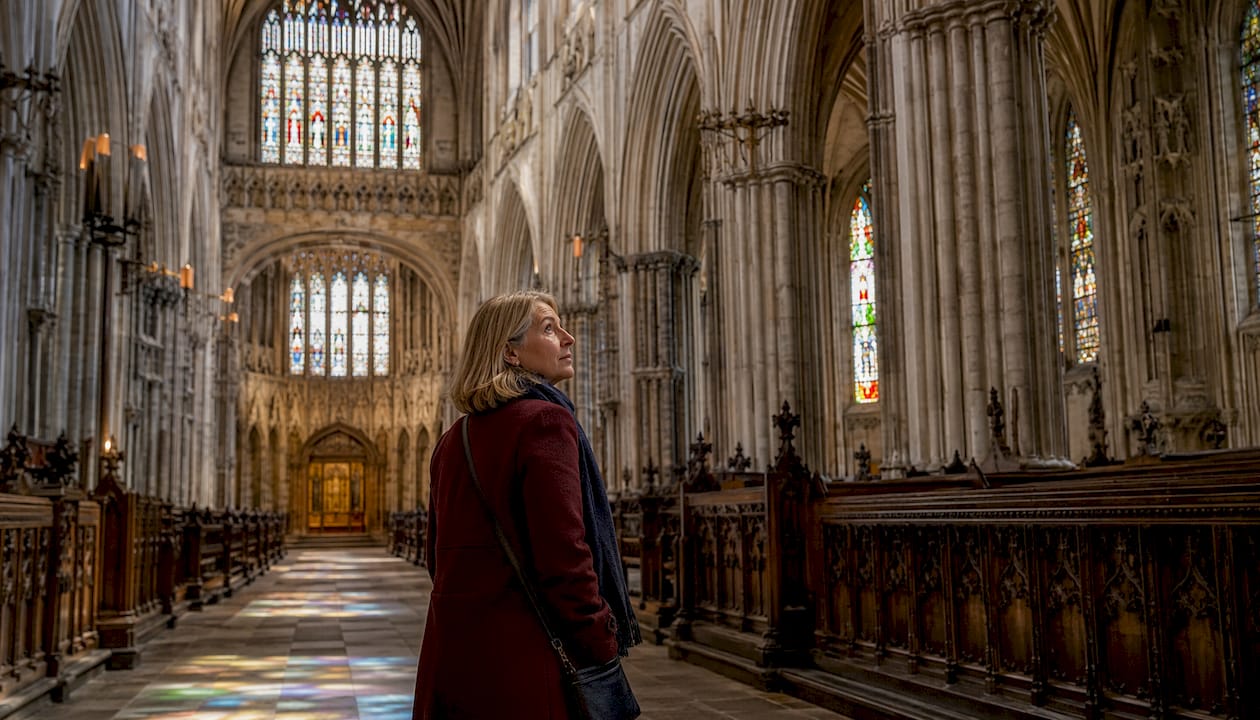
Exeter Cathedral is the obvious starting point, and it earns the attention. The Gothic nave is the longest uninterrupted medieval vault in the world, and the astronomical clock in the north transept dates to the 14th century. Entry is by donation, and the cathedral hosts regular concerts, exhibitions, and seasonal events throughout the year.
The Roman city walls encircle much of the old city and are walkable via the City Wall Trail. Some sections stand to nearly their original Roman height, supplemented by medieval rebuilding. The trail takes roughly 90 minutes at a relaxed pace.
The Underground Passages are genuinely unlike anything else in England. These are medieval aqueduct tunnels beneath the city streets, built to carry fresh water to the cathedral and city. Guided tours, which require safety helmets due to the narrow passages, run regularly and are particularly popular with families. Booking in advance is strongly advised.
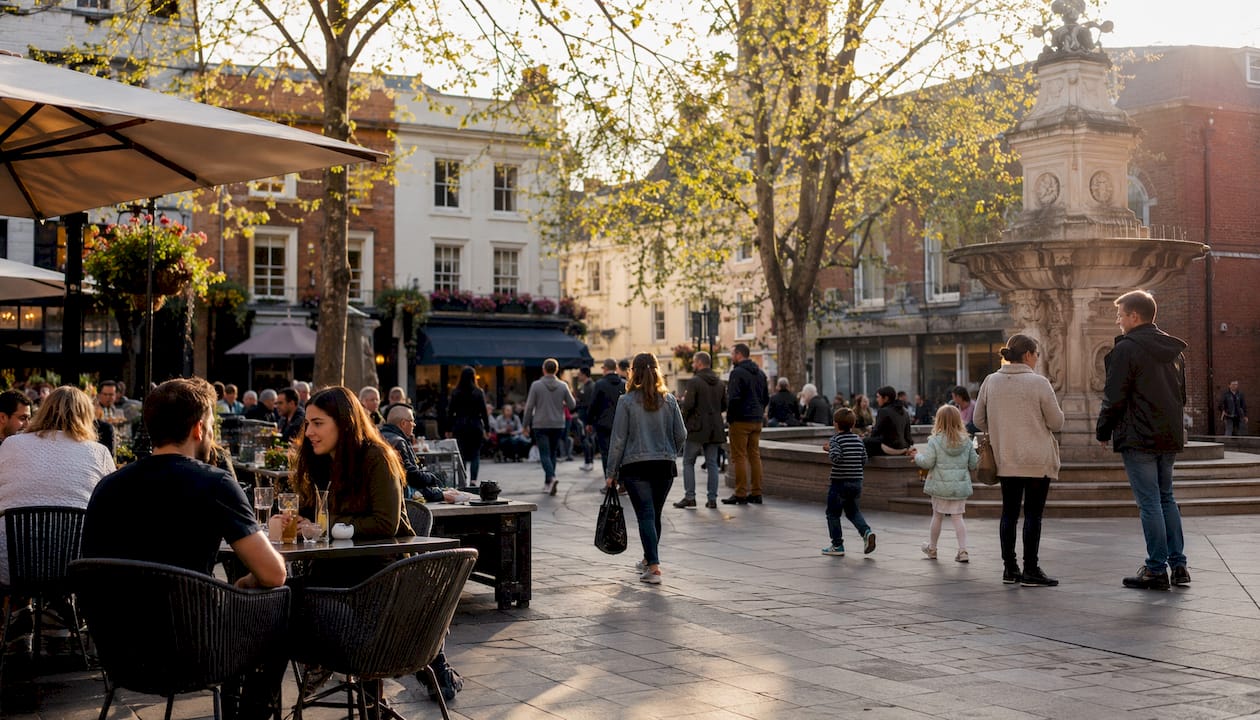
Exeter Quayside sits about 15 minutes on foot from the city centre and feels like a different world. Independent shops, pubs, and restaurants line the historic waterfront, and the quayside connects directly to national cycle routes and watersports hire points for kayaking and paddleboarding on the Exe. On a warm evening, it is one of the best places in Devon to be.
Princesshay Shopping Centre is the city’s main retail hub, a modern open-air development adjacent to the cathedral that blends high-street brands with independent traders. It is well-designed for a shopping centre, with the cathedral visible from several points within it.
Magdalen Road is the antidote to Princesshay. Locally celebrated as Exeter’s most characterful shopping street, it is lined with independent delis, bakeries, wine merchants, and cafés. It is the kind of street that makes you want to move to a city.
Exeter Phoenix is the city’s main independent arts centre, hosting film, live music, visual art, and performance. It sits just off Gandy Street, which is itself worth a wander for its independent shops and restaurants.
Northernhay Gardens are the oldest public gardens in England, laid out in 1612. They wrap around the ruins of Rougemont Castle and offer a quiet green retreat in the middle of the city.
Red Coat guided tours are free, daily, and genuinely good. Guides in red coats meet at Cathedral Green and cover everything from Roman history to ghost stories. They are run by the city and require no booking.
Pro Tip: Book the Underground Passages tour well in advance, especially in school holidays. They sell out quickly, and the experience is worth planning around.
For a broader sense of what Devon has to offer beyond the city, the Devon galleries and arts guide is a useful companion.
What is it like to live in Exeter?
Exeter consistently ranks among the happiest and healthiest cities in the UK. That is not a vague claim: the combination of walkability, green space, cultural provision, and access to the countryside makes it genuinely liveable in a way that larger cities often are not.
Healthcare is anchored by the Royal Devon University Healthcare NHS Foundation Trust, which operates the Royal Devon and Exeter Hospital (known locally as the RD&E) on Barrack Road. It is one of the largest acute hospitals in the South West, with a full range of specialist services.
Education is a genuine strength. The University of Exeter is ranked 10th in the UK and 137th globally according to the Times Higher Education Rankings, making it one of the most prestigious universities outside London. State schools across the city and surrounding area include several rated Outstanding by Ofsted, and there are strong independent school options including Exeter School and The Maynard School.
Housing covers a wide range of types and price points. Georgian and Victorian terraces dominate the older neighbourhoods of St David’s, Heavitree, and Pennsylvania. More modern apartments cluster around the city centre and the waterfront. Average house prices sit at around £342,755, above the Devon average but considerably more affordable than Bristol, Bath, or London. Rental demand is high, driven by the student population, which keeps rents competitive but can make finding a family home in popular areas competitive too.
Residents consistently value the easy access to Dartmoor and the coast, with both reachable within 30–45 minutes by car. That combination of urban convenience and outdoor access is difficult to find elsewhere in England at this price point.
What drives Exeter’s economy?
Exeter punches above its weight economically for a city of its size. The public sector is the largest employer, anchored by Devon County Council, Exeter City Council, the NHS, and the University of Exeter itself. Together, these institutions employ tens of thousands of people across the city and wider county.
The university has also seeded a growing knowledge economy. Exeter Science Park, located on the eastern edge of the city, hosts technology, environmental science, and data analytics companies, many of which have direct links to university research. The Met Office, one of the world’s leading weather forecasting organisations, has its headquarters in Exeter, bringing hundreds of highly skilled scientists and researchers to the city.
Financial and professional services are well represented, with several regional offices of national firms based in the city centre. Tourism contributes significantly to the local economy, with Exeter serving as a gateway for visitors heading to Dartmoor, the Jurassic Coast, and the wider Devon countryside. Retail remains important, though like most UK cities, Exeter has seen a shift toward hospitality and experience-led spending in recent years.
Getting to and around Exeter
Exeter’s transport connections are one of its strongest practical assets. Direct trains to London Paddington take approximately two hours, making it realistic for commuters and frequent travellers. Services also run to Bristol, Birmingham, and the far South West, including Penzance.
By road: The M5 motorway connects Exeter northward to Bristol and the Midlands. The A30 heads west into Cornwall, and the A38 runs south to Plymouth. The city is well-positioned for road access to the whole of the South West.
By air: Exeter Airport, located about five miles east of the city, operates flights to UK destinations and a range of European cities. It is a small airport by national standards, but convenient for regional travel.
Within the city: Exeter is compact and walkable. The city centre, Quayside, and most major attractions are within 20 minutes on foot from the central station. Stagecoach operates the main bus network, and there are dedicated cycle routes connecting the city centre to the Quayside and beyond via the national cycle network. Park and Ride services operate from several sites on the city’s edge, which helps manage traffic in the historic centre.
By rail within Devon: Exeter is the hub for several scenic branch lines, including the Avocet Line to Exmouth and the Tarka Line to Barnstaple, both of which offer access to coastal and rural Devon without needing a car.
Healthcare in Exeter
The Royal Devon and Exeter Hospital on Barrack Road is the city’s main acute hospital, part of the Royal Devon University Healthcare NHS Foundation Trust. It provides a comprehensive range of services including emergency care, maternity, oncology, cardiology, and specialist surgery. The trust also operates community hospitals and health centres across the wider Devon area.
Primary care is delivered through a network of GP surgeries across the city, though like much of England, demand for appointments has increased significantly in recent years. Several walk-in and urgent treatment centres operate in and around Exeter, providing an alternative to A&E for non-emergency conditions.
Mental health services are provided through Devon Partnership NHS Trust, which runs community mental health teams, crisis services, and inpatient facilities. Dental provision follows the national pattern: NHS dentistry is available but in high demand, with many practices operating waiting lists for new NHS patients.
Private healthcare options include the Nuffield Health Exeter Hospital and several private GP and specialist clinics in the city centre, offering faster access for those who choose to use them.
Sport and recreation in Exeter
Exeter City FC plays in the English Football League and is one of the few fan-owned clubs in professional English football, with the Exeter City Supporters’ Trust holding a majority stake. The club plays at St James Park, one of the oldest football grounds in the country, a short walk from the city centre.
Exeter Chiefs RFC is the city’s rugby union club and one of the most successful in England. The Chiefs play in the Gallagher Premiership and have won multiple league titles, including the Premiership title in 2020. Their home ground, Sandy Park, is on the eastern edge of the city and regularly sells out for big matches.
Beyond spectator sport, Exeter offers strong recreational provision. The Quayside is the hub for watersports, with kayak and paddleboard hire available on the Exe. The national cycle network passes through the city, and routes along the Exe Estuary Trail connect Exeter to Exmouth along a largely traffic-free path. Northernhay Gardens, Heavitree Pleasure Ground, and Ludwell Valley Park all offer green space for walking, running, and informal recreation within the city boundary.
Dartmoor is within 30 minutes by car, offering walking, trail running, wild swimming, and climbing. The coast at Dawlish Warren and Exmouth is similarly accessible for swimming, surfing, and beach walking. For a broader look at Devon’s outdoor activities, the options extend well beyond the city.
Notable people from Exeter
Exeter has produced, and attracted, a surprisingly varied cast of notable figures across history and contemporary life.
Samuel Taylor Coleridge was born in Ottery St Mary, just outside Exeter, in 1772. Though not city-born, his connection to the area is strong enough that he is claimed by Exeter with some justification.
Richard Hooker, the influential 16th-century theologian and author of Of the Laws of Ecclesiastical Polity, was born in Heavitree, now part of Exeter, around 1554. His work shaped Anglican theology for centuries.
Princess Henrietta of England was born in Exeter in 1644 during the Civil War, when her mother Queen Henrietta Maria sought refuge in the city. She later became Duchess of Orléans and a significant figure in European court politics.
Jan Stewer (Albert John Coles) was a Devon dialect writer and humorist born in Exeter in 1876, whose work captured rural Devon life in the early 20th century.
Tim Smit, the entrepreneur behind the Eden Project in Cornwall, studied at the University of Exeter, as did a number of prominent figures in British public life.
J.K. Rowling studied at the University of Exeter in the 1980s, reading French and Classics. The university’s library and the city’s medieval architecture are said to have influenced her world-building.
The city’s academic community continues to produce notable alumni across science, politics, and the arts, reflecting the university’s growing international standing.
Key takeaways
Exeter is one of the most liveable and historically rich cities in England, offering a rare combination of Roman heritage, medieval architecture, a top-10 UK university, and direct access to both Dartmoor and the coast.
| Point | Details |
|---|---|
| Historic depth | Exeter’s Roman walls, medieval cathedral, and Guildhall represent over 2,000 years of continuous settlement. |
| University city | The University of Exeter ranks 10th in the UK and 137th globally (Times Higher Education Rankings). |
| Housing affordability | Average house prices sit at around £342,755, above the Devon average but well below Bristol or London. |
| Transport connectivity | Direct trains reach London Paddington in approximately 2 hours; the M5 and Exeter Airport add road and air links. |
| Outdoor access | Dartmoor National Park and the coast are both within 30–45 minutes, making Exeter a strong base for outdoor pursuits. |