Bigbury Island guide: tide access, things to do and where to stay
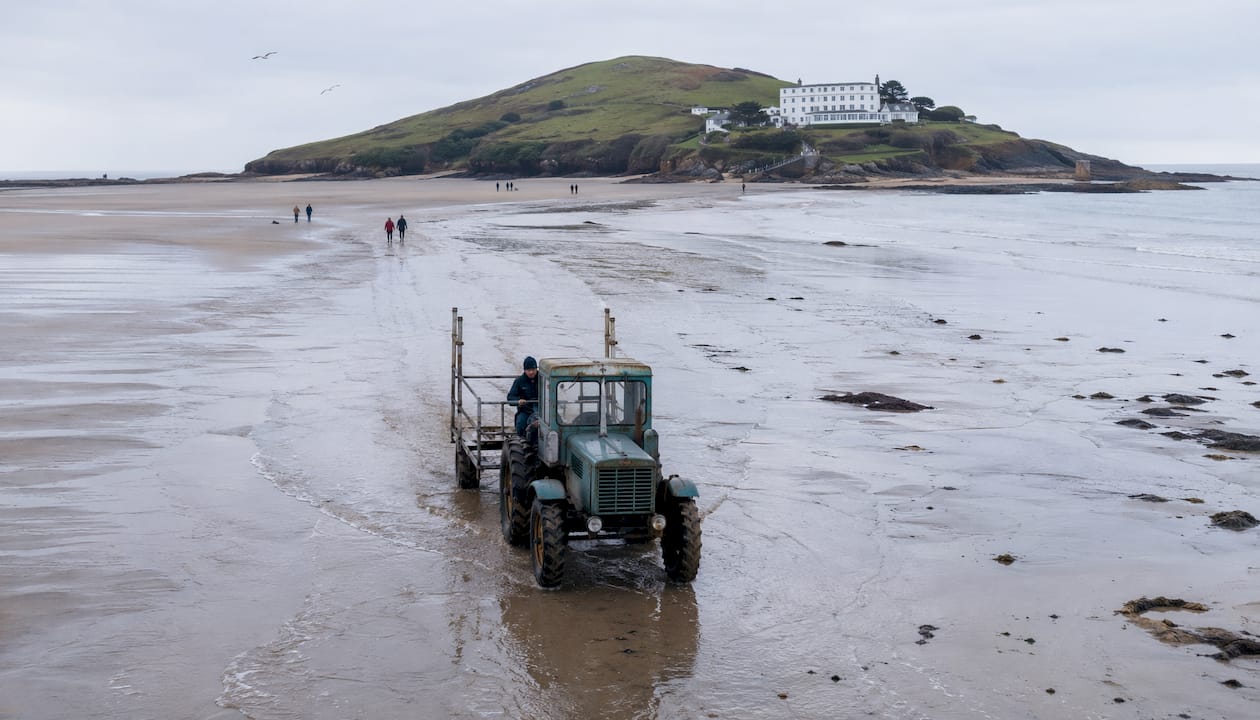
Burgh Island is a tidal island off Bigbury-on-Sea that you can walk to across a sandy causeway at low tide, taking a short walk on foot. When the tide covers the causeway, the island’s famous sea tractor carries passengers across for a small cash-only fare. The island is open to the public year-round, but the Burgh Island Hotel’s facilities are largely reserved for residents. Before you go, check the tide tables and bring cash.
- Causeway crossing: about 250 metres, taking roughly eight minutes to walk at low tide
- Sea tractor fare: £2 per person each way, cash only
- Public access: The Pilchard Inn and the island’s paths are open to all; hotel facilities are for guests
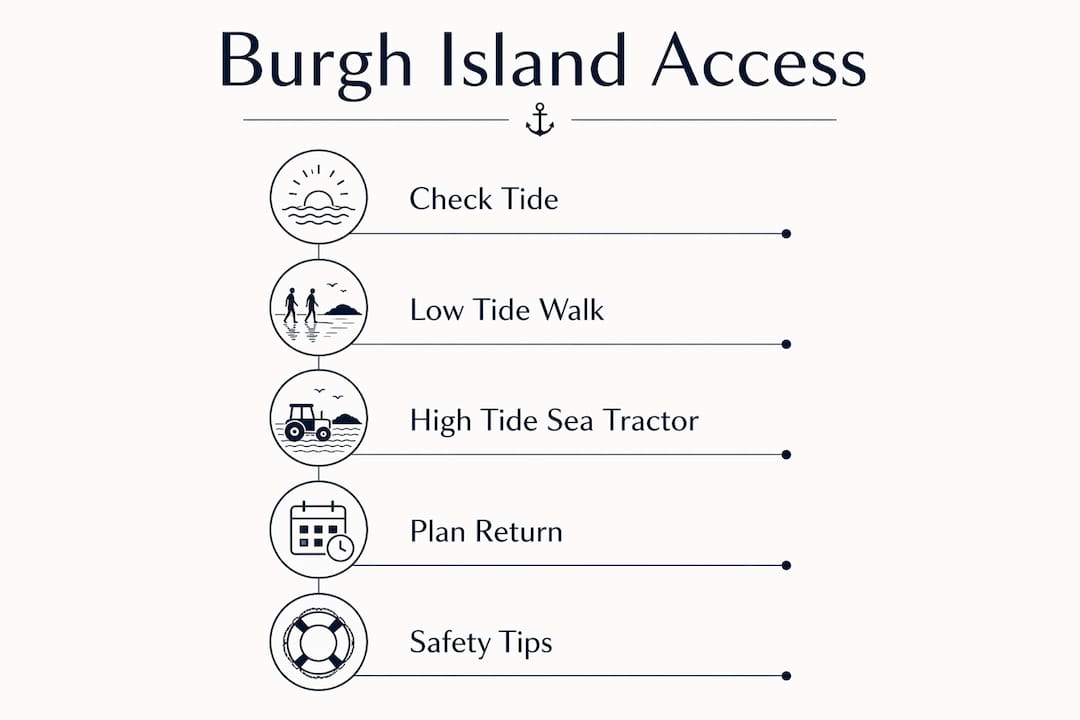
- Tide check: The causeway submerges roughly every six hours, so plan your return before the tide turns
Pro Tip: Carry cash before you leave the mainland. There are no ATMs on the island, and the sea tractor will not accept cards.
Table of Contents
- Quick facts about Burgh Island at a glance
- Where exactly is Burgh Island?
- The history of Burgh Island: smugglers, Christie and Art Deco
- How do you get to Burgh Island?
- What can you do on Burgh Island and at Bigbury Beach?
- Where to stay near Burgh Island
- Practical planning: parking, facilities and safety
- Who manages the island, and how is it protected?
- Key takeaways
- A local perspective on visiting Burgh Island
- Useful sources for planning your visit
Quick facts about Burgh Island at a glance
| Detail | Information |
|---|---|
| Island size | Approximately 26 acres |
| Distance from mainland | About 250 metres |
| Low-tide crossing time | Approximately eight minutes on foot |
| Sea tractor fare | £2 per person, each way (cash only) |
| Public access | Year-round; hotel facilities reserved for residents |
| Pilchard Inn | Open to all visitors |
| Mermaid Pool | Private; viewable from public paths only |
The island is open all year, though the Pilchard Inn and some services operate seasonally. Hotel dining and spa facilities require a booking or a room reservation.
Pro Tip: Check the official tide tables before you set off. The causeway floods on the six-hour tidal cycle, and the sea tractor does not run around the clock.
Where exactly is Burgh Island?
Burgh Island sits at the southern edge of Bigbury Bay in the South Hams district of Devon, a short distance from the beach at Bigbury-on-Sea. At low tide, a wide sandy causeway connects the two, and you can walk across in minutes. At high tide, the island becomes genuinely isolated, surrounded by the Atlantic on all sides.
The island covers approximately 26 acres and rises to a modest but dramatic headland, giving views across the bay towards Bantham and the Avon estuary. The South West Coast Path passes through Bigbury-on-Sea, making the island a natural detour for walkers already on the trail.
Key landscape features:
- The sandy causeway, which appears and disappears with the tidal cycle
- A sheltered cove on the island’s eastern side, popular for paddling
- The Mermaid Pool, a private rock-encased tidal pool linked to the hotel, visible from the coastal path but not open for public swimming
- Historic pillboxes and a small chapel, both accessible on foot
- Panoramic views from the island’s summit across Bigbury Bay
The tidal nature of the crossing is what makes Burgh Island feel genuinely special. You can watch the causeway disappear beneath the water within minutes of the tide turning, which concentrates the mind wonderfully when planning your return.
The history of Burgh Island: smugglers, Christie and Art Deco
The island’s recorded history stretches back to the medieval period. The Pilchard Inn dates from the 14th century, built to serve the fishermen who worked the bay and, by most accounts, the smugglers who found the island’s isolation rather convenient. It is one of the oldest continuously licensed pubs in Devon.
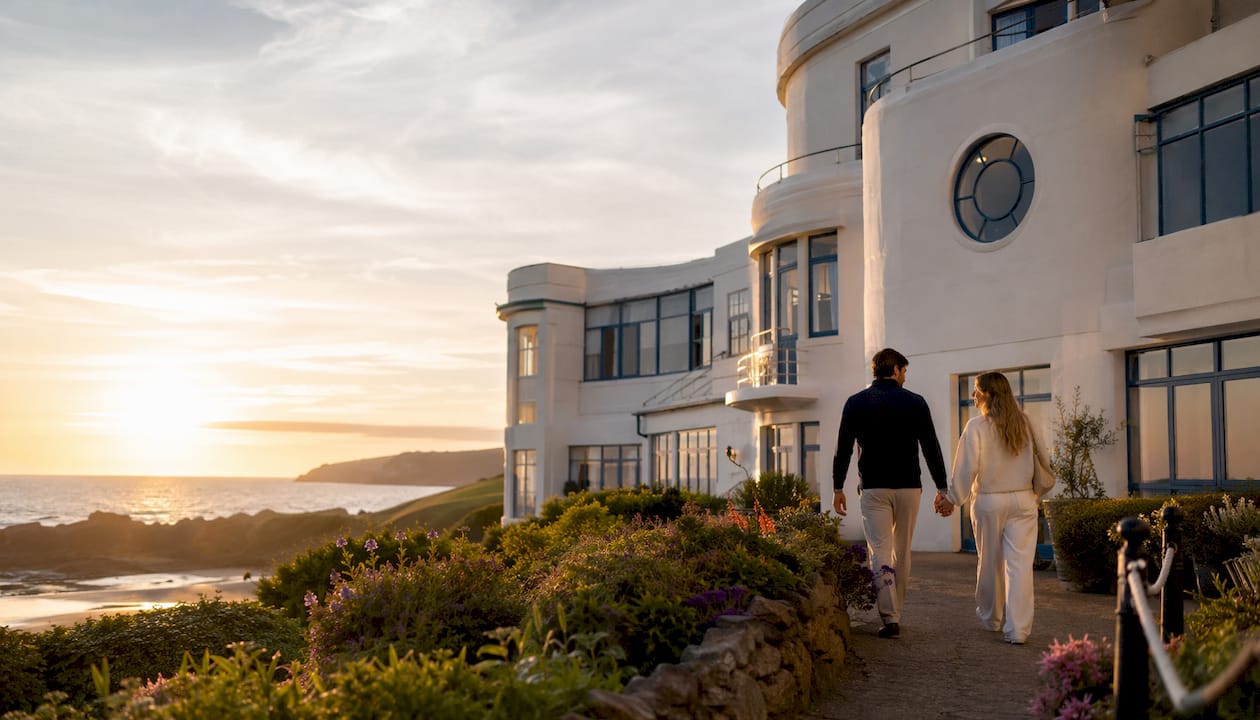
The 20th century brought a very different kind of visitor. The Burgh Island Hotel was developed in the early 1900s and rebuilt in the Art Deco style that defines it today, becoming a fashionable retreat for the wealthy and well-connected during the 1920s and 1930s. The hotel has since been restored and refinanced to preserve its distinctive architectural fabric.
The Christie connection draws a significant number of literary visitors each year. Both novels have been adapted for film and television, and the hotel’s period interiors appear in several productions. For fans, standing on the island and looking back at the Art Deco building across the bay is a genuinely evocative experience.
Key historical milestones:
- 14th century: Pilchard Inn established as a fishermen’s and smugglers’ haunt
- Early 1900s: Hotel development begins on the island
- 1920s–30s: Art Deco hotel becomes a fashionable destination; Christie visits
- Late 20th century: Hotel falls into disrepair, then undergoes restoration
- Recent decades: Refinancing and investment to preserve the Art Deco heritage
Pro Tip: History lovers should spend time inside the Pilchard Inn before crossing back. The interior has changed little in centuries, and the staff are usually happy to share stories about the island’s smuggling past.
How do you get to Burgh Island?
Getting to the island is straightforward, but the tide dictates your options. Here is how each route works.
On foot at low tide
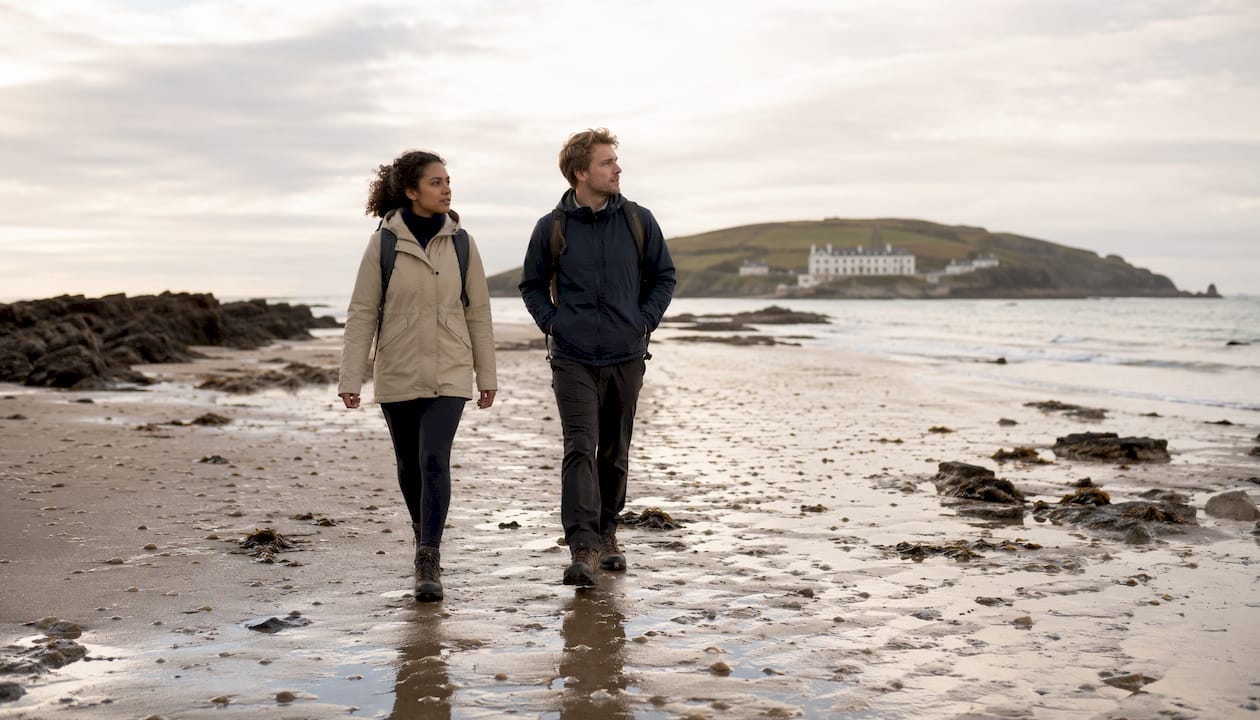
The 250-metre causeway is firm sand at low tide and takes around eight minutes to walk. Wear shoes you do not mind getting slightly wet at the edges, particularly if the tide is on the turn. The crossing is clearly visible from the beach at Bigbury-on-Sea.
By sea tractor at high tide
The sea tractor is one of the most unusual vehicles in Britain. The current model, the third to serve the crossing, was purpose-built in 1969 and carries passengers on a high platform above the submerged causeway. The fare is £2 per person each way, cash only. It does not run continuously, so check the schedule on the island or ask at the beach.
Getting to Bigbury-on-Sea by road and public transport
- By car: Bigbury-on-Sea is signposted from the A379 between Modbury and Kingsbridge. The drive from Plymouth takes around 40 minutes; from Exeter, allow roughly 90 minutes.
- By bus: The nearest town with regular bus connections is Kingsbridge, served from Plymouth and Totnes. A seasonal bus service runs from Kingsbridge to Bigbury-on-Sea; check Traveline South West for current timetables, as services vary by season.
- Parking: There is a pay-and-display car park at Bigbury-on-Sea, managed with ANPR cameras. Mobile signal can be unreliable, so have a contactless card ready for the payment machine.
Tide safety
- The causeway submerges roughly every six hours on the standard tidal cycle
- Plan your return crossing well within the low-tide window, not at its edge
- If the tide catches you, the sea tractor is your only regular option back; it does not run all night
- In an emergency, contact the island hotel reception or call the coastguard (999)
Accessibility
The sandy causeway is uneven and can be soft in places, making it difficult for wheelchairs and pushchairs. The sea tractor has steps and is not fully accessible for all mobility needs. Visitors with significant mobility requirements should contact the Burgh Island Hotel directly before travelling to confirm what assistance is available.
Pro Tip: Check the tide times the morning of your visit, not the night before. Tidal patterns shift daily, and a window that looked comfortable at 9 PM may have moved by the time you arrive.
What can you do on Burgh Island and at Bigbury Beach?
Day visitors have more to do than many expect, though the experience is deliberately unhurried. The island rewards those who slow down.
On the island
- Walk the short circular path around the island’s perimeter, taking in the pillboxes, the chapel and the clifftop views across Bigbury Bay
- Have lunch or a drink at the Pilchard Inn, one of Devon’s oldest pubs and open to all visitors; booking ahead is wise in summer
- Photograph the Art Deco hotel from the causeway or the beach, particularly in the late afternoon when the light hits the white facade
- Spot the Mermaid Pool from the coastal path, though swimming there is not permitted for day visitors
- Follow the Agatha Christie trail around the island, imagining the closed-world atmosphere she captured in her novels
At Bigbury Beach and nearby
Bigbury Beach itself is a fine stretch of sand with good surf, and the South West Coast Path connects it to longer walks towards Bantham and beyond. Activities available from the beach include surfing, paddleboarding, rockpooling and general beach play. The Venus Café on the mainland side serves food and drinks and is open to everyone without a booking.
For those combining coastal walks with a visit to the island, the stretch from Bigbury-on-Sea towards Challaborough and back makes a satisfying half-day circuit.
Pro Tip: Cross to the island by sea tractor at high tide, walk the perimeter while the tide drops, then return on foot across the causeway. You get both experiences in one visit, and the light on the hotel facade is best in the hour before the tide fully retreats.
Where to stay near Burgh Island
Burgh Island Hotel
The hotel is the only accommodation on the island itself. Staying there is a genuinely immersive experience: the Art Deco interiors, the sea views and the sense of being cut off from the mainland at high tide are unlike anything else in Devon. Guests travel on the sea tractor free of charge and have access to the hotel’s dining, bar and the Mermaid Pool. Rooms book up well in advance, particularly in summer and at weekends. The hotel’s website is the only place to book directly.
Mainland options
For visitors who want proximity without the island price tag, Bigbury-on-Sea and the surrounding villages offer B&Bs, guesthouses and self-catering cottages. Bantham, Thurlestone and Kingsbridge are all within easy driving distance and have a range of accommodation at different price points. When booking on the mainland, look for properties with off-road parking and check whether they are within the tidal access window for an early-morning crossing.
- B&Bs and guesthouses in Bigbury-on-Sea and Bantham
- Self-catering cottages in Thurlestone and the surrounding South Hams villages
- Larger hotel options in Kingsbridge and Salcombe, both within 20 minutes by car
Pro Tip: Staying on the mainland removes any anxiety about tide-related travel. You can time your crossing for the best conditions each day rather than working around a fixed check-in or check-out.
Practical planning: parking, facilities and safety
Parking
The car park at Bigbury-on-Sea uses ANPR cameras and payment machines. Mobile signal is often poor, so do not rely on a parking app. Bring a contactless card, note the machine location when you arrive, and pay promptly. The car park fills quickly on sunny summer days; arriving before 10 AM gives you the best chance of a space.
Facilities
- Public toilets are available at Bigbury-on-Sea, near the car park
- The Venus Café on the mainland provides food and drinks throughout the season
- The Pilchard Inn on the island serves food and drink; opening hours vary, and booking is recommended in peak season
- Shelter on the island is limited outside the pub and hotel; bring a waterproof layer regardless of the forecast
Accessibility in practice
The sandy causeway is manageable for most walkers but presents real challenges for wheelchairs and pushchairs. The sea tractor involves steps and a raised platform. Families with young children in buggies should plan to cross on foot at low tide and carry the buggy if needed. Contact the hotel in advance if you have specific accessibility requirements.
Emergency and safety checklist
- Check tide tables from a reliable source such as the Met Office or the UKHO Easytide service before you leave
- Plan your return crossing with at least 30 minutes to spare before the causeway floods
- If stranded on the island, contact the Burgh Island Hotel reception for guidance
- In a genuine emergency, call 999 and ask for the coastguard
Pro Tip: Screenshot the day’s tide times before you leave the car park. Signal on the island is unreliable, and having the times saved offline takes the guesswork out of your return.
Who manages the island, and how is it protected?
Burgh Island is privately owned, with the Burgh Island Hotel playing the central role in managing access, infrastructure and the visitor experience. Recent hotel refinancing reflects an ongoing commitment to preserving the Art Deco building while sustaining the services that make the island viable for visitors.
Conservation priorities on the island include:
- Maintaining the structural integrity of the Art Deco hotel, which is the island’s most significant heritage asset
- Protecting the fragile coastal habitats around the island’s perimeter, including cliff-nesting birds during spring and early summer
- Managing visitor footfall to prevent erosion on the island’s paths and headland
Visitors can help by sticking to marked paths, respecting the private areas around the Mermaid Pool, and following any seasonal signage about nesting birds or restricted zones. The island’s mixed identity as both a public landmark and a privately managed resort means some areas will always be off-limits to day visitors, and that boundary deserves respect.
Key takeaways
Burgh Island is accessible to all on foot at low tide, but the six-hour tidal cycle means planning your crossing time is the single most important thing you can do before you visit.
| Point | Details |
|---|---|
| Check tide times first | The causeway floods on the tidal cycle; plan your return well within the low-tide window. |
| Carry cash | The sea tractor fare is £2 per person each way (cash only). |
| Plan parking early | The Bigbury-on-Sea car park uses ANPR; bring a contactless card and arrive before 10 AM in summer. |
| Know what is public | The Pilchard Inn and island paths are open to all; hotel facilities and the Mermaid Pool are for guests only. |
| Book refreshments | The Pilchard Inn gets busy in peak season; reserve a table if you plan to eat on the island. |
A local perspective on visiting Burgh Island
There is a particular moment on Burgh Island that most visitors miss because they are too focused on the hotel. Stand on the island’s western headland in the late afternoon, facing away from the Art Deco facade, and look out over the open Atlantic. The light at that hour is extraordinary, the kind that makes Devon photographers quietly smug. The island is small enough to walk in under an hour, but that headland view earns a longer pause.
The Christie connection is real and worth engaging with, but the island does not need the literary backstory to justify a visit. The sea tractor alone is worth the trip for anyone who appreciates genuinely eccentric British engineering. The Pilchard Inn, meanwhile, is one of those rare pubs that has not been softened for tourism. Order something local, sit by the window, and watch the tide make its mind up.
For quieter visits, September and October are the months we would choose. The summer crowds have thinned, the sea is still warm enough for a paddle at Bigbury Beach, and the light has that low, golden quality that makes the whole bay look like a painting. If you are planning a longer stay in the South Hams, the Berry Head nature reserve and the coastal villages around Salcombe make natural companions to a day at Burgh Island.
Useful sources for planning your visit
Before you travel, these are the resources worth bookmarking:
- Tide times: The UK Hydrographic Office’s Easytide service and the Met Office both provide accurate, location-specific tide predictions. Check the day before and again on the morning of your visit.
- Burgh Island Hotel FAQs: The hotel’s own FAQ page covers sea tractor schedules, access policies and booking information for dining and accommodation.
- South West Coast Path: The SWCP route notes for Bigbury-on-Sea include practical walking guidance and links to the island as a waypoint.
- England’s Coast: Detailed sea tractor information including fare details and operational notes for the crossing.
- Countryfile: A useful overview of the island covering tidal behaviour and the Christie connections.
- Local walking guides: The South Devon Beach Bible offers itinerary suggestions for combining the island with nearby beaches and walks.
- Wikipedia: The Burgh Island Wikipedia entry provides a solid historical overview and is a useful starting point for deeper research.
For extended Devon itineraries, the Thedevondrop visitor guide to Burgh Island covers regional day trips and local recommendations across the South Hams.