Berry Head nature reserve: the complete visitor guide
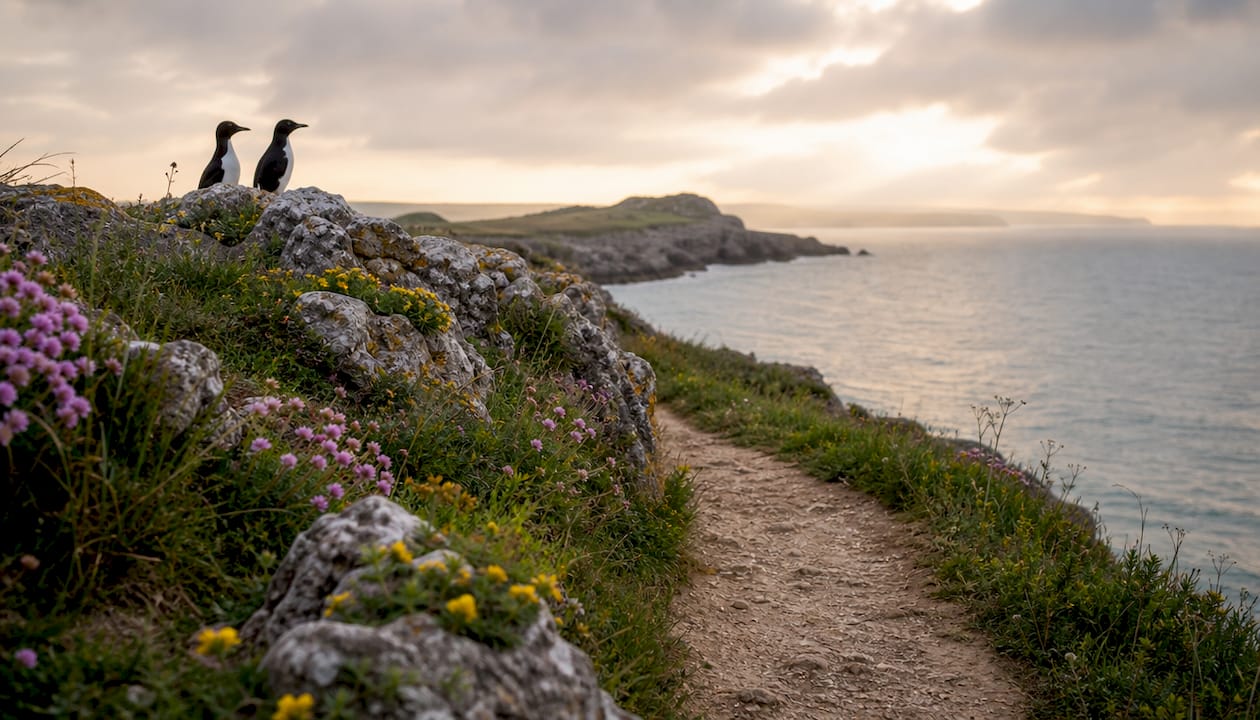
Berry Head is a limestone headland forming the southern tip of Tor Bay in South Devon, and it ranks among the finest nature reserves in England. The cliffs here support over 1,000 breeding pairs of guillemots, making this the largest guillemot colony on England’s south coast. Add Napoleonic fortifications, the smallest and highest lighthouse in the British Isles, and a marine reserve teeming with dolphins, and you have a destination that rewards every kind of outdoor visitor. Whether you are planning your first trip or returning for the tenth time, this guide covers everything worth knowing.
1. What makes Berry Head special?
Berry Head sits at the southern edge of Tor Bay, rising sharply from the sea on limestone cliffs that have shaped the area’s ecology for thousands of years. The headland forms part of the Berry Head to Sharkham Point Marine Conservation Zone, one of the most ecologically significant stretches of coastline in the South West. That designation protects the underwater habitats directly below the cliffs, which in turn supports the extraordinary concentration of seabirds above. Few places in England offer this combination of marine, terrestrial, and historical interest within a single short walk.
2. The best coastal walks at Berry Head
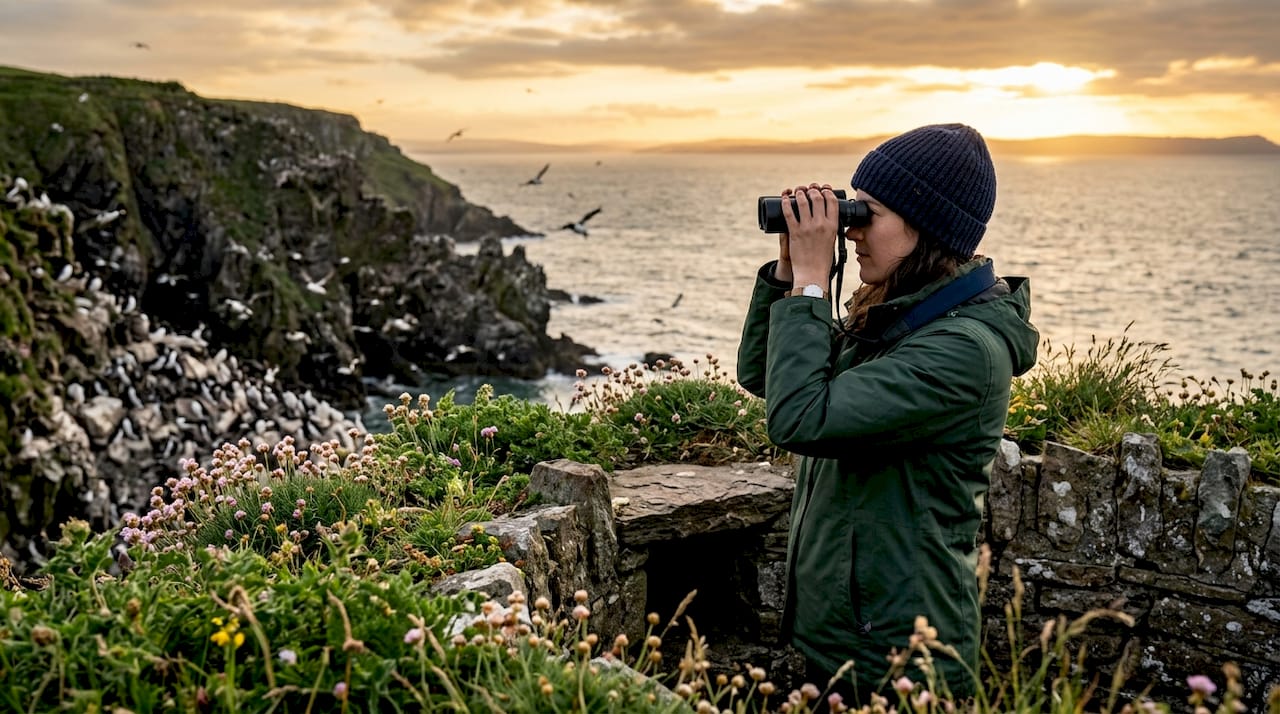
The standard circular route covers approximately 2 miles and is graded easy, with only minor inclines. This makes it genuinely accessible for most visitors, including those with pushchairs or limited mobility on the surfaced sections. The path takes you past the lighthouse, along the cliff edge, and back through open grassland, giving you the full sweep of the headland in under two hours.
For walkers who want more of a challenge, a woodland alternative branches off the main route and involves a long, steep sequence of steps through dense tree cover. This path is rougher underfoot and demands a reasonable level of fitness. The reward is a quieter, more sheltered experience away from the main visitor flow.
Key vantage points along the coastal path include:
- The Berry Head lighthouse, perched at the cliff’s highest point
- The Napoleonic fort ruins, which frame views across Tor Bay towards Torquay
- The designated bird hides overlooking the guillemot ledges
- Open grassland sections where peregrine falcons are regularly spotted overhead
Pro Tip: Visit on a weekday morning in may or june for the quietest conditions and the best light for photography from the cliff edge.
3. Wildlife at Berry Head: seabirds, dolphins, and rare flora
The guillemot colony is the headline act. More than 1,000 birds nest on the limestone ledges each spring, creating a spectacle of noise, movement, and colour that is unlike anything else on the south coast. Guillemots are members of the auk family and spend most of their lives at sea, coming ashore only to breed. Watching them jostle for position on the cliff face is genuinely extraordinary.
The best months for wildlife viewing run from april through to august. During this window, you can expect:
- Guillemots and razorbills nesting on the cliff ledges
- Peregrine falcons hunting along the cliff tops
- Migrant warblers passing through the scrub and woodland
- Dolphins and harbour porpoises visible from the cliff edge on calm days
Berry Head is one of the best land-based cetacean watching sites in South Devon. Warm, settled weather produces the clearest sightings, as the animals surface close inshore when the sea is flat. Bring binoculars and allow at least 20 minutes of patient scanning.
The flora is equally impressive. The reserve records over 500 plant species, including wild orchids and a rich variety of limestone grassland wildflowers. That figure places Berry Head among the most botanically diverse nature reserves in Devon. The orchids typically flower in late may and june, appearing in the short turf between the path and the cliff edge.
One detail most visitors miss: the designated bird hides give far better views of the guillemot colony than standing at the general cliff edge. The hides position you directly opposite the nesting ledges, removing the angle problem and reducing disturbance to the birds.
4. Berry Head lighthouse and Napoleonic history
The Berry Head lighthouse was established by Trinity House in 1906 and holds a unique record: it is the smallest and highest lighthouse in the British Isles. The structure itself is compact enough to walk past without noticing, yet it sits at the highest point of the headland, giving its light an exceptional range across Tor Bay and the English Channel. That combination of tiny scale and commanding position is what earns it the record.
The Napoleonic fortifications predate the lighthouse by roughly a century. The forts were built during the late 18th and early 19th centuries to defend Tor Bay against French naval attack. The earthworks and stone walls remain largely intact, and walking through them gives a clear sense of how the headland was used as a defensive position. The Guardhouse Café now occupies one of the original fort buildings, which means you can take a cream tea inside a structure that once housed soldiers watching for Napoleon’s fleet. That is the kind of detail that makes Berry Head genuinely different from other coastal walks in Devon.
Key heritage features to look for:
- The main fort ramparts running along the cliff top
- The guardhouse building, now the café and visitor centre
- Interpretation boards explaining the military history of the site
- The lighthouse at the southern tip of the headland
Pro Tip: The Guardhouse Café serves locally sourced food and is open most days during the season. Arriving early avoids the lunchtime queue and gives you a quieter moment inside the historic building.
For visitors interested in Devon’s wider cultural heritage, Dartington Hall offers another layer of historical depth worth combining with a trip to this part of the county.
5. Practical information for visiting Berry Head
Parking is available in the dedicated car park at the reserve entrance. Payment operates via pay-and-display, either using coins or the RingGo app with location code 15884. Parking inspectors check the site periodically, so paying on arrival is the sensible approach.
| Facility | Details |
|---|---|
| Car park | Pay-and-display; RingGo app code 15884 |
| Café | Guardhouse Café, open seasonally |
| Toilets | Available near the visitor centre |
| Visitor centre | Information on wildlife and history |
| Accessibility | Main circular path is surfaced and largely flat |
The Guardhouse Café, toilets, and visitor centre are all located close to the car park, which means you can orientate yourself before setting off. The visitor centre carries information on current wildlife sightings, which is worth checking before you head to the hides.
The best months to visit are april through august for wildlife, though the coastal walk is rewarding year-round. Winter visits bring their own character: the cliffs are quieter, the views are often sharper in cold clear air, and you may spot wintering seaducks offshore.
Berry Head sits on the edge of Brixham, which adds a practical bonus. After your walk, the town offers fish and chips, independent cafés, and a working harbour that is worth an hour of anyone’s time. For a broader Devon itinerary, the Devon holidays insider guide covers the best ways to structure a longer stay in the county.
Pro Tip: Combine Berry Head with a morning at Brixham Harbour and an afternoon at a nearby beach for a full and varied Devon day out.
6. Why Berry Head rewards repeat visits
The 2026 management plan for Berry Head actively seeks to balance visitor numbers with conservation, which tells you something important about the reserve’s success. More people are discovering it each year. That is both a compliment to the place and a reason to visit thoughtfully.
Berry Head also functions as an outdoor classroom and social destination simultaneously. You can spend a morning studying orchids and guillemots, then sit in a 200-year-old guardhouse eating a scone. That range of experience is rare. Most nature reserves ask you to choose between wildlife and comfort. Berry Head does not.
Key takeaways
Berry Head combines the largest guillemot colony on England’s south coast with Napoleonic heritage and the smallest lighthouse in the British Isles, making it Devon’s most layered coastal nature reserve.
| Point | Details |
|---|---|
| Guillemot colony scale | Over 1,000 breeding pairs nest on the limestone cliffs each spring. |
| Best visiting months | April through august offers peak wildlife viewing for seabirds and marine mammals. |
| Walk options | The 2-mile circular path is easy-graded; the woodland route is steep and rougher. |
| Heritage highlights | The 1906 lighthouse and Napoleonic forts are both accessible on foot from the car park. |
| Practical planning | Pay parking via RingGo code 15884; café and toilets are on site near the entrance. |
My honest view on Berry Head
I have walked Berry Head in every season and in all weathers, and the visit that stays with me most was a grey tuesday in october. The guillemots were long gone, the café was closed, and I had the cliff top almost entirely to myself. The views across Tor Bay were extraordinary in the flat autumn light, and I found a late-flowering orchid in the turf that I would have walked straight past in the summer crowds.
The point is this: Berry Head is not just a spring and summer destination. The reserve has a character in every month, and the quieter visits often reveal more than the busy ones. Most guides tell you to come in june for the birds. That is correct. But do not let it stop you coming in november for the solitude.
The one thing I would urge every visitor to do is use the hides. Standing at the cliff edge and looking down at the guillemot ledges is impressive. Sitting in the hide opposite them, at eye level, watching them preen and argue and feed their chicks, is something else entirely. It takes five extra minutes and most people skip it. Do not be most people.
Berry Head also rewards visitors who read the interpretation boards rather than walking past them. The Napoleonic history is genuinely interesting, and understanding why the fort was built there changes how you look at the landscape. The headland was chosen for military reasons that are still visually obvious once you know what to look for.
— Mark
Planning your next Devon experience
Berry Head is one of those places that makes you want to see more of Devon. If a day on the cliffs has given you an appetite for what else the county offers, Thedevondrop has a range of Devon experiences and stays worth exploring, from coastal dining to spa retreats and weekend breaks across the region.

Whether you are looking for a three-course dinner at The Cary Arms & Spa after a day on the headland, or a wellness escape to round off a week in South Devon, Thedevondrop brings together the best of what Devon has to offer in one place. The county deserves more than a single visit, and there is always something worth coming back for.
FAQ
What is Berry Head known for?
Berry Head is known for its guillemot colony, the largest on England’s south coast, as well as its Napoleonic forts and the smallest and highest lighthouse in the British Isles.
When is the best time to visit Berry Head?
April through august offers the best wildlife viewing, with guillemots nesting on the cliffs and dolphins visible offshore on calm days.
Is the Berry Head walk suitable for families?
The main circular path covers approximately 2 miles and is graded easy, making it suitable for families. The woodland alternative involves steep steps and is better suited to confident walkers.
How do I pay for parking at Berry Head?
Parking is pay-and-display using coins or the RingGo app with location code 15884. Inspectors check the car park periodically.
Can you see dolphins from Berry Head?
Yes. Berry Head is one of the best land-based cetacean watching sites in South Devon, with dolphins and harbour porpoises commonly spotted from the cliff edge, particularly in warm, calm weather.