Burgh Island Devon: the complete visitor guide 2026
What you need to know before visiting Burgh Island
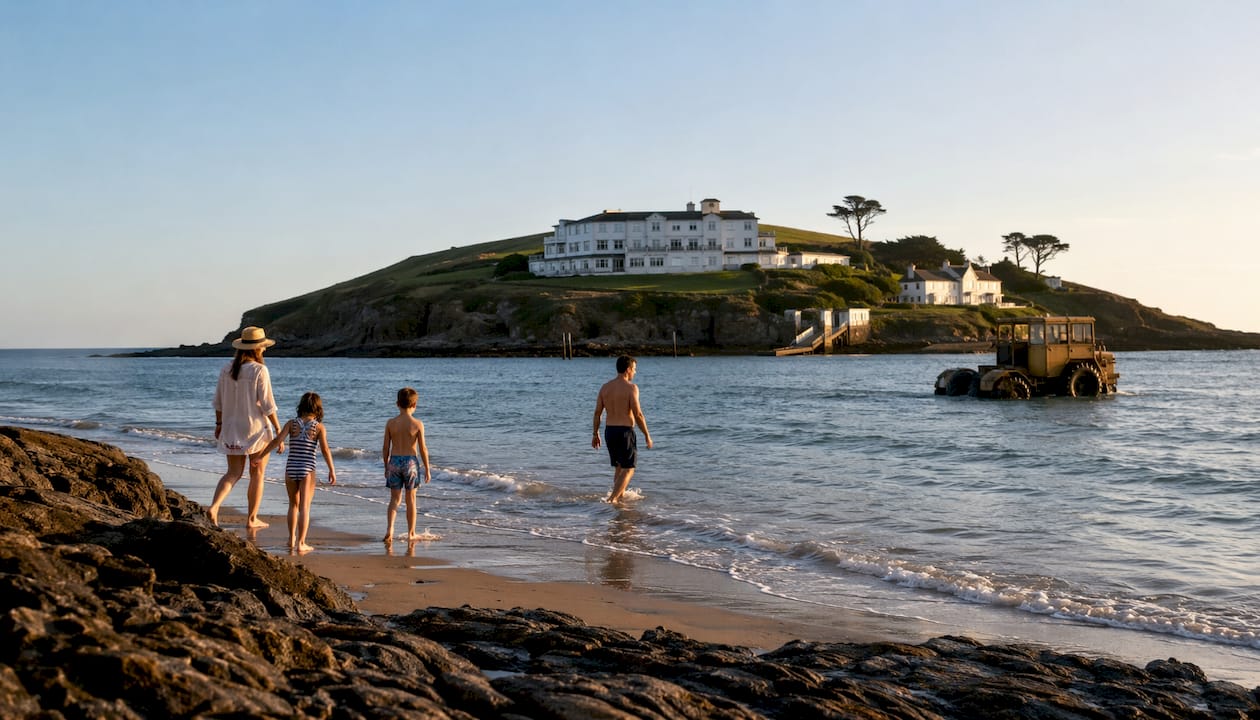
Burgh Island is a small tidal island off the South Devon coast, located close to the beach at Bigbury-on-Sea. It is one of the most distinctive places in the whole of Devon: genuinely cut off by the tide twice a day, home to a Grade II listed Art Deco hotel, and served by one of the most unusual vehicles in Britain. Whether you are planning a day trip or a luxury overnight stay, this is a place that rewards a little preparation.
Access to the island is free year-round. At low tide, you simply walk across the sandy causeway from Bigbury-on-Sea. At high tide, the sea tractor takes over, charging £2 per person each way, cash only. No card reader, no exceptions.
Key essentials at a glance:
- Walk the causeway at low tide; the crossing takes only a few minutes on foot.
- The sea tractor fare is £2 each way per person, cash only.
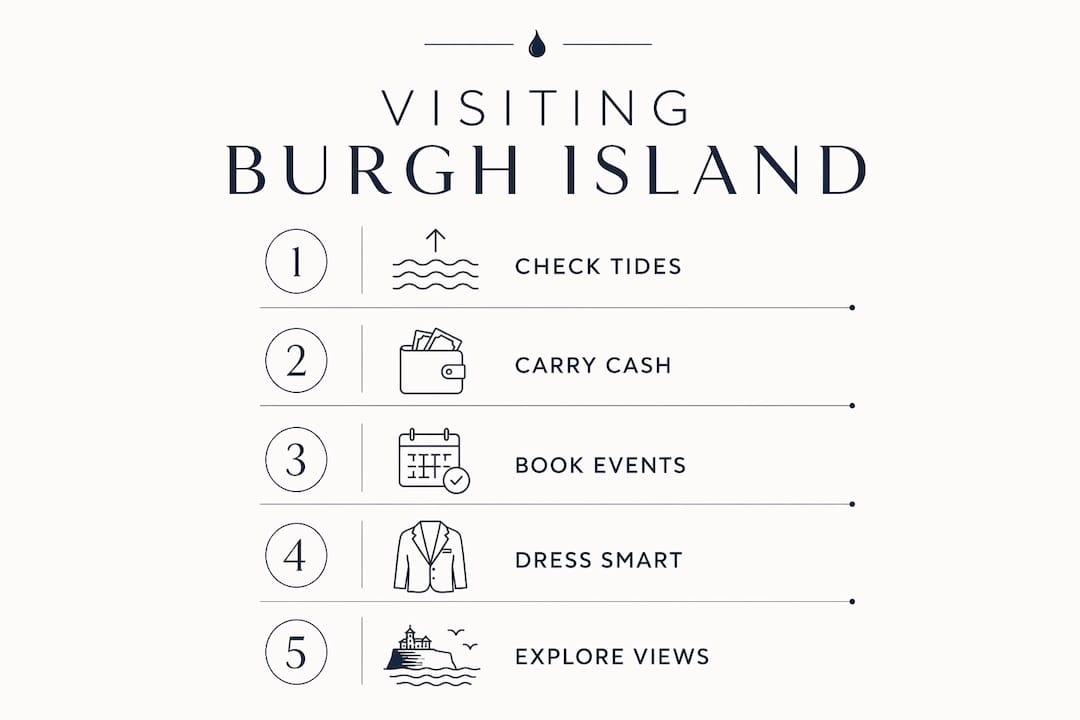
- Check tide times before you go; the causeway submerges quickly and the schedule changes daily.
- Wear sturdy shoes. The sand is often wet and heavy, and flip-flops will make the crossing miserable.
- The Pilchard Inn is open to all day visitors for food and drink.
- The Burgh Island Hotel is accessible to non-residents for afternoon tea and dining, subject to availability.
Pro Tip: Carry a small amount of cash specifically for the sea tractor. There is no ATM on the island, and the tractor operator will not take a card under any circumstances.
The best seasons to visit are late spring and early autumn, when the crowds thin out but the weather is still cooperative. Summer weekends can get busy at Bigbury-on-Sea, which affects parking and the mood of the crossing. A weekday visit in May or September gives you the island largely to yourself.
A brief history of Burgh Island and why it matters
Few places in Devon carry as much layered history as this small outcrop of rock and grass. The island has been used for fishing and smuggling for centuries, its isolation making it ideal for both. A huer’s hut still stands at the island’s summit, a remnant of the pilchard fishing industry that once defined this stretch of the South Hams coast. Fishermen would watch from the hut for shoals of pilchards in the bay below, then signal to the boats waiting offshore.
The island’s modern story begins in the late 1920s, when Archibald Nettlefold built the hotel that would define Burgh Island’s reputation for the next century. The original structure went up in 1929, and the Art Deco interiors that guests admire today date largely from the 1930s, when the island became a fashionable retreat for the wealthy and the famous.
The roll call of notable guests is extraordinary. Agatha Christie visited repeatedly and used the island as the setting for two of her novels: Evil Under the Sun and And Then There Were None. The Duke and Duchess of Windsor were among the guests, as were Noël Coward and Amy Johnson. The island’s combination of seclusion and glamour made it irresistible to people who wanted to disappear from public life for a few days.
- 1929: Archibald Nettlefold builds the original hotel on the island.
- 1930s: The Art Deco interiors are completed; the island becomes a fashionable retreat.
- Agatha Christie visits and uses the island as inspiration for two novels.
- Mid-20th century: The hotel falls into decline after the Second World War.
- 1986: Tony and Beatrice Porter begin a restoration of the hotel and its interiors.
- 2018: Giles Fuchs acquires the island and hotel.
- 2023: Fuchs lists the property for £15 million, then withdraws the sale in 2024 to continue as owner.
The island’s cultural legacy runs deeper than its famous guests. It has appeared in television adaptations of Christie’s work and continues to draw visitors who want to experience something that feels genuinely out of time. That quality is not accidental. It has been carefully maintained through successive ownerships, and Fuchs’s decision to withdraw the 2023 sale suggests a long-term commitment to keeping it that way.
The Burgh Island Hotel: Art Deco architecture and modern luxury
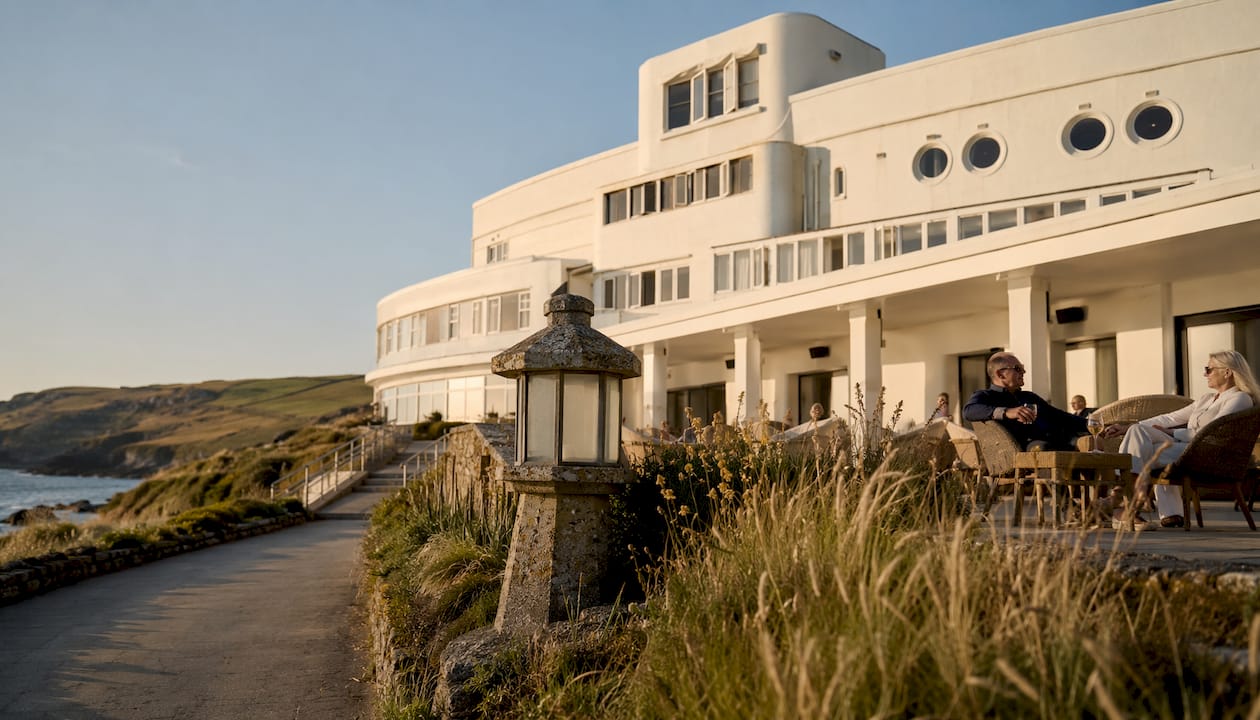
The hotel is the centrepiece of any visit to the island, whether you are staying or simply admiring it from the outside. The white Art Deco facade, the curved lines, the black-and-white tiled entrance hall: it looks exactly as it did in the 1930s, which is precisely the point. The restoration work carried out over recent decades has been meticulous, preserving original features while quietly updating the infrastructure behind the scenes.
Giles Fuchs, who acquired the island in 2018 and chose to retain ownership after listing it for sale, has spoken about the tension between heritage preservation and practical modernisation. The hotel is not a museum, and it does not pretend to be. Guests get the 1930s atmosphere alongside contemporary comforts.
| Feature | Details |
|---|---|
| Architecture | Grade II listed Art Deco building, original 1929 structure |
| Room types | Suites and beach houses, all with sea views |
| Starting price | From £450 per night (bed and breakfast, double occupancy) |
| Two-night packages | — |
| Dining | The Ballroom Restaurant, the Palm Court, and the Nettlefold Bar |
| Dress code | Black tie encouraged at dinner in the Ballroom |
| Non-resident access | Afternoon tea and dining available, subject to booking |
The dress code at dinner is one of the hotel’s most talked-about quirks. Black tie is encouraged rather than enforced, but most guests embrace it. It adds to the sense that you have stepped into a different era entirely. The Ballroom Restaurant serves a set menu dinner, and the Palm Court is the place for afternoon tea with views across the bay.
Non-residents can book afternoon tea or dinner, which makes the hotel accessible even if an overnight stay is out of reach. Booking well in advance is advisable, particularly for summer weekends.
How to reach Burgh Island and what you will find when you get there
Getting to the island is half the experience. The sandy causeway from Bigbury-on-Sea is straightforward at low tide: a short walk across firm sand, with the hotel growing larger ahead of you. The crossing takes only a few minutes, but the sand can be deceptively soft and wet in places, so solid footwear matters.
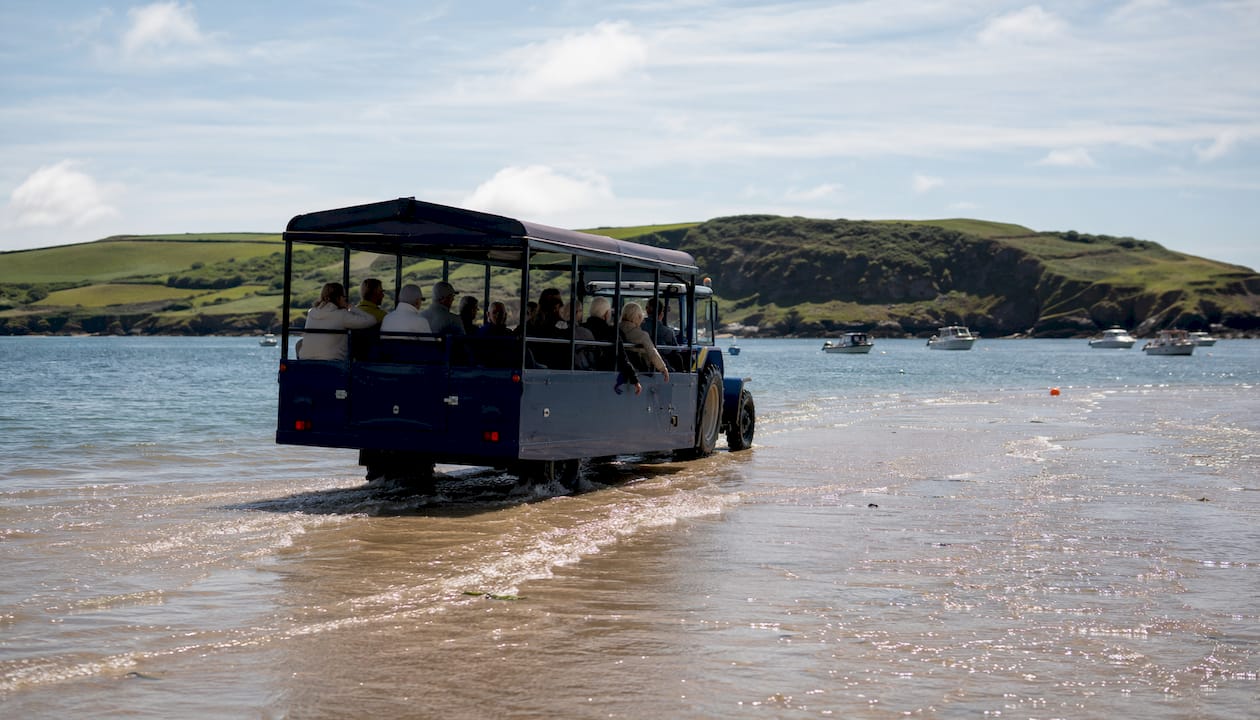
At high tide, the sea tractor takes over. Built in 1969, it is a hydraulic vehicle unlike anything else in the world: a raised platform on stilts that wades through the shallow water between the beach and the island. It is slow, slightly theatrical, and completely charming. The fare is £2 each way per person, cash only, and the schedule follows the tides rather than a fixed timetable.
Practical access notes:
- Tide times are posted at the crossing point and on the Burgh Island website; check them before you leave home.
- The causeway submerges rapidly once the tide turns. Do not linger on the crossing if the water is already rising.
- The sea tractor operates in most weather conditions but can be suspended in rough seas. Check ahead if the forecast looks poor.
- Parking is at Bigbury-on-Sea; spaces fill quickly on summer weekends, so arrive early.
- The island has no shops, no ATM, and no card payment facilities for the sea tractor.
Once on the island, the Pilchard Inn is the main destination for day visitors. Dating from the 14th century, it is one of the oldest pubs in Devon and serves food and drink throughout the day. The interior is low-ceilinged and atmospheric, with the kind of worn character that takes centuries to accumulate. It is open to everyone, no booking required.
Pro Tip: If you are visiting as a day tripper, time your arrival for shortly after low tide. You get the causeway walk in, a few hours on the island, and the sea tractor ride back as the tide comes in. It turns the logistics into part of the experience rather than a complication.
Accessibility on the island is limited by its terrain. The paths are uneven and the causeway itself is not suitable for wheelchairs or pushchairs. The hotel can advise on specific accessibility requirements for guests who have booked a stay.
Bigbury-on-Sea and the surrounding South Hams coast
The village of Bigbury-on-Sea sits directly across from the island and is the natural base for a visit. It is a small, unpretentious place: a car park, a beach, a handful of facilities, and some of the best coastal scenery in South Devon. The beach itself is wide and sandy, popular with families and surfers when the swell is right.
The surrounding South Hams coast offers some excellent walking, and the area around Bigbury-on-Sea connects to the South West Coast Path. Here are the most worthwhile things to do in the area:
- Walk the South West Coast Path east towards Thurlestone or west towards Bantham for dramatic cliff-top views and quieter beaches.
- Bantham Beach, a short drive away, is one of Devon’s best surf beaches and far less crowded than the better-known spots further west.
- Beachcombing at low tide around Bigbury-on-Sea turns up interesting finds, particularly after winter storms.
- Wildlife watching on and around the island: grey seals are occasionally spotted in the bay, and the cliff-top grassland supports a range of coastal birds.
- The Pilchard Inn on the island itself is worth a visit for a pint and a look at the interior, which has changed very little over the centuries. For more on historic Devon pubs, the South Hams has several that rival it for atmosphere.
- Kayaking and paddleboarding around the island are popular in calm conditions; hire is available from local operators near Bigbury-on-Sea during the summer months.
- Burgh Island at sunset is worth timing a visit around. The light on the white hotel facade in the late afternoon is genuinely striking, and the island empties of day visitors by early evening.
For a broader picture of what the county has to offer, the Devon insider guide covers the South Hams alongside the rest of Devon’s coastal highlights.
The nearest town with a full range of shops and services is Kingsbridge, about eight miles inland. Modbury is closer and has a good selection of independent shops and cafés. Neither is a destination in itself, but both are useful if you are spending more than a day in the area.
Local knowledge: how to get the most from your visit
The single most common mistake visitors make is not checking the tide times until they are already in the car park at Bigbury-on-Sea. By then, the causeway may already be underwater and the sea tractor schedule may not align with their plans. Check the daily tractor schedule the evening before, note the low-tide window, and build your day around it rather than hoping for the best.
Cash is the other thing people consistently forget. The sea tractor has operated on a cash-only basis for decades, and that is not going to change. £2 each way per person is a small amount, but if you arrive without it, you are either swimming or waiting for someone to lend you coins.
Pro Tip: Visit on a weekday in late september or early october. The summer crowds have gone, the sea is still warm enough to paddle in, and the light over the bay in autumn is extraordinary. The hotel’s shoulder-season rates are also more accessible than peak summer pricing.
Giles Fuchs has spoken about his intention to keep the island’s heritage intact while investing in the infrastructure that makes it viable long-term. That means the hotel is not standing still: there have been updates to the rooms and facilities since his 2018 acquisition, and the balance between 1930s atmosphere and contemporary comfort has shifted slightly in favour of the latter. Guests who visited a decade ago may notice the difference.
The island hosts occasional events, including jazz evenings and themed 1930s weekends, which sell out quickly. If you want to attend one of these rather than a standard stay, sign up for the hotel’s mailing list well in advance. They are not widely advertised outside the hotel’s own channels.
For day visitors, the island rewards those who slow down. Walk to the top of the hill for the view across Bigbury Bay. Sit outside the Pilchard Inn with a drink and watch the sea tractor make its crossing. The island is small enough to explore fully in a couple of hours, but it has a quality that makes you want to stay longer than you planned.
Key takeaways
Burgh Island in Devon is one of the few places in Britain where the journey to get there is as memorable as the destination itself, combining tidal access, Art Deco heritage, and one of Devon’s oldest pubs in a single visit.
| Point | Details |
|---|---|
| Free island access | The island is free to visit; walk at low tide or take the sea tractor at high tide. |
| Sea tractor fare | The fare is £2 per person each way, cash only; no card payments accepted. |
| Hotel pricing | — |
| Tide awareness | Check tide times before visiting; the causeway submerges quickly and the schedule changes daily. |
| Ownership and vision | Giles Fuchs acquired the island in 2018 and withdrew a £15 million sale listing in 2024 to continue as steward. |