Teignmouth: the complete Devon visitor guide
Teignmouth (pronounced “Tin-muth”) sits at the mouth of the River Teign on South Devon’s coast, roughly a dozen miles south of Exeter, and it earns its place as one of the region’s most rewarding seaside destinations. With a population of 14,932 at the 2021 census, it is compact enough to explore on foot yet rich enough in character to fill a long weekend. What sets it apart from the average Devon resort is the combination of a genuinely working port, two distinct beaches, Georgian and Victorian architecture, and direct access to both the South West Coast Path and Dartmoor National Park.
Here is what you can expect from a visit:
- A sandy Town Beach with Teignmouth’s Victorian pier, amusements, and traditional seaside atmosphere
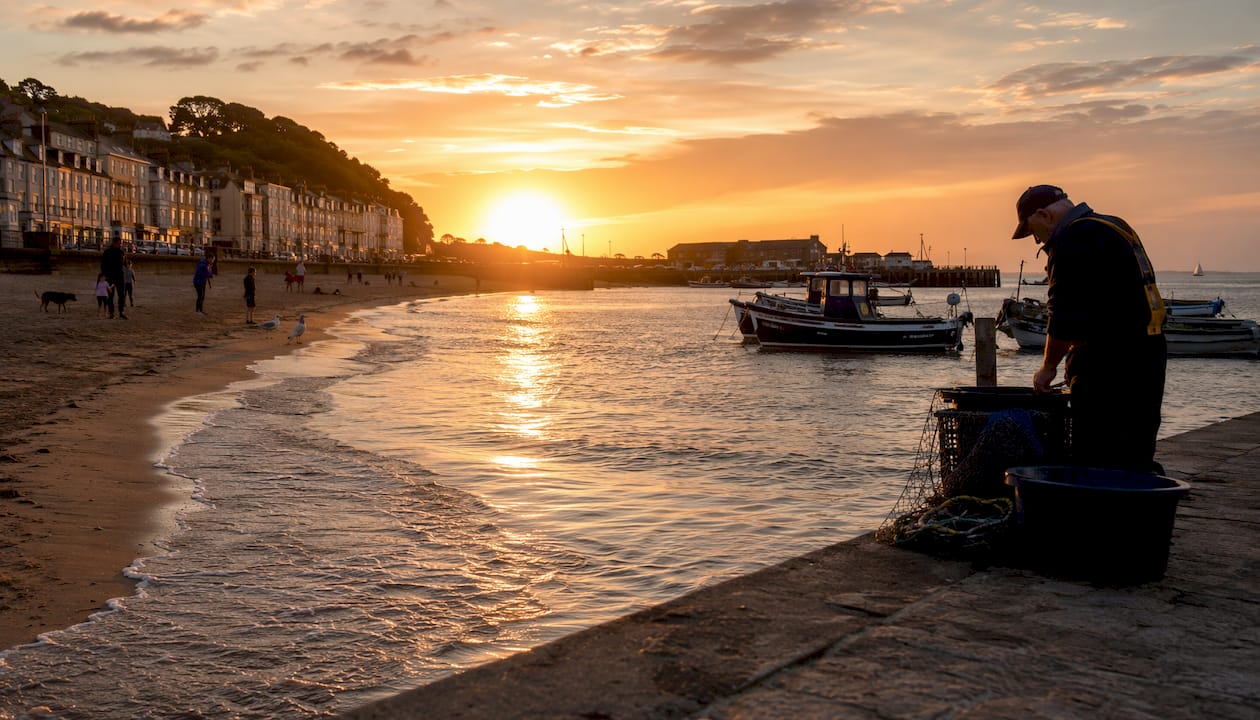
- A quieter Back Beach on the estuary side, with views of fishing boats and sunsets over the water
- The Teign Heritage Museum, covering centuries of maritime history including a 16th-century Venetian shipwreck
- Georgian terraces, two Conservation Areas, and a thriving independent town centre
- Coastal walks along the South West Coast Path and day trips to Dartmoor
- Local food culture anchored by the Taste of the Teign trail
Table of Contents
- How Teignmouth grew from medieval parishes to Victorian resort
- What is the geography and natural setting of Teignmouth?
- How do you get to Teignmouth, and what are the transport options?
- What visitor facilities and amenities does Teignmouth offer?
- Local heritage and outdoor experiences that make Teignmouth distinctive
- The seafront and port: Teignmouth’s working heart
- Events and culture in Teignmouth
- When is the best time to visit Teignmouth?
- Key takeaways
- Why Teignmouth deserves more credit than it gets
How Teignmouth grew from medieval parishes to Victorian resort
The town’s origins lie in two separate medieval settlements, East and West Teignmouth, divided by the Tame River. Neither appeared in the Domesday Survey independently; both were recorded as part of the manors of Dawlish and Bishopsteignton. The name itself means “mouth of the stream,” and the first written record dates to 1044, when the Saxon King granted land to Leofric, later Bishop of Exeter.
The medieval and early modern period
- Market charters granted (mid-13th century): Both villages received charters for weekly markets and an annual fair, establishing Teignmouth as a commercial hub on the South Devon coast.
- Salt and fishing boom: West Teignmouth grew rapidly on the back of the fishing industry and salt production, supplying the Newfoundland cod trade that connected Devon ports to the North Atlantic.
- The French raid of 1690: The French fleet attacked and nearly destroyed the town, burning most of the houses and wrecking the harbour’s boats. Salt production ceased two years later. Yet the rebuilding that followed proved transformative: West Teignmouth emerged as a prosperous working port, while East Teignmouth developed into a fashionable resort for retired sea captains and affluent professionals.
- Georgian reputation: By the mid-18th century, Teignmouth had already earned a name as a seaside destination, attracting visitors drawn by its mild climate and genteel atmosphere.
The Victorian surge
- The South Devon Railway arrived in 1846, connecting the town to Exeter and beyond. Visitor numbers rose sharply.
- The original sections of Teignmouth Grand Pier were built between 1865 and 1867, cementing the town’s identity as an English seaside resort.
- By 1889, the town had three banks, a post office, a lifeboat station, and a market hall. Two quays had been built in the 1820s and 1880s, alongside shipbuilding yards and warehouses.
- The two parishes amalgamated legally in 1909, though their distinct characters persist today in the architectural contrast between the working port and the elegant resort terraces.
The 20th century and beyond
Teignmouth suffered wartime bombing during the Second World War, which left gaps in the Victorian streetscape. Post-war reconstruction was uneven, but the town retained its Georgian and early Victorian core. The port continued to trade, handling clay, timber, and grain. Until 1852, Teignmouth had legally been part of the Port of Exeter; independence, won after years of campaigning, was celebrated as a landmark moment in the town’s civic identity.
Pro Tip: The two Conservation Areas, the Town Centre Conservation Area and St James’s Conservation Area, are the best places to read the town’s layered history in its buildings. Look for the tall sash windows and rendered elevations that characterise the Georgian resort era, then contrast them with the sandstone boundary walls of the older St James’s quarter.
What is the geography and natural setting of Teignmouth?
The town occupies the north bank of the River Teign estuary, where the river meets the sea at a narrow, tide-driven channel. The red sandstone headland on the Shaldon side, known as The Ness, is the most recognisable landmark from the water. Sandbanks shift with the tides, and the estuary creates a dynamic coastal environment that shapes everything from the local birdlife to the conditions for water sports.
| Feature | Details |
|---|---|
| Location | North bank of River Teign estuary, South Devon |
| Distance from Exeter | Approximately a dozen miles south |
| Distinctive landmark | The Ness, a red sandstone headland on the Shaldon side |
| Climate type | Mild maritime, in rain shadow of Dartmoor |
| Annual rainfall | considerably less rain per year than Plymouth |
| Nearby national park | Dartmoor National Park |
| Coastal walking route | South West Coast Path |
Teignmouth’s climate is genuinely mild. Lying to the east of Dartmoor, the town sits in a lee position that gives it mean temperatures around 3°C higher and less than 43% of the rainfall of Princetown on the moor. That rain shadow effect makes it one of the drier spots on the South Devon coast, which matters when you are planning a beach day.
The natural environment around the estuary supports a range of habitats: mudflats and saltmarsh on the river, red sandstone cliffs along the coast, and the Haldon Ridge and Foothills rising to the west. The South West Coast Path passes through the town, connecting it to Dawlish to the north and Shaldon to the south. An 18-mile waymarked route called the Templer Way links Haytor on Dartmoor to Shaldon, following the route of George Templer’s granite tramway and the Stover Canal before reaching the estuary.
How do you get to Teignmouth, and what are the transport options?
Getting to Teignmouth is straightforward from most of Devon and the wider South West. The town sits at the junction of three roads and has its own railway station on a scenic coastal line.
| Transport mode | Details |
|---|---|
| Train | Teignmouth station on the Riviera Line (Exeter to Paignton); direct services to London Paddington |
| Road | Coast road connecting Dawlish (north) and Shaldon/Torquay (south) |
| Road | Links to Newton Abbot, then the motorway |
| Road | Alternative route up to the motorway via Ashcombe |
| Ferry | Foot passenger ferry across the estuary to Shaldon (seasonal) |
| Coach parking | East Cliff coach park |
Teignmouth railway station opened in 1846 and sits close to the town centre, between Dawlish and Newton Abbot on the South Devon Main Line. The station is rated category B2 for step-free access, but visitors with mobility requirements should be aware that the footbridge is not accessible. Step-free access to the platforms involves navigating outside routes rather than crossing directly through the station building, so it is worth contacting the station in advance.
- Parking in Teignmouth is managed by a combination of Teignmouth Town Council, Teignbridge District Council, and Devon County Council. Bitton House Car Park is one of the main town-centre options.
- The railway station itself offers 80 parking spaces, including two accessible bays, and has an on-site taxi rank.
- Local bus services connect Teignmouth to Newton Abbot, Dawlish, Exeter, and Torquay, making it easy to combine a visit with nearby towns.
- The foot passenger ferry to Shaldon runs seasonally and is one of the most pleasant ways to cross the estuary, giving you a different perspective on The Ness.
Pro Tip: If you are arriving by train and want to explore nearby Dawlish, the coastal path between the two towns is walkable in under an hour and gives you the famous red cliff scenery that makes this stretch of the Riviera Line so dramatic.
What visitor facilities and amenities does Teignmouth offer?
Teignmouth punches well above its size when it comes to visitor infrastructure. The town has enough accommodation variety, dining options, and cultural venues to support a stay of several days without repeating yourself.

Accommodation
The town offers a range of places to stay, from seafront hotels and traditional B&Bs to self-catering cottages and holiday parks on the outskirts. The seafront and town centre have the highest concentration of accommodation, putting you within easy walking distance of both beaches and the pier.
Dining and local food
The Taste of the Teign food trail is the best way to eat well here. It guides visitors through local producers, restaurants, and food businesses around the estuary, with an emphasis on fresh seafood, local meat, and regional ingredients. For broader Devon dining inspiration, the seafood restaurant guide for Devon covers some of the best options across the county.
Shopping and markets
The town centre has a good mix of independent shops, cafés, and local businesses. The covered market and street-level traders give it a genuine community feel rather than the chain-heavy high street you find in larger towns.
Cultural venues
- The Teign Heritage Museum covers the town’s maritime and social history.
- The arts quarter hosts galleries and creative studios, reflecting a growing arts community.
- The Pavilions theatre and entertainment venue hosts live performances throughout the year.
Family amenities
- The Lido on the seafront provides outdoor swimming in season.
- Amusement arcades, fairground rides, and a children’s play area cluster around the pier.
- The leisure centre offers indoor sports facilities year-round.
Pro Tip: The visitor information point in the town centre stocks free maps and event listings. If you are visiting in summer, pick one up on arrival as local events, markets, and pop-up food stalls can change week to week.
Local heritage and outdoor experiences that make Teignmouth distinctive
The Teign Heritage Museum is the obvious starting point for anyone interested in the town’s past. Its collection covers the full arc of Teignmouth’s maritime history, and one exhibit stands out: the Church Rocks wreck, the remains of a 16th-century Venetian vessel that lies close to shore. It is a reminder that this stretch of coast was a serious commercial waterway long before the Victorian tourists arrived. The museum also covers the connection to Admiral Edward Pellew, the naval hero whose early career was shaped by his time in these waters, a detail that will interest anyone with a taste for naval history.
Outdoor activities
- The South West Coast Path offers walking in both directions from Teignmouth, with the stretch south towards Shaldon and Babbacombe among the most dramatic in Devon.
- Dartmoor National Park is accessible within 30 minutes by car, offering moorland walking, wild swimming, and cycling as a counterpoint to the coast.
- Paddleboarding and kayaking on the Teign estuary are popular from spring through to early autumn. The sheltered river conditions make it suitable for beginners, while the open sea beyond the sandbar suits more experienced paddlers.
- The Templer Way walking route, 18 miles from Haytor to Shaldon, passes through the estuary and gives a fascinating industrial history lesson alongside the scenery.
Pro Tip: For a half-day that covers both culture and coast, start at the Teign Heritage Museum in the morning, walk the Back Beach at low tide to see the estuary at its most atmospheric, then take the foot ferry across to Shaldon for lunch before returning on the afternoon tide.
For those planning a wider Devon adventure, the Devon outdoor guide covers activities across the county that pair well with a Teignmouth base.
The seafront and port: Teignmouth’s working heart
The seafront is where the two sides of Teignmouth’s character meet most visibly. On one side, the sandy Town Beach stretches along the bay, backed by the pier and the colourful amusement buildings that have defined the English seaside experience for generations. On the other, the working port handles clay, timber, and grain, its cranes and cargo vessels a reminder that this is not just a holiday town.
Teignmouth Grand Pier is over 160 years old and remains the focal point of the seafront. It has been through storms, wartime requisitioning, and decades of changing tastes, yet it still draws families for amusements, rides, and the simple pleasure of walking out over the water. The pier is one of those places that works on multiple levels: nostalgic for those who visited as children, genuinely entertaining for families with young children, and architecturally interesting for anyone who appreciates Victorian seaside engineering.
The Back Beach, on the estuary side of the spit, offers a completely different atmosphere. Fishing boats moor here, the light on the water changes constantly with the tide, and the views stretch up the estuary towards Dartmoor. It is quieter than the Town Beach and tends to attract locals rather than day-trippers. At low tide, the sandbanks expose themselves and the wading birds move in, making it an unexpectedly good spot for wildlife watching.
The port itself has been active since at least the 13th century. It gained independence from the Port of Exeter in 1852, a moment the town celebrated with considerable civic pride. Today it remains one of the few genuinely working ports on the South Devon coast, which gives Teignmouth a grit and authenticity that purely tourist-focused resorts often lack.
Events and culture in Teignmouth
Teignmouth has a cultural calendar that reflects its dual identity as a working town and a visitor destination. The summer months bring the expected seaside events: outdoor concerts, food festivals, and beach activities that draw visitors from across Devon and beyond. The Taste of the Teign food trail runs as a structured event in addition to being a year-round guide, with producer open days and special menus at participating restaurants.

The arts community has grown steadily in recent years. The arts quarter hosts exhibitions, open studios, and creative events that give the town a dimension beyond the beach. The Pavilions venue covers live music, comedy, and theatre, with a programme that runs through the winter months as well as the peak season.
The town’s maritime heritage feeds into its cultural identity in ways that go beyond the museum. The connection to Admiral Pellew, the Newfoundland cod trade, and the centuries of shipbuilding give local events and community organisations a strong sense of historical grounding. Teignmouth is twinned with the French town of Perros-Guirec, a relationship that occasionally surfaces in cultural exchanges and events.
The town centre market and independent shops create a retail culture that feels genuinely local. Saturday mornings in particular have a community atmosphere, with traders and residents mixing in a way that larger resort towns rarely manage.
When is the best time to visit Teignmouth?
Teignmouth’s mild maritime climate makes it a viable destination across a longer season than many British coastal towns. The rain shadow effect from Dartmoor keeps annual rainfall lower than comparable spots on the South Devon coast, and the sheltered estuary position moderates temperatures in both directions.
Summer (June to August) is peak season. The beaches are busy, the pier is fully operational, water sports are at their best, and the full range of visitor facilities is open. Accommodation books up quickly, particularly in July and August, so advance planning pays off.
Spring (April to May) is arguably the most rewarding time for those who want the scenery without the crowds. The coastal path is at its best, wildflowers appear on the clifftops, and the estuary birdlife is active. Many accommodation providers and restaurants are open from Easter onwards.
Autumn (September to October) extends the season pleasantly. Sea temperatures remain warm enough for swimming into September, the light on the estuary is exceptional, and the town settles back into its local rhythm after the summer rush. The Taste of the Teign trail is particularly good in autumn when local produce is at its peak.
Winter (November to March) is quiet but not without appeal. The town’s Georgian architecture, heritage museum, and independent cafés make for a satisfying short break, and the coastal walks are dramatic in winter weather. Accommodation prices drop considerably, and you get a much more honest sense of what Teignmouth is like as a place to live rather than just to visit.
Key takeaways
Teignmouth rewards visitors who look beyond the pier and the beach, offering a layered experience of maritime heritage, Georgian architecture, estuary wildlife, and genuine local food culture.
| Point | Details |
|---|---|
| Historic port and resort | Teignmouth has operated as a working port since the 13th century and a seaside resort since the Georgian era. |
| Two distinct beaches | Town Beach suits families and traditional seaside activities; Back Beach offers a quieter estuary atmosphere with wildlife and harbour views. |
| Victorian pier | Teignmouth Grand Pier has stood for over 160 years and remains the seafront’s centrepiece for family entertainment. |
| Coastal and moorland access | The South West Coast Path and Dartmoor National Park are both accessible from the town, offering walking, cycling, and paddleboarding. |
| Mild climate | Teignmouth receives considerably less rain per year than Plymouth, making it one of the drier spots on the South Devon coast. |
Why Teignmouth deserves more credit than it gets
Most Devon visitors head straight for Dartmouth, Salcombe, or Padstow, towns that have been polished to a high shine for the tourist market. Teignmouth has resisted that process, partly by accident and partly because it never stopped being a real town with a real port and real residents who use the high street for something other than fudge and ice cream.
What strikes me most about Teignmouth is the honesty of it. The pier is genuinely old and genuinely used. The Back Beach is genuinely quiet and genuinely beautiful, not because someone decided it should be a “hidden gem” but because most visitors walk straight past it to the main beach. The Teign Heritage Museum is the kind of local history museum that rewards slow reading rather than a quick scan, and the Church Rocks wreck story alone is worth an hour of your time.
The food trail is the other thing that separates Teignmouth from the average seaside town. The Taste of the Teign is not a marketing exercise dressed up as a food event. It connects visitors to actual producers, actual fishermen, and actual kitchens, and the estuary setting gives the whole thing a coherence that food trails in inland towns struggle to match.
My honest view is that Teignmouth works best for visitors who are willing to slow down. Walk the estuary at low tide. Take the ferry to Shaldon and walk back along the cliff. Eat somewhere on the food trail rather than the first café you see on the seafront. The town will give you considerably more than you expect if you give it the time it deserves.