Devon gardens: the plant and design guide for 2026
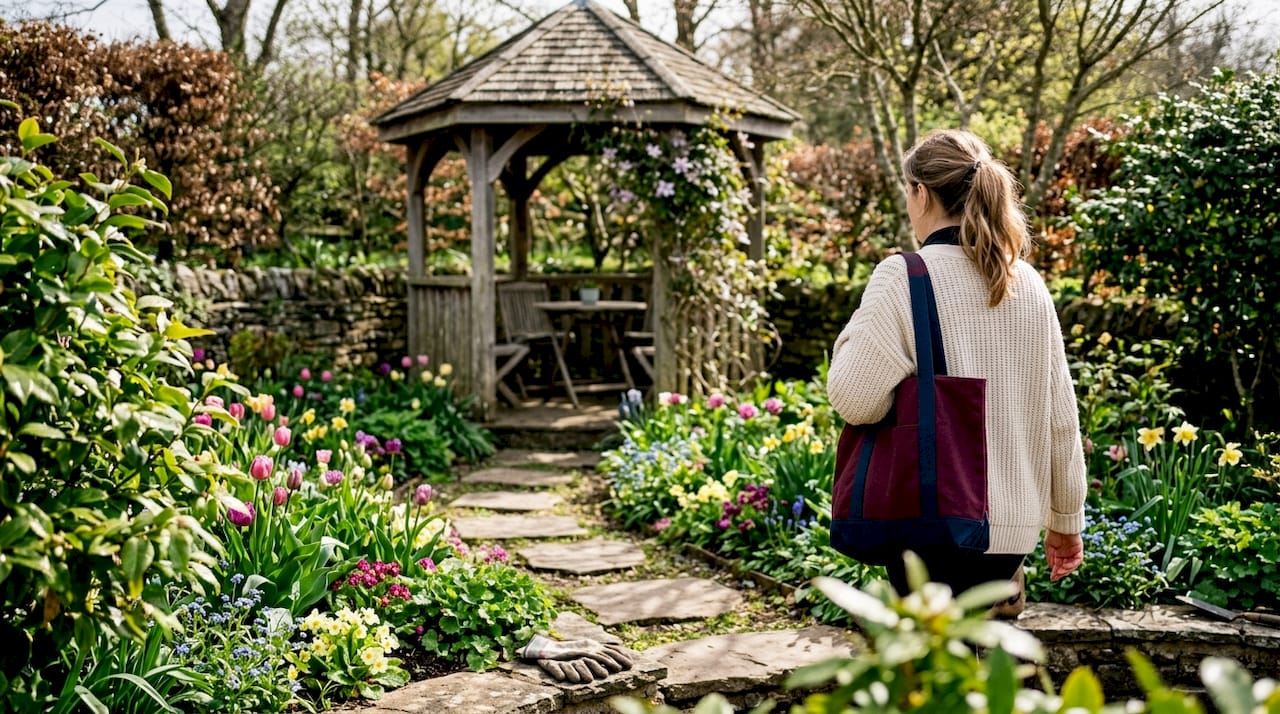
Devon gardens are defined by a rare combination of mild Atlantic climate, sharply varied microclimates, and a growing season long enough to support plants that struggle almost everywhere else in Britain. The National Garden Scheme lists 124 private Devon gardens open to the public in 2026, from grand coastal estates to intimate back gardens tucked behind stone walls. RHS Rosemoor near Great Torrington sets the benchmark for what Devon soil and shelter can achieve. Whether you garden on a windswept North Devon headland or a sheltered South Hams valley, the county rewards those who understand its conditions and work with them rather than against them.
1. What makes Devon gardens different from the rest of the UK?
Devon’s multiple microclimates within a single property set it apart from more uniform gardening zones across Britain. A south-facing dry bank and a shaded damp corner can sit within ten metres of each other, demanding entirely different plant choices. This is not a challenge to manage around. It is an opportunity to grow a wider range of plants than almost any other county allows. The key is reading your plot carefully before you plant a single thing.
The county’s mild winters and long growing season create what local horticulturalists call the Devon advantage. Tender exotics that would perish in the Midlands or the North can thrive in a sheltered Devon corner with minimal protection. That said, coastal exposure and clay-heavy soils introduce real constraints that uniform gardening advice never addresses.
2. Best plants for Devon gardens: coastal varieties
Salt-tolerant plants are the foundation of any successful coastal Devon garden. Coastal gardens rely on hardy plants like Hebe, Lavender, and Rosemary, all of which handle salt spray without losing vigour. Glossy-leaved varieties such as Escallonia and Griselinia also perform well because their waxy surfaces shed salt rather than absorbing it.
Agapanthus is one of the most rewarding choices for a sheltered coastal spot. Its strap-like leaves and bold blue flower heads look architectural against a backdrop of sea or sky. Phormium tenax (New Zealand flax) adds year-round structure and tolerates both salt and wind with ease.
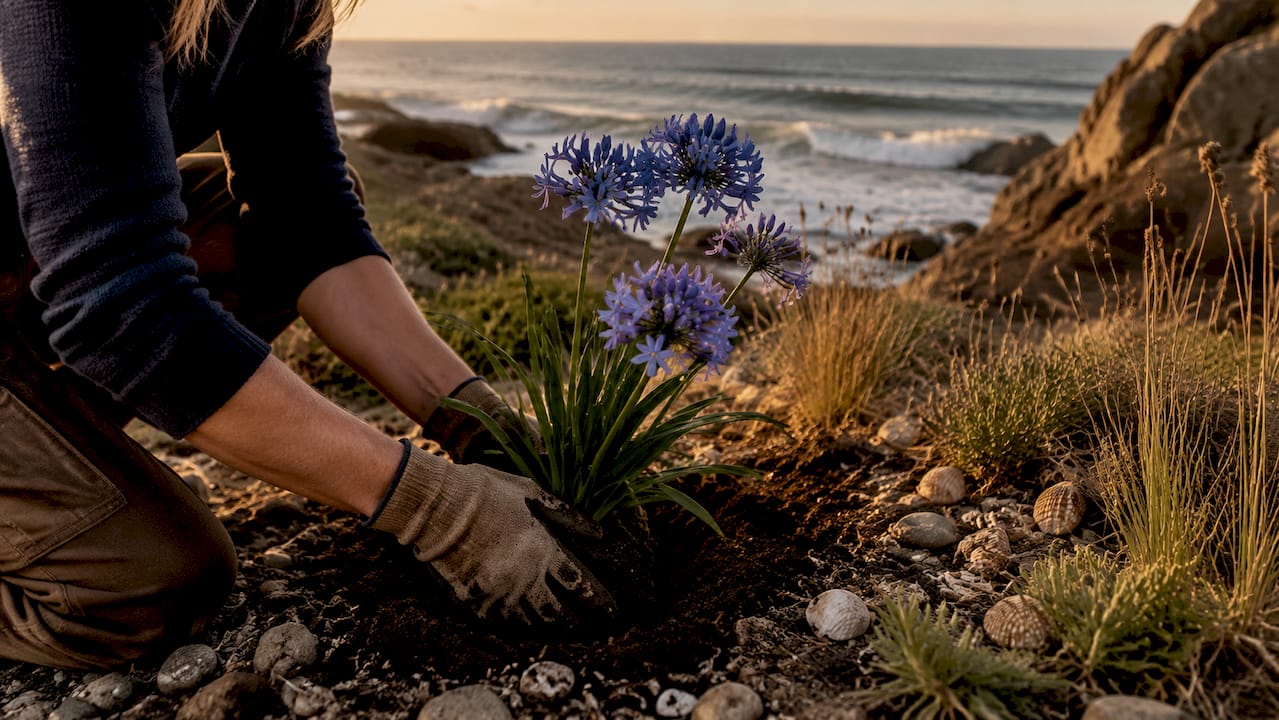
Pro Tip: Plant coastal species in groups of three or five rather than single specimens. Grouped plants create their own micro-shelter and establish faster than isolated individuals.
Avoid large-leaved plants like Gunnera or Hydrangea paniculata in fully exposed coastal positions. Salt desiccates their foliage quickly, and no amount of watering compensates for that damage.
3. Best plants for Devon gardens: inland and sheltered spots
Sheltered inland Devon gardens open the door to genuinely exotic planting. Tree ferns (Dicksonia antarctica) establish reliably in sheltered valleys across South Devon and mid-Devon. Bananas (Musa basjoo), Canna lilies, and Hedychium (ginger lily) all overwinter outdoors with a light mulch in the mildest spots. These are not novelty plants. They are genuinely at home here in a way they are not in most of Britain.
For inland clay and loam soils, cottage garden favourites perform strongly. Hardy Geraniums, Astrantia, Persicaria, and Achillea all thrive in Devon’s reliable rainfall without needing irrigation. Native plants like Foxglove, Red Campion, and Wild Garlic naturalise readily and support local pollinators throughout the season.
Bare-root roses planted between november and march establish faster than container-grown specimens and cost considerably less. Devon’s mild winters mean bare-root stock rarely suffers frost damage if planted promptly on arrival.
4. How to design a Devon garden around its microclimates
Understanding your plot’s microclimates is the single most useful thing you can do before spending money on plants. Walk your garden at different times of day across different seasons. Note where frost lingers, where the soil dries fastest, and where wind funnels through gaps in boundaries. That information shapes every planting decision you make.
Devon gardens often contain microclimates requiring plant selection tailored to hyper-local conditions rather than a uniform approach. A pergola on a south-facing wall creates a warm, sheltered microclimate suitable for a trained fig or a tender Ceanothus. A north-facing border under a canopy suits ferns, Hostas, and Epimediums that would scorch in full sun.
Windbreaks and shelter
Permeable windbreaks reduce wind speed on the leeward side by up to ten times their height when they filter rather than block wind. That is a significant reduction. A solid fence, by contrast, creates turbulence on its leeward side that can damage plants more than an open site would.
Salt-laden winds damage foliage in coastal Devon, and permeable hedges or willow screens outperform solid fences in every measurable way. Griselinia littoralis, Escallonia, and Pittosporum tenuifolium all make excellent filtering hedges for coastal sites. Willow hurdles work well as temporary screens while permanent hedging establishes.
Pro Tip: Plant your windbreak hedge at least two years before attempting tender or specimen planting behind it. Rushing this step is the most common reason coastal garden schemes fail.
Soil and drainage considerations
Raised beds solve two problems at once in Devon. They improve drainage on clay-heavy ground and create a distinct microclimate slightly warmer than the surrounding soil. A 30cm raised bed filled with a mix of topsoil, grit, and compost gives you near-complete control over growing conditions regardless of what lies beneath.
5. Spring preparation for Devon gardens: when and what to do
Spring preparation in Devon starts in late february or early march when soil temperature reaches around 6°C. At that point, soil organisms become active, roots begin to grow, and pruning cuts heal quickly. Starting earlier than this wastes effort and risks damaging plants that are still dormant.
The key spring tasks, in order of priority:
- Soil testing. Check pH and drainage before adding any amendments. Devon soils vary from acid moorland peat to alkaline limestone, and the wrong pH locks out nutrients regardless of how much fertiliser you apply.
- Pruning summer-flowering shrubs. Buddleja, Caryopteris, and Lavatera all flower on new wood and benefit from hard pruning in early spring. Cut Buddleja back to 30cm above the base for the strongest new growth.
- Clearing winter debris. Remove dead stems and fallen leaves from borders, but leave any stems that held seed heads through winter until march. Many beneficial insects overwinter inside hollow stems.
- Planting hardy vegetables. Broad beans, onion sets, and garlic can go in from late february in sheltered Devon plots. Courgettes and French beans wait until after the last frost, typically mid-may in most of Devon.
- Pest management. Slugs and vine weevils are active earlier in Devon than in colder counties. Apply nematode treatments to the soil from march onwards when soil temperature is consistently above 5°C.
Pro Tip: Test your soil temperature with a cheap probe thermometer rather than guessing by calendar date. Devon’s microclimates mean one part of your garden may be ready two weeks before another.
Feeding established shrubs and perennials with a balanced granular fertiliser in early spring sets them up for the whole season. Apply after pruning and before new growth extends beyond 5cm.
6. Managing Devon’s soil and moisture challenges
Wet feet from clay-rich loam kill more plants than frost in Devon gardens. This is the single most important fact for Devon gardeners to internalise. Waterlogging deprives roots of oxygen and creates conditions where fungal pathogens thrive. A plant that survives a hard frost will often collapse in a waterlogged border the following spring.
The practical solutions are straightforward:
- Add horticultural grit at a ratio of one part grit to three parts existing soil when planting into clay. Do not add sand. Fine sand and clay combine to create a near-concrete consistency.
- Build raised beds for any plants that require free drainage, including Mediterranean herbs, most bulbs, and tender exotics.
- Avoid walking on wet soil. Compaction destroys the structure that drainage depends on. Lay stepping stones or planks across borders before any winter or early spring work.
Pro Tip: If water pools on your soil surface for more than an hour after heavy rain, you need drainage intervention before planting. No plant selection compensates for genuinely waterlogged ground.
Winter pruning is recommended over aggressive clearing to protect soil fauna and winter-active wildlife. Leaving root systems intact over winter also holds soil structure together. Pulling out large shrubs in november disturbs the soil web that supports spring growth.
Phased pruning over three years, removing no more than one-third of a congested shrub each time, avoids shock and supports long-term plant health. This approach takes patience, but it produces far stronger plants than a single hard cut.
Key takeaways
Devon gardens thrive when gardeners match plant choices to specific microclimates, prioritise drainage over frost protection, and use permeable windbreaks to filter rather than block coastal winds.
| Point | Details |
|---|---|
| Microclimates define success | Assess sun, shade, and wind across your plot before selecting any plants. |
| Drainage beats frost protection | Improving clay soil drainage prevents more plant loss than any winter covering. |
| Permeable windbreaks outperform fences | Filtering hedges reduce wind speed far more effectively than solid barriers. |
| Spring prep starts at 6°C soil temp | Begin pruning, planting, and pest management when soil reaches 6°C in late february. |
| Phased pruning protects plant health | Remove no more than one-third of any shrub per year to avoid shock and decline. |
What gardening in Devon has taught me
The thing that surprises most gardeners when they move to Devon is how little the county resembles the rest of Britain once you start paying attention. I spent my first season here treating the garden like a Midlands plot and lost half my planting to waterlogging and salt burn. The second season, I started reading the land instead of imposing a plan on it.
The microclimate lesson is the one I return to constantly. A sheltered corner behind a Griselinia hedge in my North Devon garden grows Agapanthus and a Chusan palm without any winter protection. Twenty metres away, in a gap in the boundary, the wind strips foliage from plants that should be perfectly hardy. The difference is not the plant. It is the position.
What I find genuinely exciting about Devon gardening is that the county rewards experimentation in a way that colder regions simply cannot. The long growing season means mistakes are recoverable. A plant that fails in one spot often succeeds three metres away. That encourages a kind of confident curiosity that makes gardening here genuinely enjoyable rather than anxious.
My honest advice: resist the urge to fill every space in year one. Spend a full growing season watching your plot before committing to permanent planting. The garden will tell you what it wants if you give it time to speak.
— Mark
Devon gardens and local experiences worth exploring
Devon’s gardens are best enjoyed alongside everything else the county has to offer. A morning at a National Garden Scheme open garden pairs naturally with lunch at a local farm café or an afternoon walk along a coastal path. Thedevondrop covers the full range of Devon experiences, from things to do across the county to the best places to stay and eat.

If you are planning a garden-focused visit or a weekend away that takes in some of Devon’s finest green spaces, Thedevondrop’s dining, spa, and weekend stay listings are a practical starting point. The county’s gardens are at their best from april through october, and combining a garden visit with a stay at a local country hotel or a meal at a farm-to-table restaurant makes for a genuinely memorable trip.
FAQ
What is the best time to visit Devon gardens?
April through october offers the widest range of colour and interest across Devon’s gardens. The National Garden Scheme opens many private Devon gardens on specific dates throughout this period.
Which plants grow best in coastal Devon gardens?
Hebe, Lavender, Rosemary, Escallonia, and Griselinia are the most reliable choices for exposed coastal sites. All tolerate salt spray and establish well in Devon’s mild conditions.
How do I improve drainage in a Devon clay garden?
Add horticultural grit at one part grit to three parts existing soil, and build raised beds for plants that need free drainage. Avoid adding sand, which compacts with clay rather than improving it.
When should I start spring gardening in Devon?
Spring preparation begins in late february or early march when soil temperature reaches 6°C. Starting before this point offers no benefit and risks disturbing dormant plants and soil organisms.
Are tender exotic plants worth trying in Devon?
Tree ferns, Agapanthus, Canna lilies, and Musa basjoo all establish reliably in sheltered Devon gardens. The county’s mild winters make these plants a practical choice rather than a gamble, provided you site them in a protected spot.