Devon, England: the complete leisure and travel guide
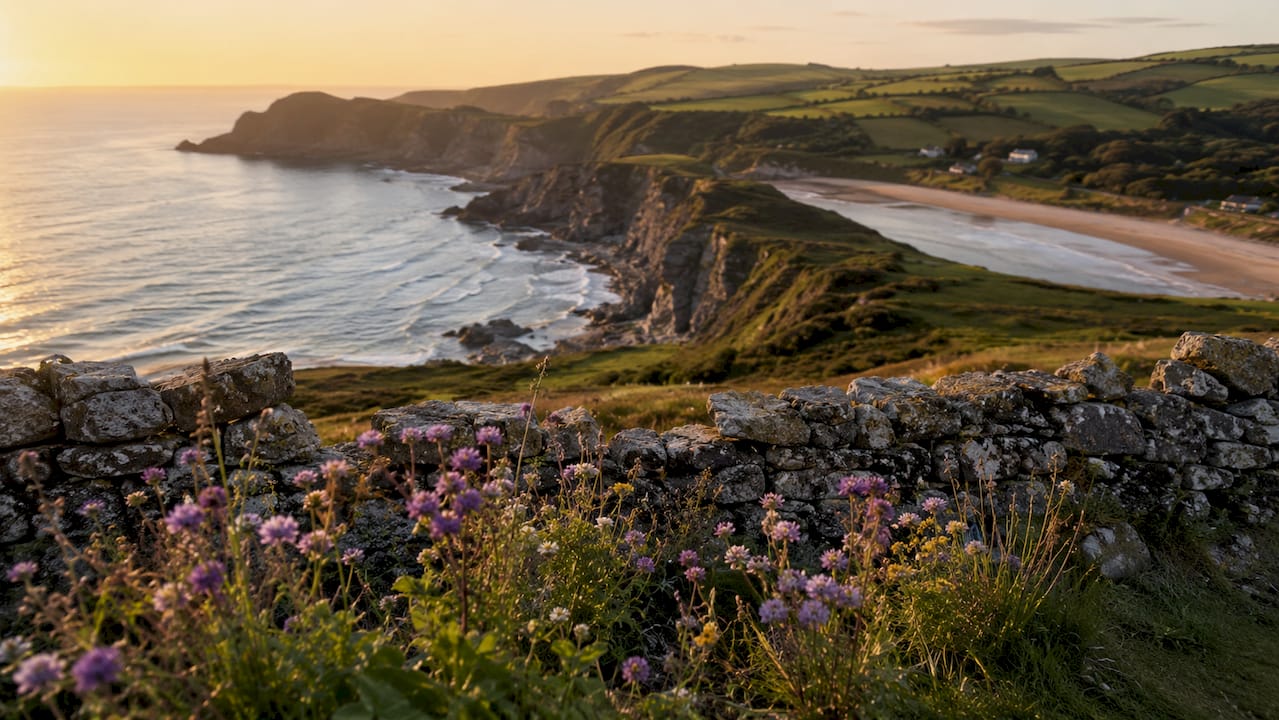
Devon, England, is the only UK county with two distinct coastlines, one facing the Bristol Channel to the north and one facing the English Channel to the south. That geographical fact alone sets Devon apart from every other county on the map of England. Covering 6,707 km² with a population of approximately 1.25 million, it offers a range of experiences that few regions in Britain can match. From Atlantic surf beaches in North Devon to sheltered coves along the English Riviera, from Dartmoor’s granite moorland to Exeter’s medieval cathedral quarter, this is a county that rewards both the first-time visitor and the lifelong local.
What makes Devon’s geography and coastline special?
Devon’s dual coastlines create two entirely different worlds within the same county. The north coast, facing the Atlantic via the Bristol Channel, delivers dramatic cliffs, wide sandy beaches, and powerful surf. The south coast, sheltered by the English Channel, offers calmer waters, wooded estuaries, and the mild microclimate that earned Torbay its nickname, the English Riviera. No other county on the UK map presents this contrast so sharply.
Around 65% of Devon’s coastline carries Heritage Coast designation, which means it is protected from development and managed for public access and natural beauty. That figure translates directly into the quality of what you see when you walk the cliffs or sit on a beach here. The landscape has not been compromised by ribbon development, and that restraint is visible at every headland.
The beaches themselves divide neatly by character. On the north coast, Woolacombe, Saunton, Croyde, and Westward Ho! face the open Atlantic and produce the kind of consistent swell that draws surfers from across Britain. On the south coast, spots like Babbacombe Beach near Torquay offer a peaceful shingle cove with calm, clear water, accessible by the historic Babbacombe Cliff Railway from Babbacombe Downs. The contrast between these two coastlines is the defining feature of Devon’s beach offer.
Inland, the county sits between two national parks. Dartmoor National Park occupies the high granite plateau at Devon’s centre, with open moorland, ancient stone rows, and wild ponies. Exmoor National Park straddles the Devon and Somerset border to the north, offering heather-covered hills that drop sharply to the sea. Both parks are within an hour’s drive of most parts of the county, which means outdoor adventure is never far away regardless of where you base yourself.

Pro Tip: If you are planning a beach visit to popular spots like Babbacombe or Breakwater Beach, arrive early in the morning to secure parking without stress, even during peak summer weeks.
Which villages, towns, and hidden gems define Devon’s charm?
Devon’s settlements range from two cities to dozens of market towns and hundreds of villages, many of which carry names that reveal their Celtic origins. Place names ending in combe, for instance, derive from the Brittonic word cwm, meaning valley. You will find this suffix across the county, from Ilfracombe on the north coast to Salcombe in the south, each name a small piece of living linguistic history.
The county’s main urban centres each have a distinct personality:
- Exeter is the county town, home to a Norman cathedral, a thriving university, and a compact historic centre that survived the Second World War bombing raids better than many English cities.
- Plymouth is Devon’s largest city, with a proud maritime history, the Barbican waterfront quarter, and the National Marine Aquarium.
- Torquay, together with Paignton and Brixham, forms the Torbay conurbation, which functions as Devon’s primary tourist centre along the south coast.
- Barnstaple is the main market town for North Devon, serving as the commercial hub for the north Devon UK coastline and the gateway to the Atlantic beaches.
Beyond the cities, the smaller towns and villages are where Devon’s real character lives. Totnes is a market town on the River Dart with a reputation for independent shops, a Norman castle, and a food culture that punches well above its size. Sidmouth is a Regency seaside town that grew with the arrival of the railway in the 19th century and has retained its elegant seafront architecture. Bideford, on the Torridge estuary in North Devon, is a working port town with a medieval bridge and a quieter, less-visited appeal than the coastal resorts.
| Town or village | Character and appeal |
|---|---|
| Totnes | Independent market town, Norman castle, strong food and arts scene |
| Sidmouth | Regency seafront, folk festival, quieter south Devon base |
| Bideford | Medieval bridge, working estuary port, gateway to North Devon |
| Clovelly | Car-free fishing village, cobbled main street, National Trust managed |
| Dartmouth | Estuary town, Royal Naval College, ferry links and coastal walks |
Clovelly deserves a particular mention. This car-free fishing village on the North Devon coast is privately owned and managed, with a single cobbled street that drops steeply to a small harbour. It is one of the most photographed villages in England, and rightly so, though arriving on a weekday outside school holidays makes the experience considerably more rewarding.
What are the must-try local foods and dining experiences in Devon?
Devon cuisine is defined by quality local produce and a strong culture of artisanal food making. The county’s cream teas, seafood, and artisanal producers are recognised nationally, and farmers markets and food festivals celebrating regional produce are widespread throughout the county. Eating well in Devon is not difficult. The harder task is choosing where to start.
Here are the food experiences worth prioritising on any visit:
- A proper Devon cream tea. The regional debate about whether jam or clotted cream goes on the scone first is genuine and long-standing. In Devon, cream goes on first, then jam. Order one at a traditional tearoom in Dartmouth, Totnes, or any village with a National Trust property nearby.
- Fresh crab and lobster on the quay. Brixham is one of England’s busiest fishing ports, and buying directly from the quayside fish market or a harbourside café gives you seafood that was caught the same morning.
- Farmers markets for local producers. Exeter’s weekly farmers market and the Totnes market on Fridays both showcase Devon cheese, charcuterie, sourdough, and seasonal vegetables from farms within the county.
- Pub dining in a village inn. The Mason’s Arms at Branscombe, the Drewe Arms at Drewsteignton, and the Nobody Inn at Doddiscombsleigh are three pubs that have built genuine reputations for food without becoming restaurant-style operations.
- Seafood restaurants in Dartmouth and Salcombe. Both towns have restaurants that source locally and cook with real skill. The Seahorse in Dartmouth has a particular reputation for whole fish and shellfish cooked simply and well.
Pro Tip: Devon’s food festivals are worth planning around. The Dartmouth Food Festival in October and the Exeter Festival of South West Food and Drink in spring both bring together producers, chefs, and growers in a way that supermarkets simply cannot replicate.
What outdoor activities and events can visitors enjoy in Devon?
Devon’s outdoor offer is one of the most varied in England. The county’s geography, two coastlines, two national parks, and a network of river valleys, supports activities that range from gentle coastal strolling to serious multi-day hiking and Atlantic surfing.
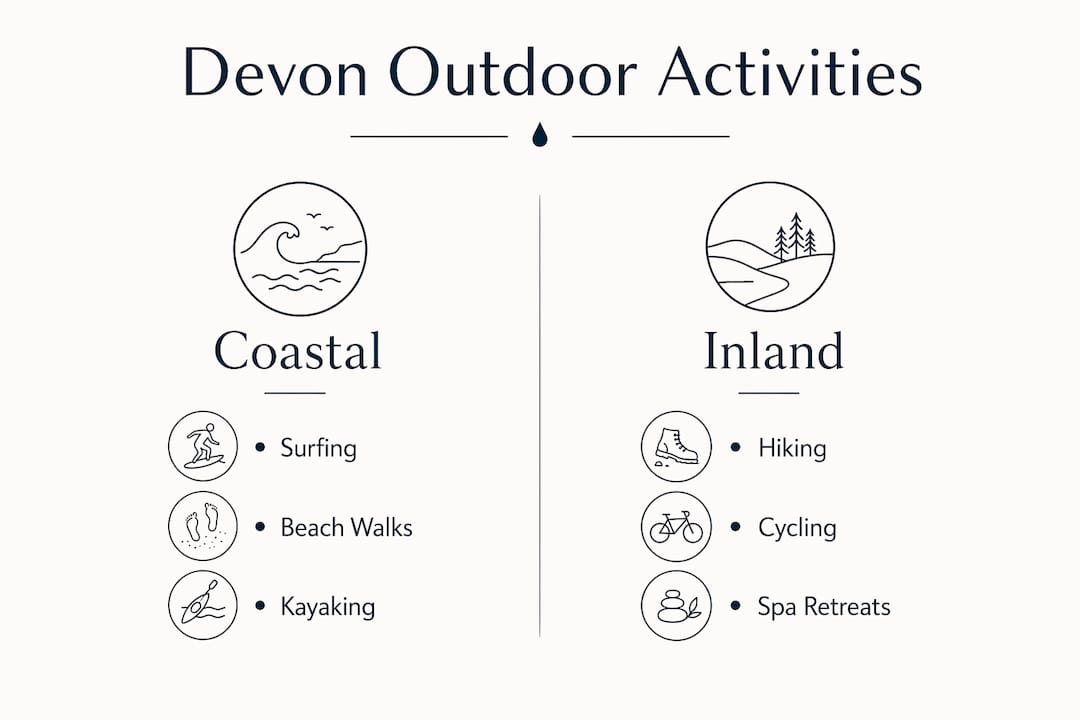
The South West Coast Path is the backbone of Devon’s walking offer. It runs along the entire length of Devon’s coastlines, with dramatic scenery at every stage. The stretch between Lynmouth and Combe Martin in North Devon is among the most challenging and rewarding sections of the entire 1,014-kilometre national trail. The south Devon sections between Dartmouth and Salcombe offer easier walking with estuary views and ferry crossings that add a pleasing logistical puzzle to the day.
Water sports are concentrated on the north coast. Woolacombe, Croyde, and Saunton are the primary surfing beaches, with surf schools operating throughout the season from April to October. Kayaking is popular on the Dart, Exe, and Tamar estuaries, where tidal conditions create interesting paddling without the exposure of the open coast. Coasteering, which involves scrambling, swimming, and jumping along rocky shorelines, is offered by several operators around the Hartland Peninsula and the South Hams coast.
Key activities and events by season:
- Spring: Coastal walking as wildflowers appear on cliff paths; Exeter Festival of South West Food and Drink; birdwatching on Exmoor.
- Summer: Surfing at North Devon beaches; sea kayaking on the Dart and Exe; Dartmouth Royal Regatta in late August; Sidmouth Folk Festival in early August.
- Autumn: Dartmouth Food Festival; cycling the Tarka Trail between Barnstaple and Bideford; foraging walks on Dartmoor.
- Winter: Quiet coastal walks with dramatic light; spa retreats and country house hotels; Christmas markets in Exeter and Plymouth.
For those seeking wellness rather than adrenaline, Devon has a strong spa and retreat offer. Country house hotels across the county provide spa facilities, and the combination of rural quiet and coastal air makes Devon a genuinely restorative destination. You can explore Devon spa day options to find retreats that suit different budgets and preferences.
Cycling is well served by the Tarka Trail, a 51-kilometre traffic-free route that follows the rivers Taw and Torridge through the North Devon countryside between Braunton and Meeth, passing through Barnstaple at its centre. The route is largely flat, making it accessible for families and leisure cyclists, and the scenery along the river valleys is genuinely lovely.
Key takeaways
Devon, England, rewards visitors and locals alike through its unique combination of dual coastlines, protected Heritage Coast, and a food and outdoor culture that is deeply rooted in the county’s geography and history.
| Point | Details |
|---|---|
| Dual coastlines | Devon is the only UK county with both a Bristol Channel and English Channel coast, creating two distinct beach characters. |
| Heritage Coast protection | Around 65% of Devon’s coastline is Heritage Coast designated, preserving dramatic scenery and public access. |
| Towns worth knowing | Totnes, Bideford, Sidmouth, and Clovelly offer genuine local character beyond the main tourist resorts. |
| Food culture | Brixham seafood, Devon cream teas, and farmers markets in Exeter and Totnes represent the county’s strong local food identity. |
| Outdoor range | The South West Coast Path, North Devon surf beaches, and the Tarka Trail cycling route cover walking, water sports, and cycling in one county. |
Why Devon keeps pulling me back
I have spent time in most of England’s counties, and Devon is the one that consistently surprises me. Not because of the obvious things, the cream teas and the surf, but because of the sheer density of genuinely good places within a short drive of each other. You can walk a dramatic cliff path in the morning, eat fresh crab on a harbour wall at lunch, and be sitting in a quiet pub in a village that has barely changed in fifty years by evening. That combination is rarer than people realise.
The advice I give to anyone visiting for the first time is to resist the pull of the most famous names. Woolacombe is magnificent, but so is Croyde, and Croyde has a village feel that Woolacombe cannot quite match. Dartmouth is beautiful, but Dittisham, a few kilometres up the Dart by ferry, is quieter and just as lovely. The county rewards the slight detour, and the map of Devon is full of them.
One thing I would push back on is the idea that Devon is only a summer destination. The autumn and winter coastline has a quality of light and a sense of space that the summer crowds obscure. Walking the South West Coast Path in October, with the bracken turning and the sea a deep grey-green, is one of the better experiences England offers. If you have only ever seen Devon in July, you have not seen all of it.
— Mark
Discover more of Devon with Thedevondrop

Thedevondrop is built for people who want to get more from Devon, whether that means finding the right beach for a family day out, tracking down a spa retreat in the South Hams, or discovering a village you have never visited before. The site brings together curated local experiences and guides that go beyond the standard tourist trail. If you are planning a trip or simply looking for something new closer to home, explore Devon experiences on Thedevondrop to find ideas worth your time. For accommodation, the Devon hotel guide covers options from coastal guesthouses to country house hotels across the county.
FAQ
Where exactly is Devon on the UK map?
Devon sits in the south-west of England, bordered by Cornwall to the west, Somerset to the north-east, and Dorset to the east. On any map of Devon, England, it occupies the widest part of the South West Peninsula.
What are the best beaches in Devon?
North Devon beaches including Woolacombe, Croyde, and Saunton are best for surfing, while south Devon beaches such as Babbacombe and Blackpool Sands offer calmer, sheltered swimming. The best beaches in Devon vary significantly by coast and season.
What is North Devon Barnstaple known for?
Barnstaple is the main market town for North Devon and serves as the commercial and transport hub for the region. It sits at the centre of the Tarka Trail cycling route and is the primary gateway to the Atlantic surf beaches at Croyde, Saunton, and Woolacombe.
How big is Devon compared to other English counties?
Devon covers 6,707 km², making it the third-largest county in England by area. Its population of approximately 1.25 million is spread across two cities, Plymouth and Exeter, and a large number of market towns and rural villages.
Is Devon worth visiting outside of summer?
Devon is genuinely rewarding in autumn and winter, with quieter roads, dramatic coastal light, and lower accommodation prices. The South West Coast Path, Dartmoor, and Devon’s food and pub culture are all at their best when the summer crowds have gone.