Devon Day: your complete guide to 4 June celebrations
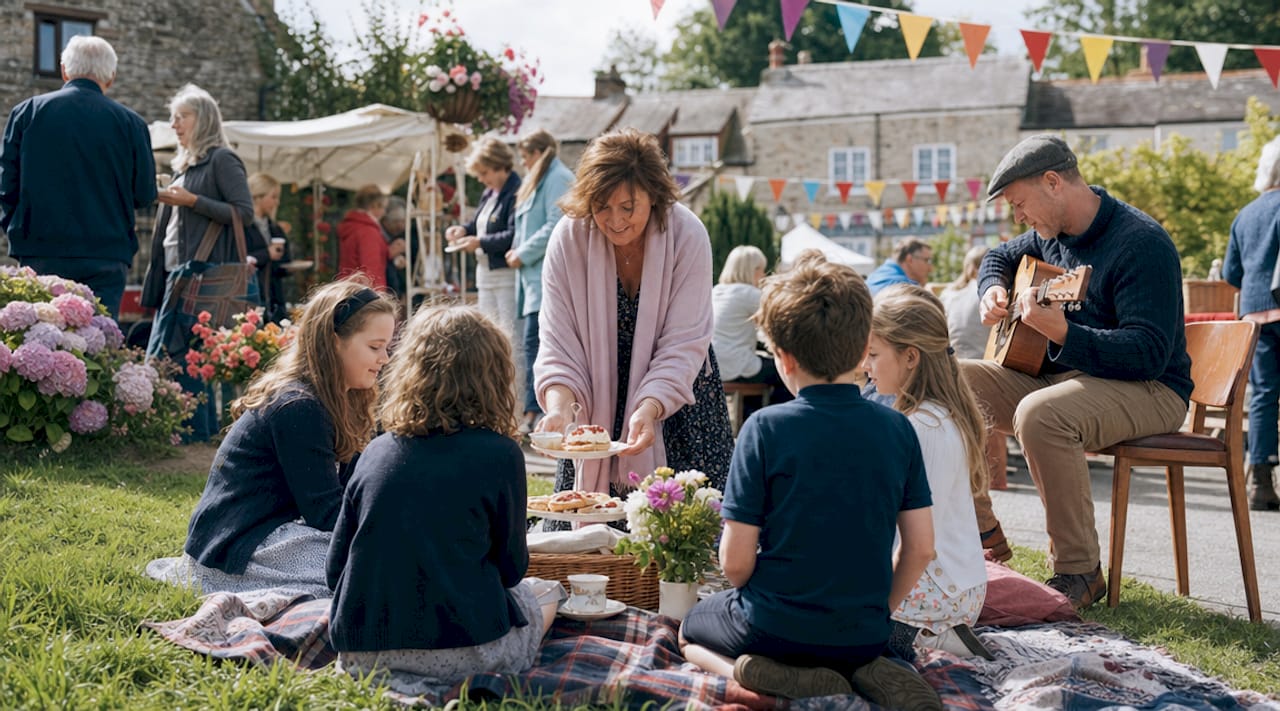
Devon Day is the official annual celebration of Devon’s culture, heritage, and identity, held every 4 June as a countywide day of recognition. Officially established in 2016, the day is rooted in the feast of St Petroc, a 6th-century Celtic saint with deep ties to the region. Whether you are a first-time visitor or a long-time local, a Devon day trip on 4 June offers something genuinely distinct: local markets, flag-raising ceremonies, folk music, and cream teas served with proper Devon pride. This guide covers the traditions, the best places to celebrate, and how to build a day that goes well beyond the obvious.
What is Devon Day and why does it matter?
Devon Day, also known as St Petroc’s Day, is a countywide celebration held on 4 June each year, including 2026. St Petroc was a Welsh-born monk who settled in Cornwall and Devon during the 6th century, founding monasteries at Padstow and Bodmin. His influence spread across the South West, and his feast day became the natural anchor for a modern celebration of Devon’s distinct identity.
The celebration was made official in 2016, designed not as a single parade or ticketed event but as a distributed, community-led day of recognition. That structure is deliberate. Devon is a large and varied county, stretching from Exmoor in the north to the South Hams coast in the south, and no single venue could represent it fairly. The result is a patchwork of local events that collectively paint a vivid picture of what Devon actually is.
For visitors planning a Devon day trip, this decentralised format is both the charm and the challenge. You will not find one central festival ground. Instead, you will find farmers’ markets in market towns, flag ceremonies outside village halls, and folk sessions in pub gardens. The experience rewards those who plan ahead and embrace the county’s character rather than expect a conventional event.
What traditions and events happen on Devon Day?
The raising of the Devon Flag is the most recognisable Devon Day tradition. The flag, a green, black, and white cross on a white background, was officially adopted in 2003 and represents Devon’s landscapes and identity. On 4 June, it flies from public buildings, village greens, and private homes across the county. Seeing it raised at a local ceremony is a genuinely moving moment if you have any connection to the place.
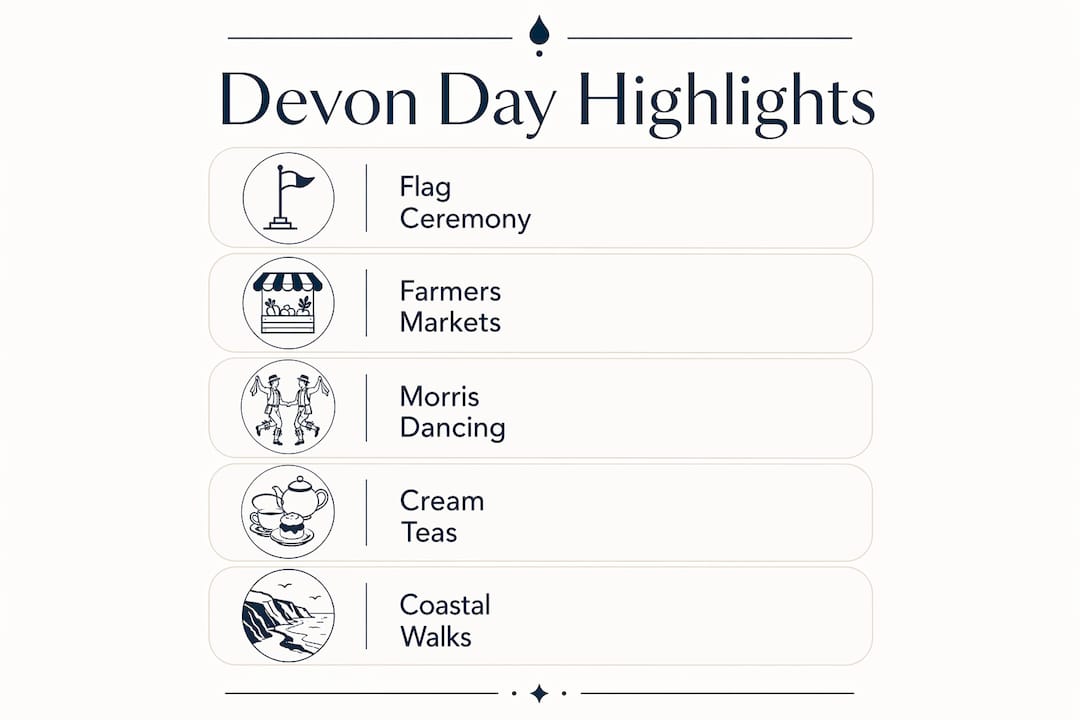
Beyond the flag, Devon Day events typically include:
- Farmers’ markets and food showcases featuring Devon cheese, clotted cream, local cider, and artisan produce
- Craft stalls and makers’ fairs run by local producers and independent businesses
- Heritage walks and guided tours of historic sites, town centres, and coastal paths
- Folk music sessions and Morris dancing in town squares and pub gardens
- Poetry readings in Devon dialect, a tradition that surprises many visitors but captures the county’s literary character
- School activities and community events that give the day a genuinely inclusive, neighbourhood feel
Food and drink are cornerstones of the celebration. Devon cream teas, in particular, carry near-ceremonial status on 4 June. The county-wide debate about whether jam or cream goes on first is, of course, unresolved and entirely intentional.
Pro Tip: Check the event listings for your chosen town or village a week before 4 June. Events are organised locally, so the programme varies significantly from place to place. Exeter, Totnes, and Tavistock tend to have particularly well-organised Devon Day programmes.
Which Devon attractions complement a Devon Day trip?
A Devon day trip on 4 June works best when you pair the cultural events with the county’s natural and visitor attractions. Devon has over 120 sandy beaches and two national parks, Dartmoor and Exmoor, which means the backdrop for any itinerary is exceptional.

For something genuinely unusual, South Devon Chilli Farm near Loddiswell grows over 600 varieties of chilli and offers tours, tastings, and a shop that draws food lovers from across the country. It fits Devon Day’s local produce theme perfectly. Combe Martin Wildlife and Dinosaur Park, on the North Devon coast, is a strong choice for families, combining live animals with dinosaur exhibits in a setting that children find memorable long after the visit.
The National Marine Aquarium in Plymouth is the largest aquarium in the UK and one of the most compelling ways to understand Devon’s relationship with the sea. Plymouth’s maritime heritage runs deep, from the Mayflower Steps to the Royal Citadel, and a morning at the aquarium followed by a Devon Day market in the Barbican area makes for a well-rounded day.
For walkers, the Devon coastal paths offer some of the finest scenery in England. The stretch between Dartmouth and Stoke Fleming, or the cliffs above Ilfracombe on the north coast, can be walked in a morning and leave you with the kind of views that make the county’s reputation entirely understandable.
Pro Tip: Combine a morning coastal walk with an afternoon Devon Day market in a nearby town. The walk earns the cream tea, and the market gives you something to browse while you recover.
How to plan a Devon Day itinerary
Effective Devon Day planning starts with accepting that you cannot cover the whole county in one day. The events are scattered, the roads in rural Devon can be slow, and trying to attend three different village fairs in three different locations will leave you frustrated. Pick one area, go deep, and let the day unfold.
The table below outlines three sample itinerary approaches based on different visitor priorities.
| Focus | Morning | Afternoon | Evening |
|---|---|---|---|
| Culture and heritage | Flag-raising ceremony in Exeter city centre, followed by a guided heritage walk | Craft market and Devon dialect poetry reading in Totnes | Dinner at a local pub with live folk music |
| Nature and walking | Coastal walk on the South West Coast Path near Dartmouth | Picnic with local produce from a Devon Day farmers’ market | Sunset at Blackpool Sands or Slapton Sands |
| Family day out | National Marine Aquarium in Plymouth, Barbican area | Devon Day market and cream tea in a South Hams village | Combe Martin Wildlife and Dinosaur Park or evening beach visit |
Balancing nearby events with natural attractions reduces travel time and creates a thematically consistent day. If you are based in North Devon, build around Barnstaple or Ilfracombe. If you are in the South Hams, Dartmouth and Kingsbridge both host strong local events. Transport is worth considering carefully. Many Devon Day events are in town centres, so parking early or using local bus services where available saves significant time.
What are the best places to celebrate Devon Day?
Devon’s towns and villages each bring a different character to the celebration. The table below summarises the key options and what they offer visitors.
| Location | Character | Devon Day highlights | Best for |
|---|---|---|---|
| Exeter | Historic city, cathedral quarter | Flag ceremonies, markets, heritage tours | Culture and history lovers |
| Dartmouth | Harbour town, medieval streets | Food markets, coastal walks, local produce | Food and scenery |
| Totnes | Independent, arts-led town | Craft fairs, folk music, dialect poetry | Arts and alternative culture |
| Plymouth | Maritime city, Barbican quarter | National Marine Aquarium, Barbican market | Families and maritime history |
| Tavistock | Market town on Dartmoor edge | Farmers’ market, Dartmoor access, local food | Walking and rural Devon |
| Ilfracombe | North Devon coastal town | Harbour events, coastal walks, local art | North Devon visitors |
Dartmouth, Salcombe, and Torquay form a strong cluster for visitors based in South Devon, combining historic harbours, excellent food scenes, and Devon Day festivities in settings that feel genuinely special. Totnes deserves particular mention. It has a reputation for independent thinking and creative culture that makes its Devon Day events feel less like a tourist programme and more like a genuine community celebration.
For those who want to avoid crowds, smaller villages such as Modbury, Chagford, and Lustleigh often hold quiet but charming local events. These are the places where Devon Day feels most authentic, where the flag goes up outside the village hall and the whole community turns out for a cream tea on the green.
Key takeaways
A Devon day trip on 4 June is most rewarding when you choose one area, research local events in advance, and combine cultural celebrations with the county’s natural and culinary highlights.
| Point | Details |
|---|---|
| Devon Day date and origin | Held every 4 June, officially since 2016, rooted in the feast of St Petroc. |
| Flag-raising tradition | The green, black, and white Devon Flag, adopted in 2003, is raised countywide on 4 June. |
| Events are decentralised | Expect multiple small local events rather than one central celebration. Research your chosen area. |
| Best locations | Exeter, Dartmouth, Totnes, Plymouth, and Tavistock each offer strong Devon Day programmes. |
| Itinerary advice | Pair a morning cultural event with an afternoon natural attraction to reduce travel and maximise enjoyment. |
Devon Day through local eyes
I have spent enough time in Devon to know that the county does not perform for visitors. It simply gets on with being itself, and Devon Day captures that quality better than almost any other event in the calendar.
What strikes me most about 4 June is how genuinely unselfconscious it is. There is no corporate sponsorship, no headline act, no ticketing infrastructure. The flag goes up, the markets open, someone reads a poem in a dialect that half the audience can barely follow, and everyone eats a cream tea. That is the whole thing. And somehow, it is exactly enough.
My honest advice is to resist the urge to optimise the day too aggressively. Devon Day spotlights local pride through small-scale, community-led events, and the best moments tend to be unplanned. The conversation with the cheesemaker at the market stall. The Morris dancers who appear without warning in a car park. The view from a coastal path that you only found because you took a wrong turn.
Go with a loose plan, a good appetite, and the willingness to follow whatever looks interesting. Devon will do the rest.
— Mark
Discover Devon experiences with Thedevondrop

Thedevondrop is the place to find curated Devon experiences that go well beyond the standard visitor guide. Whether you are planning your first Devon day trip or looking for something new to add to a familiar route, the platform brings together local activities, food experiences, and cultural events that reflect the real character of the county. From Devon’s best beaches to hidden village markets, Thedevondrop helps you find the experiences worth making the journey for. Visit The Devon Drop to explore what Devon has to offer on 4 June and beyond.
FAQ
When is Devon Day celebrated each year?
Devon Day is held on 4 June every year, including 2026. The date marks the feast day of St Petroc, a 6th-century Celtic saint with strong ties to Devon and Cornwall.
What happens on Devon Day?
Devon Day events include flag-raising ceremonies, farmers’ markets, craft fairs, folk music, Morris dancing, heritage walks, and cream teas. Events are organised locally across the county rather than at a single central venue.
Which Devon flag is raised on Devon Day?
The Devon Flag features a green, black, and white cross and was officially adopted in 2003. It is raised at public buildings, village greens, and private homes across Devon on 4 June each year.
What are the best places to visit on Devon Day?
Exeter, Dartmouth, Totnes, Plymouth, and Tavistock all host well-organised Devon Day events. Smaller villages such as Modbury and Chagford offer quieter, more intimate celebrations for visitors who prefer a local atmosphere.
How should I plan a Devon Day trip itinerary?
Choose one area of Devon and research local event listings before 4 June, as programmes vary significantly by location. Pair a morning cultural event with an afternoon visit to a beach, national park, or local attraction to make the most of the day.