Devon coasteering: the complete guide for 2026
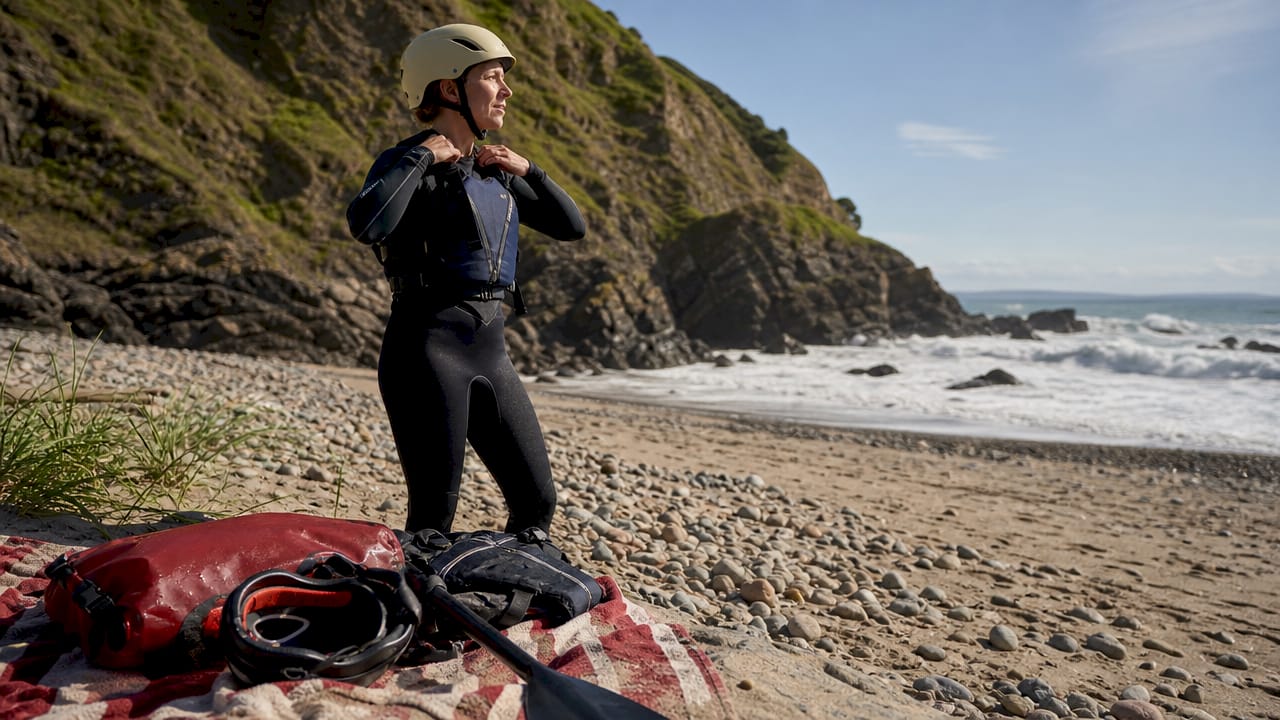
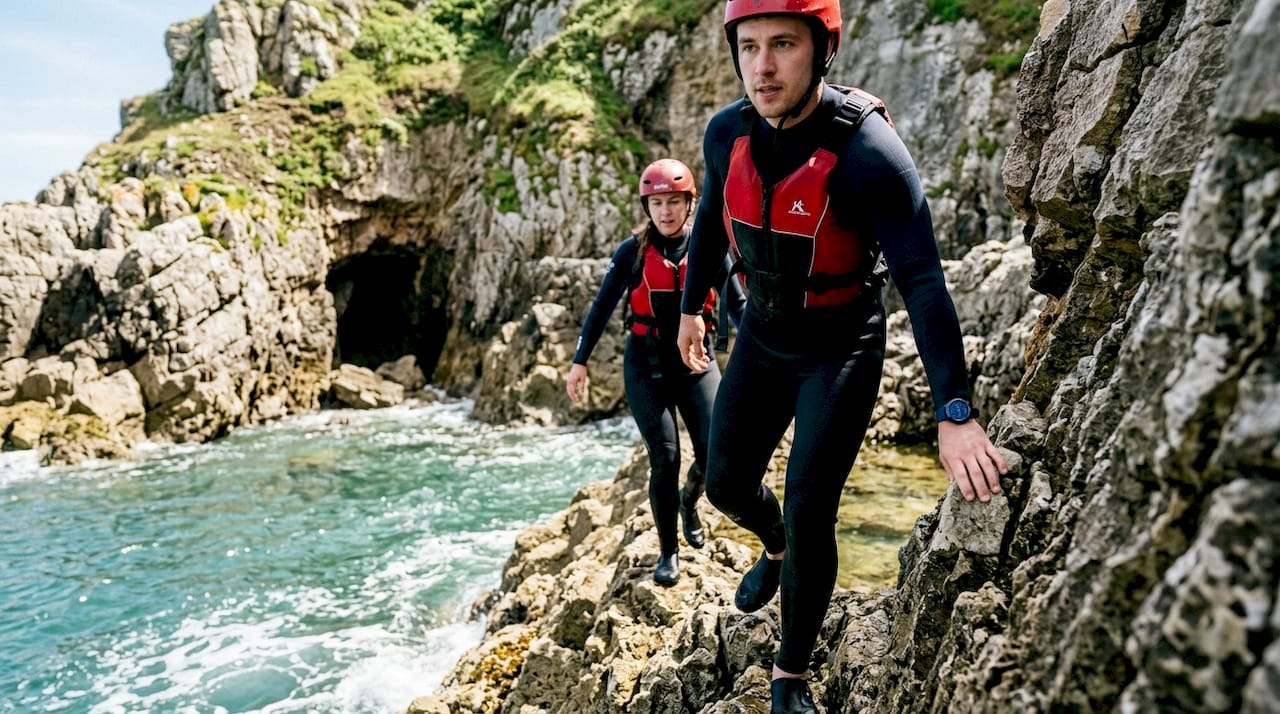
Coasteering is defined as a guided coastal adventure combining scrambling over rocks, swimming through sea channels, and jumping from cliff ledges into the Atlantic. Devon coasteering, as it is properly known in the industry, takes this activity and sets it against one of Britain’s most dramatic shorelines, from the rugged headlands of North Devon to the sheltered coves of the South Hams. Sessions typically run 3–4 hours, include all safety equipment, and suit everyone from first-timers to seasoned thrill-seekers. Locations like Baggy Point near Croyde Bay and Maidencombe near Torquay have become benchmarks for the best coasteering in Devon, offering sea caves, rocky gullies, and jump points that guides tailor to your group’s ability on the day.
What is Devon coasteering and where does it happen?
Coasteering is the recognised industry term for traversing a coastline at sea level using your body rather than a boat. You scramble, swim, and jump your way around headlands and through caves that no coastal walk can reach. Devon’s geology makes it exceptional for this. The county’s mix of Devonian slate, red sandstone, and limestone creates the varied terrain that guides need: stable ledges for jumping, sheltered pools for swimming, and sea caves that reward exploration.
Baggy Point and Maidencombe are the two premier Devon coasteering locations, each offering accessible caves and safe cliff jump points for different ability levels. Baggy Point sits at the southern tip of Croyde Bay in North Devon, where Atlantic swells carve deep gullies and the rock shelves provide jump heights ranging from a gentle 1 metre to a more committed 5 metres. Maidencombe, tucked between Torquay and Teignmouth on the South Devon coast, offers calmer water and a more sheltered environment, making it well-suited to families and mixed-ability groups.
| Location | Region | Best for | Key features |
|---|---|---|---|
| Baggy Point | North Devon | Intermediate to advanced | Deep gullies, sea caves, varied jumps |
| Maidencombe | South Devon | Beginners and families | Sheltered coves, rock pools, gentle scrambles |
| Croyde Bay | North Devon | All abilities | Atlantic swell, dramatic cliffs, cave systems |
| Torquay Geopark | South Devon | Wildlife and geology | UNESCO Geopark, marine life, historic sea caves |
Pro Tip: Book a North Devon session at Baggy Point for the most dramatic scenery, but choose Maidencombe if your group includes younger participants or less confident swimmers.
What to expect on a typical Devon coasteering session
A standard guided session lasts 3–4 hours and costs from £35 to approximately £83 per person, with all safety equipment included. That price covers a wetsuit, helmet, buoyancy aid, and windproof cag. The cost reflects the level of professional supervision and kit involved, not just the activity itself.
The session structure follows a clear pattern:
- Safety briefing. Your guide covers equipment fitting, communication signals, and what to do if you feel uncomfortable at any point.
- Scrambling. You traverse rocky sections at sea level, using handholds and footholds to move between jump points and swim zones.
- Swimming. Channels between rock formations require short swims, often with the buoyancy aid doing most of the work.
- Cliff jumping. Guides assess each jump point before you approach it. You choose your height. Nobody is pushed.
- Rock pool exploration. Low-tide sessions open up opportunities to spot anemones, crabs, and limpets in pools that are otherwise inaccessible.
- Cave exploration. Sea caves accessible only from the water add a genuine sense of discovery to the route.
Participants must be at least 6 years old, have basic swimming ability, and be physically capable of scrambling and climbing. That minimum age reflects the physical demands of the activity, not a lack of inclusivity. Guides tailor routes to the group’s fitness and confidence on the day, so a mixed group of adults and older children can share the same session without anyone feeling left behind.
Pro Tip: Schedule your session around low tide if wildlife is a priority. The marine life visible in exposed rock pools during a low-tide run rivals anything you will see on a Devon coastal walk.
How to prepare for your Devon coasteering adventure
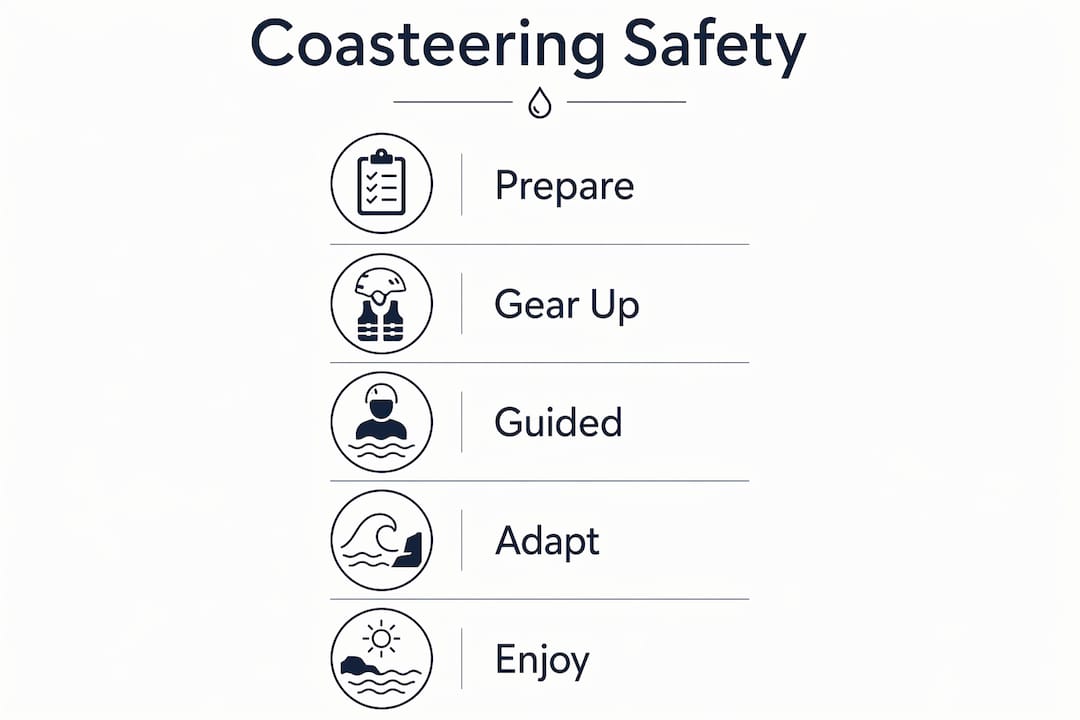
Preparation separates a great session from a frustrating one. Follow these steps before you book and before you arrive.
- Book early. Advance booking around three weeks ahead is advised during summer to secure spots at prime locations. Peak weekends at Baggy Point and Maidencombe fill quickly, and last-minute plans regularly face availability problems.
- Wear the right swimwear. Put on comfortable swimwear beneath your wetsuit. Avoid anything with buckles, zips, or hard edges that will dig in during scrambling.
- Choose proper footwear. Sturdy closed-toe shoes that can get wet are non-negotiable. Flip-flops and sandals do not stay on in surf conditions and create a genuine safety risk on wet rock.
- Assess your swimming ability honestly. You do not need to be a strong swimmer, but you must be comfortable in open water. If you are uncertain, tell your guide during the booking process.
- Prepare mentally for adaptability. Tidal and weather conditions change the route on the day. Your guide may swap one section for another. That flexibility is a feature, not a problem.
- Choose the right session type. Solo adventurers, couples, and groups each benefit from different session formats. Many Devon providers offer private group bookings that allow guides to pitch the difficulty precisely to your party.
For a broader picture of Devon’s outdoor adventure options, combining coasteering with a coastal walk the following morning makes for an outstanding two-day itinerary along either the North or South Devon coast.
How do guides keep Devon coasteering sessions safe?
Safety in coasteering rests on four pillars: equipment, knowledge, assessment, and adaptation. Every reputable Devon provider delivers all four.
The standard safety kit includes a full wetsuit, a helmet rated for impact protection, a buoyancy aid, and a windproof cag that reduces heat loss in the water. This combination keeps participants warm, visible, and buoyant even if they are tired or disoriented.
- Pre-session briefings cover every hazard on the planned route, including jump heights, current strength, and entry and exit points.
- Tidal knowledge is the guide’s most critical skill. A route that is safe at low tide can become dangerous two hours later. Guides plan sessions around tidal windows, not fixed clock times.
- Continuous risk assessment means guides reassess conditions throughout the session, not just at the start. If the sea state changes, the route changes with it.
- Group ability monitoring allows guides to redirect participants who are tiring or losing confidence before a problem develops.
“Safety is defined by informed guides who understand detailed sea conditions and weather changes, adapting routes in real time for optimal security. The best sessions are the ones where participants never notice how much risk management is happening around them.”
Guides adapt sessions to sea conditions and group ability continuously, which is why choosing a provider with experienced, locally knowledgeable staff matters more than price. A guide who has spent years on the same stretch of Devon coastline reads conditions that a less experienced instructor would miss entirely.
Why Devon coasteering works so well for groups
Coasteering is one of the few Devon adventure activities that genuinely scales to a mixed-ability group without anyone feeling sidelined. Routes are adjustable, allowing participants to choose gentle swims or high-adrenaline cliff jumps within the same session. The person who wants to jump from 5 metres and the person who prefers to wade in from a rock shelf can share the same experience without either compromising.
The activity builds group cohesion in a way that a restaurant booking or a spa day simply cannot replicate. Stag and hen parties, corporate groups, and family gatherings all report the same outcome: shared challenge creates shared memory. The reasons are straightforward:
- Every participant faces the same physical environment, regardless of fitness or experience.
- Encouraging a friend to take their first jump from a ledge creates a moment of genuine connection.
- The natural setting, sea caves, open Atlantic, and dramatic cliffs, provides a backdrop that no indoor venue can match.
- Guides structure the session to give every participant a personal achievement, however modest.
For groups planning a Devon weekend, pairing a coasteering session with an evening meal and an overnight stay turns a single activity into a full celebration. Thedevondrop’s Devon weekend itineraries include suggestions for combining outdoor adventures with the county’s best food and accommodation.
Key takeaways
Devon coasteering is the most adaptable coastal adventure in the county, combining professional safety management with terrain that suits every ability from age 6 upwards.
| Point | Details |
|---|---|
| Book three weeks ahead | Summer demand fills prime spots at Baggy Point and Maidencombe quickly. |
| Wear closed-toe shoes | Flip-flops are a safety hazard on wet rock and in surf conditions. |
| Sessions cost £35–£83 | All safety equipment is included; price reflects professional supervision. |
| Low tide unlocks wildlife | Schedule around tidal cycles to access rock pools and marine life. |
| Groups of all abilities are welcome | Guides adapt routes in real time so mixed-ability groups share the same session. |
My honest view on Devon coasteering
I have spent a lot of time on Devon’s coastline, and coasteering consistently surprises people who expect it to be purely about adrenaline. The jumps get the attention, but the moments that stay with you are quieter: a sea cave that opens into a chamber of filtered light, a rock pool at low tide teeming with life you have never seen up close, the particular silence of floating in a sheltered gully while Atlantic swells push gently against the rock.
The most common mistake I see first-timers make is choosing a session based on jump height rather than location quality. Baggy Point at the right tide, with an experienced guide, is a richer experience than any high-jump session on a mediocre stretch of coast. Ask your provider about the tidal window for your session date before you book. If they cannot answer that question clearly, find a different provider.
Groups often underestimate how physically demanding the scrambling sections are compared to the swimming and jumping. Build in recovery time after your session. A coasteering morning followed by a long coastal walk the same afternoon is ambitious. A coasteering morning followed by a good lunch and a gentle evening stroll is the right call.
For first-timers who are nervous, Maidencombe is the right starting point. The sheltered water and gentler terrain let you find your confidence before committing to the bigger challenges that North Devon offers. There is no shame in starting easy. The people who enjoy coasteering most are the ones who arrive with realistic expectations and leave wanting to come back.
— Mark
Devon adventure experiences worth knowing about
Devon’s coastline offers some of the most varied outdoor experiences in Britain, and coasteering sits at the heart of that offer.

Thedevondrop brings together the best Devon experiences in one place, from outdoor adventures and activities to dining, spa breaks, and weekend stays across the county. Whether you are planning a group coasteering trip or looking to combine a session with a night at a coastal hotel, Thedevondrop’s curated selection covers the full picture. If you want to round off an adventure day with something special, the Cary Arms & Spa dinner offer pairs beautifully with a morning on the water. Browse the full range of Devon experiences at Thedevondrop and plan your next coastal adventure properly.
FAQ
What is coasteering?
Coasteering is a guided outdoor activity that combines scrambling over coastal rocks, swimming through sea channels, and jumping from cliff ledges at sea level. It requires no specialist experience and all safety equipment is provided by the guide.
How much does coasteering in Devon cost?
Sessions cost from £35 to approximately £83 per person, including wetsuit, helmet, buoyancy aid, and windproof cag. Session length is typically 3–4 hours.
What age is coasteering suitable for?
Participants must be at least 6 years old and have basic swimming ability. Guides tailor routes to group age and fitness, making the activity accessible to families and mixed-ability groups.
What should I wear for coasteering in Devon?
Wear comfortable swimwear beneath your wetsuit and sturdy closed-toe shoes that can get wet. Flip-flops and sandals are unsafe on wet rock and in surf conditions.
When is the best time to book Devon coasteering?
Book at least three weeks in advance during summer, particularly for weekend sessions at popular locations like Baggy Point and Maidencombe. Last-minute bookings regularly face availability problems during peak season.