Dartmoor trails: the complete hiking guide for 2026
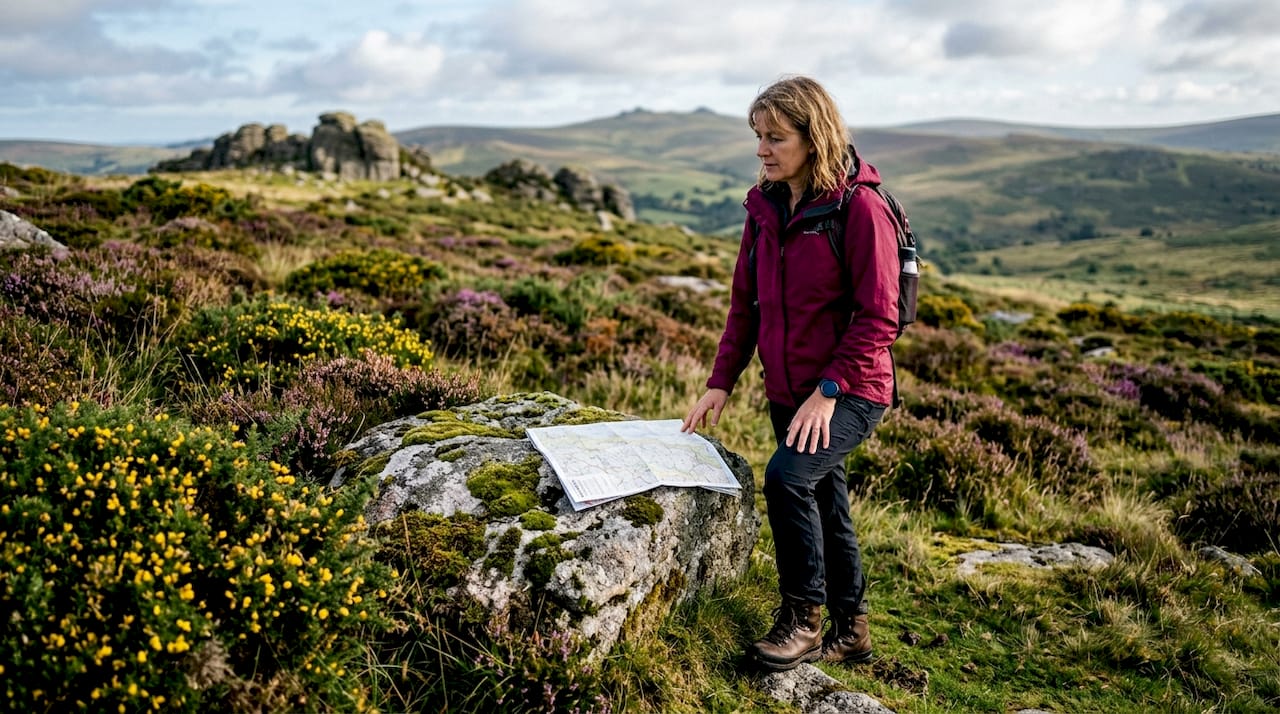
Dartmoor trails are a network of marked and unmarked walking routes across Dartmoor National Park, spanning open moorland, ancient woodland, river valleys, and historic ruins. The park covers around 954 square kilometres of south-west England, making it one of the largest open spaces in southern Britain. Routes range from gentle tarmac paths suitable for pushchairs to demanding moorland circuits requiring map and compass skills. Whether you are heading for the granite bulk of Haytor, the twisted oaks of Wistman’s Wood, or the summit of High Willhays, Dartmoor rewards walkers who come prepared. This guide covers the best routes, preparation essentials, and seasonal advice you need for a safe and memorable day out.
What are the best Dartmoor walking routes for different abilities?
Dartmoor’s hiking paths suit every level, but the gap between an easy stroll and a serious moorland circuit is significant. Choosing the right route from the start saves frustration and keeps the experience enjoyable.
| Route | Distance | Difficulty | Best for |
|---|---|---|---|
| Shipley Bridge to Avon Dam | 4 miles | Easy | Families, wheelchair users |
| Haytor and Hound Tor Circular | 7.4 km | Moderate | Mixed groups, dog walkers |
| Wistman’s Wood circular | 3–8 km | Moderate | Nature lovers, confident walkers |
| Dartmoor Tors Circuit | 13 km | Challenging | Experienced hikers |
| High Willhays, Black Tor and Yes Tor | 17 km | Strenuous | Fit, well-navigated walkers |
Gentle and family-friendly options
The Shipley Bridge to Avon Dam walk is a gentle 4-mile trail along a tarmac bridlepath with no road traffic, making it suitable for wheelchairs and pushchairs. Avon Dam itself, completed in 1957, is a striking local landmark and a satisfying destination for younger walkers. The gradients are easy throughout, and the river views keep the walk interesting without demanding any technical skill.

Mid-level classics
The Haytor and Hound Tor Circular covers 7.4 km with 308 metres of elevation gain across open moorland, a disused granite tramway, and woodland. The route is dog friendly, though close control near grazing livestock and ponies is required. Wind can catch walkers off guard even on clear days, so an extra layer is always worth carrying.
Wistman’s Wood sits at high altitude and rewards walkers with twisted ancient oaks draped in moss and lichen. Typical walks to the wood last 2–3 hours and range from 3–8 km. Mist can descend quickly here, so confident navigation is needed even on shorter routes.
Challenging and strenuous circuits
The Dartmoor Tors Circuit stretches 13 km across prominent tors including Brat Tor and Great Links Tor, with river crossings and historic tinning works along the way. Wet, rocky terrain and faint paths make an OS map non-negotiable. High Willhays, at 621 metres the highest point on Dartmoor, sits at the centre of a 17 km circular hike with boggy and rocky sections throughout. An optional detour to Yes Tor adds 1.6 km and is worth every step on a clear day.
Pro Tip: Download a GPX file for any route above moderate difficulty before you leave home. On faint moorland paths, a GPS track on your phone is far more reliable than trying to spot waymarks that may not exist.
How to prepare for Dartmoor hikes: navigation, weather, and safety
Dartmoor’s environment is genuinely demanding. Preparation is the difference between a great day and a dangerous one.
Navigation
Waymarking on Dartmoor is often sparse on open moor sections. The Two Moors Way guidance is direct: reliable map and compass skills are required, not optional. Smartphone GPS apps provide useful backup, and using GPX files reduces the risk of navigation errors on indistinct paths. Carry a paper OS map as well. Phone batteries drain faster in cold weather, and signal is unreliable across much of the moor.
Weather and kit
Dartmoor weather is notably wetter than nearby Plymouth, with frequent rain and fast-forming mist. Waterproof clothing is needed all year round, not just in winter. Wind exposure on ridges is intense, particularly on routes approaching High Willhays and the northern tors.
Follow these kit essentials before any Dartmoor outing:
- Waterproof jacket and trousers. Dartmoor rain arrives without warning at any time of year.
- Walking boots, not trainers. Boggy and rocky sections require ankle support and grip. Gaiters are advisable except in very dry conditions.
- OS map and compass. Carry these even if you are using a GPS app.
- Fully charged phone with a downloaded GPX track. A backup power bank adds extra security.
- Food, water, and a first aid kit. Trailhead facilities are limited on most routes.
- Extra warm layer. Temperature drops quickly on exposed ridges, even in summer.
Livestock and personal safety
Dartmoor is a working landscape. Cattle, sheep, and Dartmoor ponies graze freely across the moor, and walkers must give them space. Keep dogs under close control at all times. Adders are a seasonal risk in warm weather, particularly on south-facing slopes and heath. Stick to paths where possible and watch where you place your hands and feet on rocky ground.
Pro Tip: Terrain transitions on Dartmoor affect pace more than distance does. A 13 km circuit with boggy moorland and rocky clitter can take as long as a 20 km lowland walk. Build extra time into your plan.
What makes Dartmoor trails unique compared to other UK walking destinations?
Dartmoor stands apart from other walking destinations in southern Britain for reasons that go well beyond scenery.
Granite tors and open moorland
The tors are Dartmoor’s most recognisable feature. Haytor, Hound Tor, Brat Tor, and Great Links Tor are not just dramatic backdrops. They are navigational landmarks, geological curiosities, and, on clear days, viewpoints stretching to the coast. No other national park in southern England offers this combination of open moorland and exposed granite at this scale.
Ancient woodland and rare habitats
Wistman’s Wood is one of the highest-altitude ancient oak woodlands in Britain. Its moss-covered boulders and gnarled trees create an atmosphere unlike anything found on coastal or forest walks elsewhere in Devon. The wood supports rare lichens, mosses, and invertebrates that depend on the damp, sheltered microclimate between the rocks. Walking through it feels genuinely unlike anywhere else.
Dartmoor’s working landscape shapes trail usage in ways that coastal or forest walks simply do not. The presence of grazing animals and agricultural practices demands respect and caution from every hiker and dog owner on the moor.
History underfoot
Dartmoor’s trails pass through layers of human history that most UK walking destinations cannot match:
- Deserted medieval villages such as Hound Tor village, abandoned in the 14th century, sit directly on popular walking routes.
- Tin mining ruins and old leats (water channels) cross the moor, remnants of an industry that shaped the landscape for centuries.
- Granite tramways, including the one on the Haytor route, carried stone to the coast in the 19th century and are still clearly visible today.
- Bronze Age stone rows and standing stones appear on many routes across the southern and central moor.
This depth of history is part of what makes Devon’s outdoor experiences on Dartmoor so rewarding compared to a straightforward forest or coastal walk.
How can hikers make the most of Dartmoor trails year-round and with pets?
Dartmoor is walkable in every season, but the rules and conditions shift significantly across the year.
Seasonal dog walking rules
From 1 march to 31 july, dogs must be kept on leads to protect grazing animals and ground-nesting birds. This applies across most of the open moor, not just designated nature reserves. Farmers can legally shoot dogs that worry livestock. That is not a theoretical risk on a working moor where sheep and cattle roam freely.
Adders are active from spring through to early autumn. Keep dogs on paths and away from dense heather and bracken during warm weather. Check your dog thoroughly after any moorland walk.
Making the most of each season
- Spring (march to may): Stunning for wildflowers and birdlife, but dog restrictions apply. Paths can be very boggy after winter rain.
- Summer (june to august): The most popular season. Start early on routes like Haytor to avoid crowds at the car park and on the main paths.
- Autumn (september to november): Arguably the best season. The bracken turns gold, the light is low and dramatic, and the moor is quieter. Conditions are generally drier than spring.
- Winter (december to february): Rewarding for experienced walkers. Snow on the tors is spectacular, but navigation demands are highest and daylight is short.
Finding amenities and planning trailheads
Haytor Visitor Centre is the best-equipped starting point for central Dartmoor routes. Postbridge, Two Bridges, and Princetown all offer parking, toilets, and nearby pubs. For more remote routes such as High Willhays, facilities are minimal. Plan food and water carefully before you leave.
Pro Tip: Combine a Dartmoor walk with a visit to a nearby village pub for lunch. Widecombe-in-the-Moor, Moretonhampstead, and Chagford all sit within easy reach of popular routes and offer good food and a warm welcome after a long day on the moor.
Key takeaways
Dartmoor trails reward preparation: the right footwear, a downloaded GPX track, and awareness of seasonal rules make the difference between a frustrating outing and an outstanding one.
| Point | Details |
|---|---|
| Match route to ability | Choose from gentle accessible paths like Shipley Bridge or demanding circuits like High Willhays based on fitness and experience. |
| Navigation is non-negotiable | Carry an OS map and compass; waymarking is sparse on open moor sections and smartphone signal is unreliable. |
| Weather demands waterproofs | Dartmoor is wetter than nearby Plymouth year-round; waterproof jacket and boots are required on every outing. |
| Dog rules change seasonally | Keep dogs on leads from 1 march to 31 july to protect livestock and ground-nesting birds across the moor. |
| History enriches every walk | Dartmoor trails pass medieval villages, tin mining ruins, Bronze Age monuments, and granite tramways found nowhere else in southern England. |
Why Dartmoor always surprises me
I have walked Dartmoor routes in every season and in conditions ranging from brilliant sunshine to near-zero visibility. The moor has a way of humbling you regardless of how well you think you know it.
The first time I walked the Haytor and Hound Tor Circular, I underestimated the wind on the exposed ridge between the two tors. A clear sky at the car park became a biting headwind within twenty minutes. That experience taught me more about Dartmoor preparation than any guidebook had. Now I carry an extra layer regardless of the forecast.
What I find genuinely surprising is how quickly the landscape changes character. You can move from open, windswept moorland to sheltered ancient woodland within a kilometre. Wistman’s Wood, in particular, stops most walkers in their tracks the first time they see it. The moss-covered boulders and twisted oaks feel prehistoric in a way that photographs simply do not capture.
The Dartmoor ponies are another thing entirely. They appear without warning, often in small groups, and they are entirely unbothered by walkers. Keeping a respectful distance is the right approach. Getting too close, especially with a dog, is asking for trouble on a working moor.
My honest advice: plan more time than you think you need, download your GPX track the night before, and do not skip the waterproofs even in july. Dartmoor will reward the effort every single time.
— Mark
Planning your Devon adventure with Thedevondrop
Dartmoor is just one part of what makes Devon such a compelling destination for outdoor enthusiasts. After a long day on the moor, the county offers everything from excellent gastropubs and country hotels to spa retreats and coastal walks that contrast beautifully with the rugged interior.

Thedevondrop is a great starting point for planning the rest of your Devon trip. Whether you are looking for dining and weekend stays to complement your hiking plans, or you want to explore Devon’s coastal walks as a contrast to moorland routes, the site brings together the best of what the county has to offer. A Dartmoor walk followed by a good meal and a comfortable bed nearby is a hard combination to beat.
FAQ
How long are most Dartmoor walking routes?
Dartmoor walking routes range from 3 km gentle nature walks to 17 km strenuous moorland circuits. Most popular day walks fall between 7 km and 13 km, with completion times of 2–5 hours depending on terrain and pace.
Are Dartmoor trails suitable for beginners?
Yes. Routes like the Shipley Bridge to Avon Dam walk are suitable for beginners, families, and wheelchair users, with a flat tarmac path and no road traffic. More exposed moorland routes require navigation skills and appropriate kit.
Can I take my dog on Dartmoor hikes?
Dogs are welcome on most Dartmoor hiking paths, but must be kept on leads from 1 march to 31 july to protect livestock and ground-nesting birds. Adders are also a seasonal risk in warm weather, so keep dogs on paths and check them after every walk.
What footwear is best for Dartmoor hiking paths?
Walking boots are the correct choice for all but the gentlest Dartmoor routes. Boggy moorland, rocky clitter, and steep climbs require ankle support and grip that trainers cannot provide. Gaiters are advisable in wet conditions.
When is the best time to walk on Dartmoor?
Autumn, from september to november, offers the best combination of drier conditions, dramatic light, and quieter paths. Summer is popular but busy on routes near Haytor. Winter walking is rewarding for experienced hikers but demands strong navigation skills and short daylight planning.